


Listen to the article
Japan has successfully extracted rare earth minerals from the deep seabed near a remote Pacific island, marking a significant step in the nation’s efforts to reduce its dependence on Chinese imports of these critical resources.
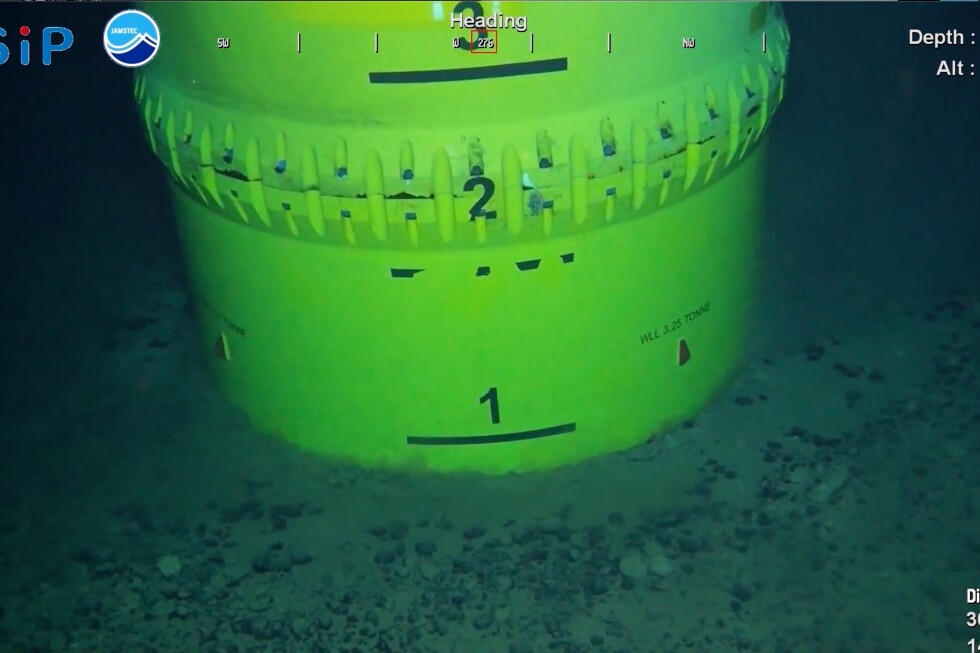
The drilling vessel Chikyu retrieved sediment containing rare earth elements from a depth of nearly 6,000 meters (19,700 feet) near Minamitorishima, a small island located about 1,950 kilometers southeast of Tokyo. Prime Minister Sanae Takaichi announced the achievement Monday, describing it as a world-first retrieval at such depths.
“It is a first step toward industrialization of domestically produced rare earth in Japan,” Takaichi stated on social media platform X. “We will make effort toward achieving resilient supply chains for rare earths and other critical minerals to avoid overdependence on a particular country.”
The breakthrough comes at a time of heightened economic security concerns for Japan. China currently dominates the global production of heavy rare earths, which are essential components in manufacturing powerful magnets used in defense systems, electric vehicles, and other advanced technologies.
Rare earth elements, despite their name, are relatively abundant in Earth’s crust but rarely found in concentrated, economically viable deposits. The 17 elements classified as rare earths possess unique magnetic, luminescent, and electrochemical properties that make them irreplaceable in many high-tech applications.
Japan’s relationship with China has grown increasingly tense in recent months, particularly after Takaichi commented in November about potential Japanese involvement if China were to take military action against Taiwan. In response, Beijing has suspended exports of dual-use goods with potential military applications to Japan, raising concerns that rare earth exports could face similar restrictions.
This wouldn’t be the first time China has leveraged its dominant position in the rare earths market. In 2010, during a territorial dispute, China briefly halted rare earth shipments to Japan, sending shockwaves through global supply chains and highlighting Japan’s vulnerability.
Japanese researchers first discovered the rare earth-rich deposits around Minamitorishima in the 2010s, setting the stage for today’s breakthrough. The country has since been conducting extensive research and development under the Strategic Innovation Promotion Program to assess the feasibility of mining these underwater resources.
“The successful retrieval of the sediment containing rare earth elements is a meaningful achievement from the perspectives of economic security and comprehensive ocean development,” said Japan’s Deputy Chief Cabinet Secretary Masanao Ozaki.
However, significant challenges remain before commercial production can begin. Officials noted that the retrieved samples still require detailed analysis to determine the exact quantity and quality of rare earth elements present. Additionally, the entire process from mining through separation and refining must be demonstrated, and economic viability verified.
The Chikyu research vessel departed for Minamitorishima last month and arrived at the mining site on January 17. The first batch of rare earth sediment was successfully retrieved on February 1, according to Japan’s Agency for Marine-Earth Science and Technology, which is conducting the survey.
The development also has geopolitical implications. Japan’s Self Defense Forces reported last year that Chinese naval vessels had been spotted near Minamitorishima, highlighting the strategic importance of the area.
For Japan, a country with limited natural resources, developing domestic sources of critical minerals represents a crucial economic security objective. If successfully industrialized, these deep-sea deposits could significantly reduce Japan’s dependence on imported rare earths and strengthen its position in global high-tech supply chains.
This breakthrough also comes as numerous countries worldwide are seeking to diversify their sources of critical minerals away from China, which currently controls approximately 60% of rare earth mining and 90% of processing capacity globally.
Fact Checker
Verify the accuracy of this article using The Disinformation Commission analysis and real-time sources.

9 Comments
Fascinating development in Japan’s efforts to reduce reliance on China for critical rare earth minerals. Seabed mining holds promise but likely faces technical and environmental challenges. Will be interesting to see if Japan can successfully scale up production.
Impressive that Japan has managed to extract rare earth-rich mud from such extreme ocean depths. Diversifying supply sources beyond China is important for economic and geopolitical reasons. But the scalability and environmental impact of this seabed mining approach remain open questions.
This is an important step for Japan to bolster its supply of rare earth elements. Reliance on a single supplier like China carries geopolitical risks. Seabed mining is uncharted territory though, so I’m curious to see the challenges they encounter scaling this up.
Interesting that Japan has achieved this rare earth extraction milestone from the seabed. Lowering reliance on China for these vital materials is prudent, but I wonder about the operational and sustainability hurdles they’ll have to overcome to make this commercially viable.
Reducing overdependence on China for rare earths is a smart strategic move for Japan. Extracting them from the deep seabed is an ambitious technical feat. I wonder about the environmental impact and viability of this approach compared to land-based mining.
Japan’s successful seabed rare earth extraction is a significant step in reducing its reliance on China. However, the technical and environmental challenges of scaling up deep-sea mining operations should not be underestimated. It will be fascinating to see how this progresses.
Japan’s rare earth extraction from the deep seabed is an intriguing development. Reducing reliance on China for these vital materials makes sense, but the scalability and environmental impact of this approach will be crucial factors to monitor.
Japan’s successful seabed extraction of rare earths is a notable development. Reducing China’s dominance in this critical supply chain makes strategic sense. However, the environmental impact and economic viability of deep-sea mining will be key factors going forward.
Breaking China’s stranglehold on rare earth supplies is an important strategic move by Japan. Extracting these critical minerals from the seabed is an impressive technical feat, but the long-term economic and environmental feasibility remains to be seen.