


Listen to the article
Japan and Canada Forge Strategic Alliance Amid Middle East Tensions
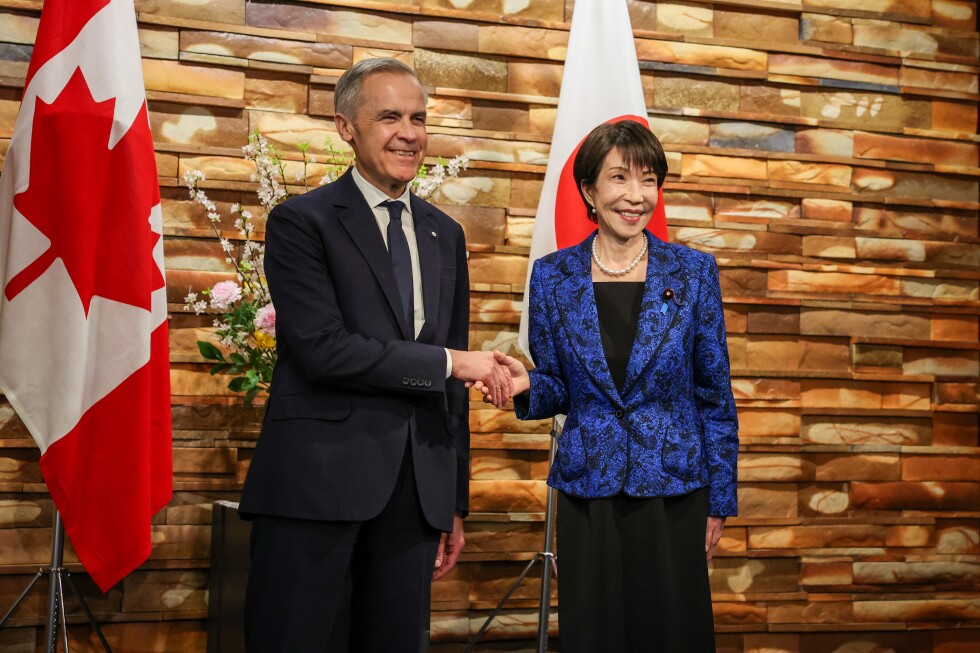
Japan and Canada signed a far-reaching strategic agreement in Tokyo on Friday to strengthen bilateral cooperation across defense, economic and energy security sectors. The pact comes at a critical moment as U.S. and Israeli military strikes on Iran have intensified concerns about global oil supplies and regional stability.
Japanese Prime Minister Sanae Takaichi and Canadian Prime Minister Mark Carney emphasized the importance of energy security during their talks, describing the current international landscape as one of significant “geopolitical uncertainty.”
“The world is at a turning point. We see the manifestations in the Middle East. We see it everywhere,” Carney stated during a joint news conference following their meeting.
The agreement outlines plans for both nations to diversify their energy resources and expand trade and investment to strengthen energy supply chains. This strategic focus on energy security takes on added urgency as the escalating conflict in the Middle East threatens crude oil shipments through the Strait of Hormuz, a critical maritime chokepoint off Iran’s coast that handles roughly 20% of global oil trade.
Carney’s visit to Japan, his first since taking office last year, follows his stop in Australia where he called for de-escalation of hostilities in Iran. The timing underscores how regional conflicts thousands of miles away can impact economic and security considerations across the Indo-Pacific region.
Beyond energy concerns, the agreement addresses growing challenges posed by China’s expanding influence. The two leaders agreed to establish bilateral dialogues on economic security and cyber policies, reflecting shared apprehensions about Beijing’s assertiveness in trade practices and military activities throughout the Indo-Pacific.
In a significant development for defense cooperation, Japan and Canada will begin negotiations toward a formal defense pact that would streamline procedures for military visits, joint exercises, and other operations between the two countries. This represents an important step in Japan’s evolving security posture under Takaichi’s leadership.
The agreement also includes provisions to enhance collaboration between their respective defense industries. This aligns with Tokyo’s broader strategy to expand its relatively modest defense manufacturing sector as part of Takaichi’s plan to strengthen Japan’s military capabilities and deepen security partnerships with allied nations.
The defense industry cooperation comes against the backdrop of potential policy changes in Japan. Earlier on Friday, Takaichi’s governing Liberal Democratic Party and coalition partner Japan Innovation Party submitted a proposal calling for the removal of longstanding restrictions on lethal weapons sales. This proposal, expected to be formally endorsed by the government in coming months, would mark another significant shift away from Japan’s post-World War II pacifist principles.
These developments reflect Japan’s increasingly pragmatic approach to national security under Takaichi, balancing traditional restraint with the realities of an increasingly complex security environment in East Asia.
For Canada, the agreement with Japan represents an important component of Carney’s efforts to diversify international partnerships and strengthen Canada’s position in the Indo-Pacific, a region of growing economic and strategic significance.
Energy analysts note that the timing of this agreement highlights how geopolitical tensions in one region can catalyze diplomatic initiatives elsewhere, as nations seek to insulate themselves from supply disruptions and economic shocks. The partnership between these two G7 economies also demonstrates how middle powers are adapting their foreign policy approaches amid shifting global power dynamics.
As implementation of the agreement moves forward in coming months, both nations will need to navigate domestic political considerations while advancing concrete measures to realize the ambitious cooperation framework they have established.
Fact Checker
Verify the accuracy of this article using The Disinformation Commission analysis and real-time sources.

10 Comments
A Japan-Canada partnership focused on defense, economics, and energy is a smart play. Reducing reliance on Middle East oil and finding alternative sources seems like a wise strategy.
Agreed. With the Strait of Hormuz potentially disrupted, this alliance could help both countries weather the storm.
The geopolitical uncertainty described is palpable. This Japan-Canada pact seems like a prudent move to shore up defense and energy security in the face of Middle East tensions.
Agreed, they’re taking a proactive approach in a volatile environment.
Interesting to see these two countries come together on such a comprehensive strategic agreement. Curious how they plan to diversify their energy resources and strengthen supply chains.
Good point. The details of their plans in those areas will be important to watch.
With the global energy landscape in flux, this Japan-Canada strategic agreement is a timely development. Diversifying supply sources and strengthening trade ties are sensible priorities.
Definitely, they’re positioning themselves to be more resilient in the face of potential disruptions.
This strategic alliance between Japan and Canada is timely given the geopolitical tensions in the Middle East. Diversifying energy resources and securing supply chains are prudent moves in these uncertain times.
Absolutely, shoring up energy security will be critical as the conflict in the region escalates.