


Listen to the article
Ivory Coast Government Steps In to Rescue Stalled Cocoa Exports
Ivory Coast, the world’s leading cocoa producer, has announced plans to purchase unsold cocoa stocks to maintain export flows and ensure farmers receive payment amid a significant market downturn that has left hundreds of thousands of tons unsold.
Since October, plunging global cocoa prices have dramatically slowed exports from the West African nation, creating a backlog of unsold inventory and leaving many farmers without income for nearly two months.
“We want to reassure them,” Agriculture Minister Kobenan Kouassi Adjoumani told reporters on Tuesday. “The situation is now under control, and collection operations will begin in the coming days.”
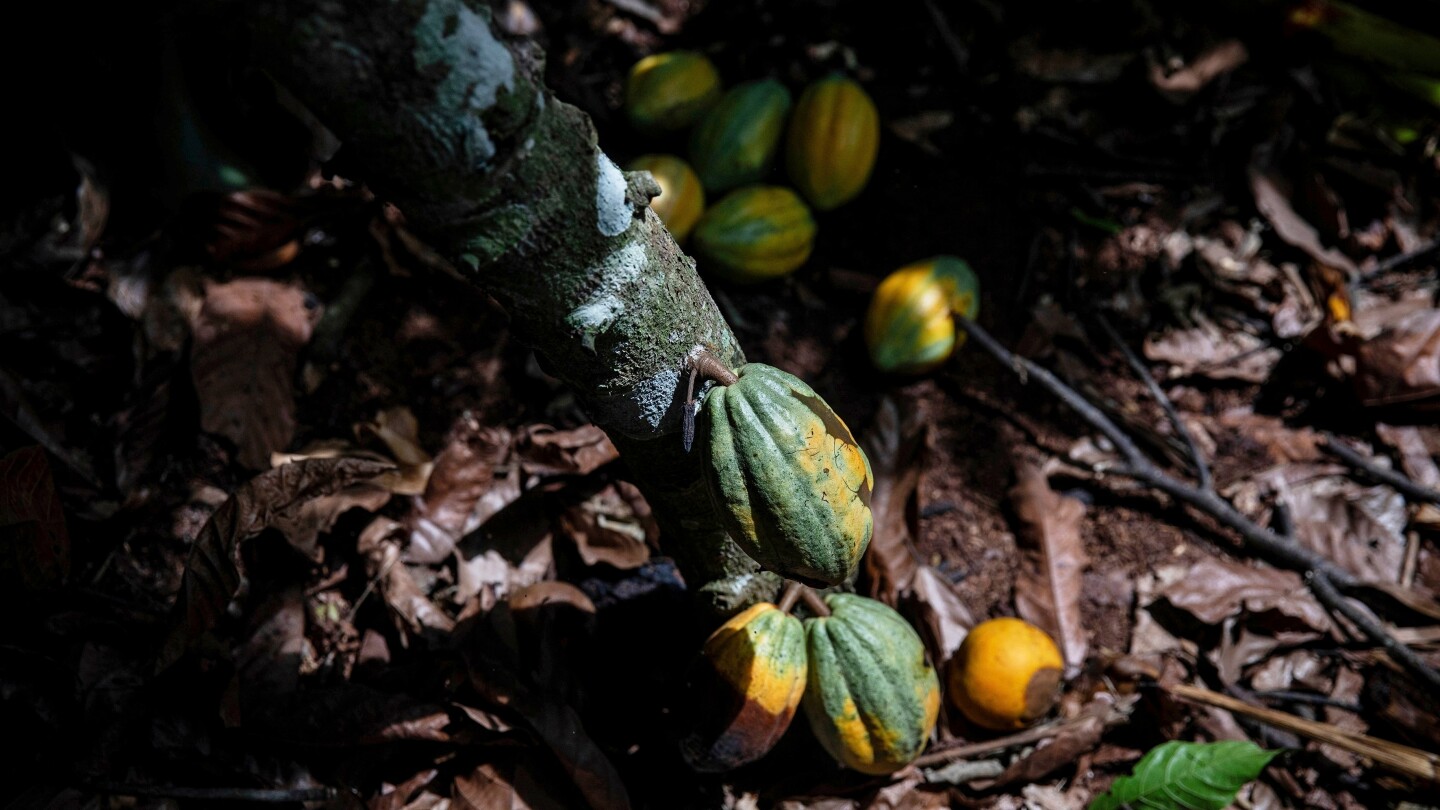
According to Synapci, the country’s primary cocoa farmers’ union, approximately 700,000 tons of cocoa remain unsold and unpaid for. This market disruption has forced desperate farmers to either sell their harvests at steep discounts or discard rotting cocoa beans, creating severe financial hardship throughout rural cocoa-growing regions.
Adjoumani confirmed the government would purchase the unsold cocoa at the guaranteed seasonal price established at the beginning of the harvest season. This intervention represents an unusual but necessary step to stabilize the sector.
Ivory Coast produces between 2 million and 2.5 million metric tons of cocoa annually, accounting for nearly half of the world’s cocoa supply. Unlike many agricultural commodities in other African nations, Ivory Coast’s cocoa sector operates under strict government regulation through the Coffee and Cocoa Council.
This regulatory system typically protects farmers from market volatility by allowing approximately 85% of the harvest to be sold in advance at fixed prices, providing growers with stable income regardless of market fluctuations. However, the system faced unprecedented pressure when global prices suddenly declined after reaching historic highs earlier in the year.
In October, the Coffee and Cocoa Council set cocoa prices at a record level of roughly $5,000 per metric ton – a move that generated optimism ahead of the country’s presidential election. Since then, global prices have fallen to around $4,630 per metric ton, causing multinational buyers to refuse purchasing the remaining 15% of the country’s cocoa production.
The price decline created a standoff between buyers and sellers that ultimately necessitated government intervention. The situation highlights the vulnerability of commodity-dependent economies to global market fluctuations, even with regulatory protections in place.
Market analysts note that Ivory Coast’s cocoa sector represents a critical economic engine for the country, providing livelihoods for millions of smallholder farmers and generating significant export revenue. Any prolonged disruption threatens both rural communities and national economic stability.
Despite the government’s pledge to resolve the situation, farmer representatives remain skeptical. Moussa Koné, president of Synapci, expressed doubts about the government’s promises: “They are making nice promises, but what guarantees are they offering? And what about those who have already had to throw away cocoa that rotted because of the blockade?”
The crisis comes at a particularly sensitive time, as the government prepares to announce new purchase prices for the mid-crop season on April 1. Industry observers expect these prices to fall sharply, potentially creating additional challenges for farmers already struggling with current market conditions.
The situation in Ivory Coast reflects broader volatility in global commodity markets, where price fluctuations can have outsized impacts on producer nations. It also demonstrates the limitations of even well-structured regulatory systems when faced with rapid market changes.
As collection operations begin in the coming days, both farmers and government officials will be watching closely to see if this intervention successfully resolves the backlog of unsold cocoa and restores stability to this crucial sector of Ivory Coast’s economy.
Fact Checker
Verify the accuracy of this article using The Disinformation Commission analysis and real-time sources.

16 Comments
This seems like a pragmatic move by the Ivory Coast government to support its vital cocoa farmers during a tough market downturn. Maintaining export flows and ensuring timely payment will be crucial to keeping the industry afloat.
Agreed. With so much unsold inventory, the government intervention should help avoid further hardship for the rural cocoa growers.
While the government buyback program may provide temporary relief, I’m curious to hear more about their plans to incentivize cocoa farmers to diversify their crops and income sources.
Diversification is crucial. Relying too heavily on a single cash crop leaves the industry vulnerable to market shocks.
Purchasing the unsold cocoa stocks is a pragmatic solution, but I hope the government is also exploring ways to boost domestic processing and value-added exports rather than just relying on raw commodity sales.
Absolutely, value-addition is key. Moving up the supply chain could help insulate Ivory Coast’s cocoa industry from global price volatility.
It’s good to see the government taking action to support its farmers, but I wonder if there are any longer-term strategies being considered to improve the resilience of the cocoa industry.
That’s a fair question. Stabilizing the sector in the short term is crucial, but they’ll need to look at structural reforms as well.
It’s commendable that the government is stepping in to support its critical cocoa sector. However, I hope they also use this as an opportunity to address structural issues and build greater resilience.
Good point. A holistic approach focused on both short-term stabilization and long-term sustainability will be key.
The global cocoa market has certainly been volatile lately. This seems like a necessary short-term fix, but the Ivory Coast will need to work on diversifying its economy and reducing reliance on a single agricultural commodity.
Diversification is key. Relying so heavily on cocoa exports leaves the country highly vulnerable to price swings and global market conditions.
This is a challenging situation for Ivory Coast’s cocoa farmers, but the government’s intervention seems like a reasonable stopgap measure. I’m curious to see what other initiatives they pursue to strengthen the industry long-term.
Agreed, this is just the first step. Developing more robust domestic and regional supply chains could be a good next focus area.
I’m curious to see how effective this government buyback program will be in practice. Ensuring timely and fair payments to the thousands of small-scale cocoa farmers will be a major logistical challenge.
That’s a good point. Executing the program smoothly and transparently will be critical to restoring confidence in the industry.