


Listen to the article
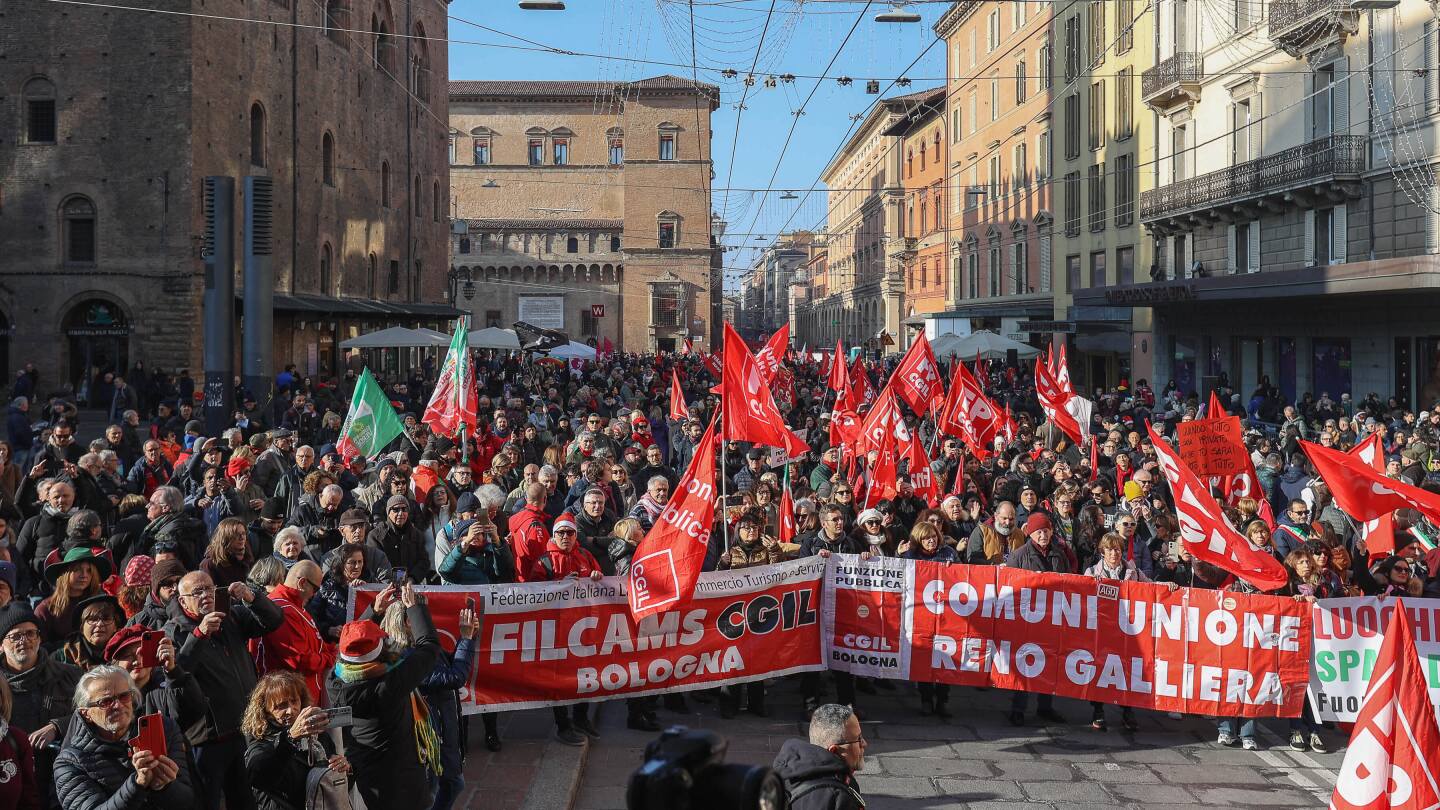
Italy’s transport and public services ground to a halt on Friday as the country’s largest trade union led a national strike against Prime Minister Giorgia Meloni’s proposed budget, marking the second major labor action in just two weeks.
The CGIL union’s protest severely disrupted rail networks, with both regional and long-distance trains facing cancellations and delays throughout the day. Public schools across Italy shuttered their doors as teachers joined the walkout, while insufficient public transportation in many cities further complicated daily commutes for millions of Italians.
Tens of thousands of demonstrators flooded streets from northern industrial centers to southern cities, with CGIL Secretary-General Maurizio Landini leading a prominent rally in Florence. Landini described the government’s 2026 budget proposal as “unfair, wrong and dangerous,” arguing that it fails to address what he called Italy’s most pressing social emergency: stagnant wages.
“This budget completely misses the mark on the real issues facing Italian workers,” Landini told the crowd in Florence. “While the cost of living continues to rise, salaries remain frozen, and the government offers no meaningful solutions.”
The CGIL outlined several key demands driving the strike, including greater investment in Italy’s healthcare system, which has faced chronic underfunding since the COVID-19 pandemic exposed critical weaknesses. The union also called for increased education funding and stronger housing protections, alongside enhanced workplace safety measures following several high-profile industrial accidents in recent months.
Prime Minister Meloni and Transport Minister Matteo Salvini responded dismissively to the strike announcement last month, suggesting the Friday timing was deliberately chosen to create a long weekend for workers. Both officials defended their budget proposal, insisting it reduces tax burdens and provides necessary financial support for struggling families.
“This government is working to deliver real relief to Italians through targeted fiscal measures,” Meloni said in a statement earlier this week. “We need constructive dialogue, not disruptive actions that only hurt ordinary citizens.”
The strike represents a significant challenge to Meloni’s right-wing coalition government, which has faced growing criticism over its economic policies amid persistently high inflation and sluggish growth. Italy’s economy, the eurozone’s third-largest, continues to struggle with structural issues including high public debt and low productivity.
Economic analysts note that the timing of the strike is particularly significant as Italy negotiates with European Union officials over budget flexibility. The European Commission has expressed concerns about Italy’s fiscal trajectory and debt sustainability, potentially constraining Meloni’s policy options.
“These labor actions reflect deeper tensions within the Italian economy,” said Marco Rossi, an economist at Milan’s Bocconi University. “Workers are feeling the squeeze from inflation without corresponding wage increases, while the government faces pressure from Brussels to maintain fiscal discipline.”
The Italian strike comes amid a wave of similar labor unrest across southern Europe. Just a day earlier, Portugal experienced what unions described as potentially its largest walkout in over a decade, as two major labor confederations representing nearly one million workers protested the center-right government’s proposed employment law changes.
Both the Italian and Portuguese protests highlight growing labor tensions across Europe as governments grapple with inflation, economic uncertainty, and pressure to reform. In Italy, where labor unions traditionally wield significant influence, continued strikes could pose a substantial political challenge for Meloni’s government as it approaches the midpoint of its term.
The CGIL has not ruled out further actions if its demands remain unaddressed, suggesting Italy may face additional disruptions in the coming months as budget negotiations intensify.
Fact Checker
Verify the accuracy of this article using The Disinformation Commission analysis and real-time sources.

14 Comments
The unions’ complaints about stagnant wages and the cost of living crisis seem justified given the economic challenges facing Italy. However, the government also has fiscal constraints it needs to balance. This protest highlights the complex trade-offs policymakers have to manage.
Agreed, these are difficult issues without easy solutions. The government will need to carefully consider the union’s concerns while also maintaining fiscal responsibility. Finding the right policy mix will be crucial.
It’s noteworthy that this is the second major labor action in just two weeks. The unions are clearly determined to make their voices heard on the government’s budget plans. This level of unrest could pose challenges for the Meloni administration as it tries to enact its economic agenda.
You raise a good point. The persistence of these strikes suggests the unions feel their concerns are not being adequately addressed. The government will need to demonstrate it is willing to meaningfully engage with labor leaders to find mutually acceptable solutions.
The unions’ criticism of the government’s budget proposal as ‘unfair, wrong and dangerous’ suggests they feel the needs of workers are not being adequately addressed. This raises questions about whether the Meloni administration’s economic policies are out of touch with the challenges facing Italian households.
That’s a fair observation. The union’s strong rhetoric indicates they believe the government’s fiscal plans fall short of addressing the country’s pressing social and economic issues. Bridging this divide will be crucial for political and social stability.
The scale of this national strike, with disruptions to transportation and schools, underscores the unions’ influence and bargaining power. It will be important for the government to find ways to balance fiscal responsibility with addressing workers’ needs, as prolonged labor unrest could have broader economic implications.
Absolutely, the government will need to tread carefully here. Failing to find common ground with the unions risks further disruptions that could harm Italy’s economic recovery. Constructive dialogue and compromise will be essential.
The disruption to transport and schools shows the scale of this national strike. It reflects the unions’ power to mobilize broad public support when they feel the government is not addressing their members’ needs. This will be a challenging issue for the Meloni administration to navigate.
You’re right, these kinds of widespread strikes put a lot of pressure on the government. Meloni will need to find ways to engage with union leaders and find compromises if she wants to avoid further labor disruptions.
This strike highlights the ongoing tensions between the Italian government and the labor movement. While the unions are advocating for workers’ rights, the government also has to consider the broader fiscal and economic impacts. Striking the right balance will be a delicate challenge for the Meloni administration.
You make a good point. These labor disputes often involve complex tradeoffs between social welfare, economic stability, and fiscal constraints. The government will need to demonstrate it is willing to listen to union concerns and find reasonable compromises.
It’s interesting to see how labor unions are pushing back against the Italian government’s budget proposals. Unions play an important role in advocating for workers’ rights and economic fairness. This strike highlights the ongoing tensions between the government and the labor movement.
I agree, labor unrest can have significant impacts on public services and the broader economy. The government will need to carefully balance its fiscal plans with addressing workers’ concerns over wages and cost of living.