


Listen to the article
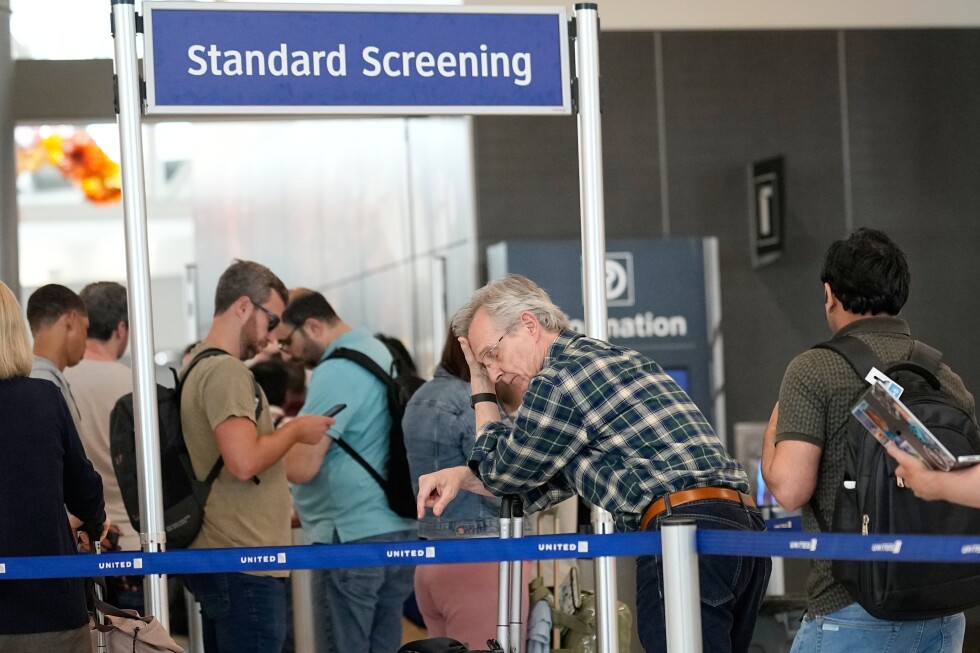
As airport security delays continue across the U.S. during the busy spring break travel season, passengers are experiencing unprecedented wait times despite President Donald Trump’s recent executive order aimed at paying Transportation Security Administration officers.
Trump signed the executive order Friday instructing the Department of Homeland Security to compensate TSA officers immediately, though the timing of actual payments remains unclear. The action comes during one of the year’s busiest travel periods, with spring breaks and upcoming Passover and Easter holidays creating high passenger volumes.
At Philadelphia International Airport, traveler Betty Mitchell arrived at 12:30 a.m. Saturday for a 5 a.m. flight, only to find that airline desks didn’t open until 3 a.m. Once they did, the security checkpoint quickly became overwhelmed.
“All at once it became a mad house,” Mitchell said. After waiting nearly three hours to clear security, she missed her flight and had to take the next available departure. “Never have I seen it that long. If the airlines work with TSA in these troubled times, maybe it would help the public.”
Experiences have varied widely across airports. While some early-morning travelers reported minimal issues, others faced increasingly lengthy delays as the day progressed. Baltimore-Washington International Airport (BWI) took to social media platform X to warn passengers of unprecedented security checkpoint wait times.
“We have not previously experienced checkpoint wait times similar to what we are seeing this morning,” BWI officials posted, recommending travelers arrive four hours before their scheduled departures.
Maryland Governor Wes Moore announced additional support measures, stating that Immigration and Customs Enforcement agents were being deployed to BWI to assist with security screenings. “We have been told by ICE their personnel will provide operational support and assist at TSA security checkpoints to speed up the clearance process for passengers — not immigration enforcement,” Moore clarified.
Homeland Security Secretary Markwayne Mullin stated TSA personnel could receive paychecks as early as Monday, offering relief to workers who have gone without pay since February 14. However, industry experts question whether this single payment will immediately resolve the staffing crisis.
Caleb Harmon-Marshall, a former TSA officer who publishes the travel newsletter Gate Access, believes the situation won’t improve significantly until officers feel confident about their long-term financial security.
“If it’s only for a pay period, that’s not enough to bring them back,” Harmon-Marshall explained. “It has to be extended pay for them to come back or want to stay there.” He estimates that longer security lines could persist for another one to two weeks.
The timeline for normalizing operations remains uncertain. Many airports have consolidated or closed checkpoints and special service lanes due to staffing shortages. According to DHS, some airports have experienced TSA officer call-out rates reaching 40 percent. Nationwide, 11.8 percent of scheduled TSA employees missed work on Thursday—the highest rate recorded during the shutdown. Nearly 500 of the agency’s approximately 50,000 officers have resigned since the shutdown began.
Traveler Holly Reynolds Lee experienced the impact firsthand at BWI. Despite arriving three hours early for her family’s spring break flight, she spent five hours navigating a single TSA checkpoint, ultimately missing her flight.
“The airport employees are doing the best they can and I know the airlines are doing the best they can,” Lee said. “We certainly have great sympathy for the TSA agents. They deserve to be paid. This is a failure of government, quite frankly. It’s just an absolute failure to get things solved for the American people.”
Lee was particularly concerned for vulnerable travelers caught in the chaos. “For older adults and families with small children, this is just an absolute nightmare,” she noted.
Travel experts recommend monitoring airport conditions frequently before departures, including checking official websites and social media accounts where airports share real-time updates. Many major airports are now advising passengers to allow at least four hours for both domestic and international screenings.
“Wait times can change quickly based on passenger volume and TSA staffing,” warned an advisory posted Saturday on John F. Kennedy International Airport’s website.
Travelers should note that wait times displayed on the MyTSA mobile app may be inaccurate during the shutdown period, as TSA isn’t actively managing its digital platforms. Third-party websites tracking TSA wait times may also display outdated information if they rely on publicly available data feeds that aren’t being regularly updated.
Fact Checker
Verify the accuracy of this article using The Disinformation Commission analysis and real-time sources.

22 Comments
Nice to see insider buying—usually a good signal in this space.
Exploration results look promising, but permitting will be the key risk.
Good point. Watching costs and grades closely.
Good point. Watching costs and grades closely.
Nice to see insider buying—usually a good signal in this space.
The cost guidance is better than expected. If they deliver, the stock could rerate.
Production mix shifting toward Business might help margins if metals stay firm.
Good point. Watching costs and grades closely.
I like the balance sheet here—less leverage than peers.
Good point. Watching costs and grades closely.
Production mix shifting toward Business might help margins if metals stay firm.
The cost guidance is better than expected. If they deliver, the stock could rerate.
Good point. Watching costs and grades closely.
Good point. Watching costs and grades closely.
Silver leverage is strong here; beta cuts both ways though.
The cost guidance is better than expected. If they deliver, the stock could rerate.
Silver leverage is strong here; beta cuts both ways though.
Good point. Watching costs and grades closely.
Good point. Watching costs and grades closely.
Production mix shifting toward Business might help margins if metals stay firm.
Good point. Watching costs and grades closely.
Interesting update on It remains to be seen if Trump’s order to pay TSA officers shortens passenger wait times. Curious how the grades will trend next quarter.