


Listen to the article
Iraqi Political Factions Navigate Complex Coalition Talks Following Inconclusive Election
Political factions across Iraq have entered a period of intense negotiations following last month’s parliamentary elections, which failed to produce a clear majority bloc capable of forming a government independently. The outcome has set the stage for what analysts expect to be protracted alliance-building efforts that will ultimately determine Iraq’s political direction.
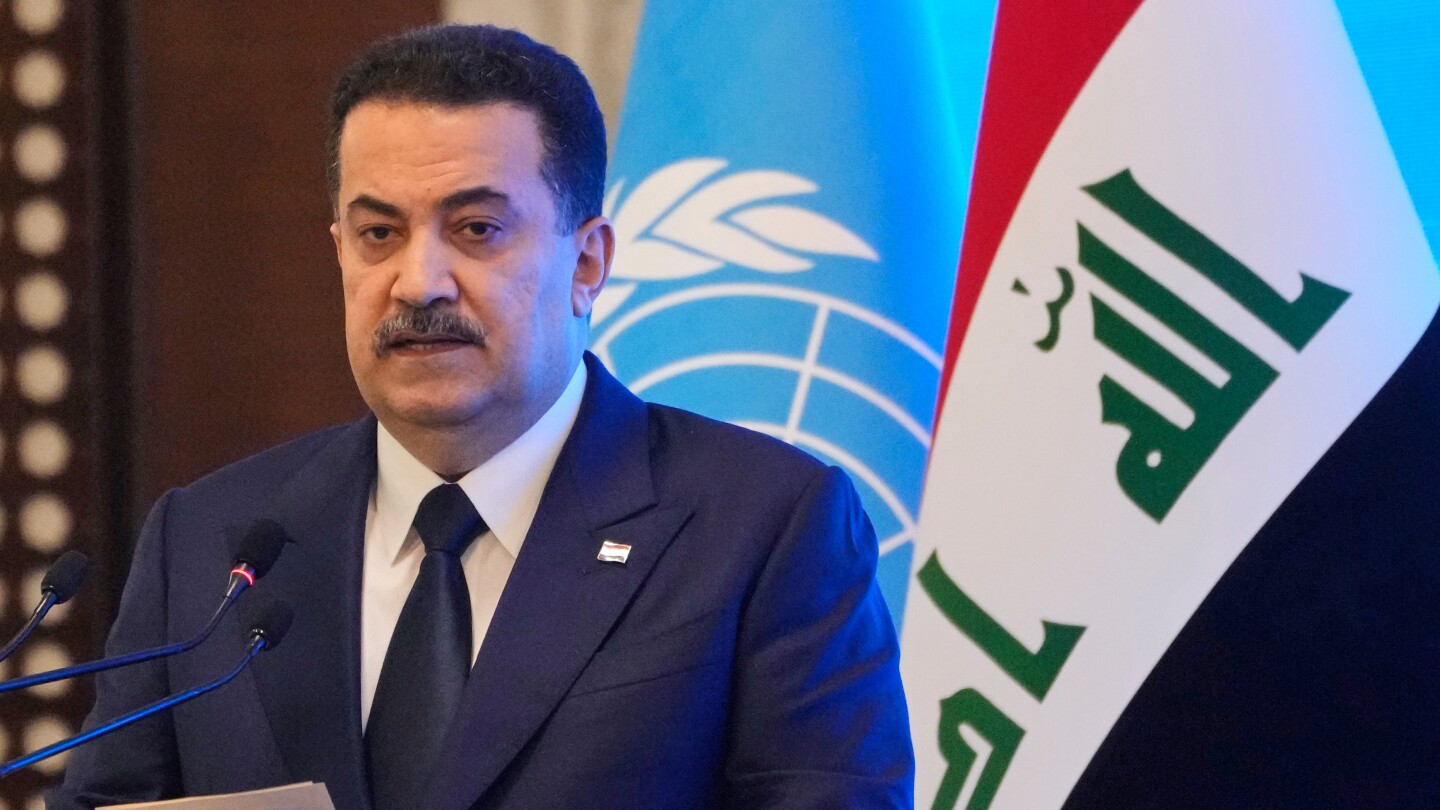
The November election results showed Prime Minister Mohammed Shia al-Sudani’s Reconstruction and Development Coalition emerging as the strongest individual party with 46 seats, performing particularly well in Baghdad and several provinces. However, this falls significantly short of the numbers needed to govern alone in Iraq’s fragmented parliament.
Al-Sudani, who has positioned himself as a pragmatic leader focused on improving public services during his first term, now faces an uncertain political future despite his relative electoral success. While his party is nominally affiliated with the Coordination Framework—a coalition of Iran-backed Shiite parties that collectively secured the largest parliamentary bloc—political analysts suggest this alliance may not support his bid for a second term.
“The choice for prime minister has to be someone the Framework believes they can control and doesn’t have his own political ambitions,” explained Sajad Jiyad, an Iraqi political analyst and fellow at The Century Foundation. “The Framework will not give al-Sudani a second term as he has become a powerful competitor.”
This reluctance reflects a recurring pattern in post-2003 Iraqi politics. Since the U.S.-led invasion, only Nouri al-Maliki has served multiple terms as prime minister. His controversial attempt at a third term failed after widespread criticism that he had monopolized power and alienated Sunni and Kurdish constituencies.
The political landscape has been further complicated by the absence of the powerful Sadrist movement led by Shiite cleric Muqtada al-Sadr. Having boycotted the political system since failing to form a government after winning the most seats in 2021, Sadr’s withdrawal has created an electoral vacuum that rival groups have rushed to fill.
“It reduced participation in areas that were traditionally within his sphere of influence, such as Baghdad and the southern governorates, leaving an electoral vacuum that was exploited by rival militia groups,” said Hamed Al-Sayed, a political activist and official with the National Line Movement.
Perhaps most notably, groups with affiliated armed wings have secured more than 100 parliamentary seats—their strongest showing since 2003. This development underscores the growing political influence of armed factions within Iraq’s formal governance structures.
In the broader political landscape, Shiite alliances and lists dominated by the Coordination Framework secured 187 seats, while Sunni groups obtained 77 and Kurdish groups 56, with an additional nine seats reserved for minority groups. On the Sunni side, parties have reorganized under the National Political Council, attempting to reclaim influence lost in previous electoral cycles.
The Kurdish political scene remains divided between the traditional powers—the Kurdistan Democratic Party and Patriotic Union of Kurdistan—with ongoing negotiations between them over the presidency, a position conventionally reserved for a Kurd under Iraq’s power-sharing arrangements.
The timeline for government formation follows a structured process: Parliament must elect a speaker within 15 days of the Federal Supreme Court’s ratification of election results, which occurred on December 14. The parliament then has 30 days to elect a president, who in turn has 15 days to appoint a prime minister. The designated prime minister then has 30 days to form a government.
The incoming administration will inherit significant challenges. Iraq faces substantial public debt exceeding $69 billion and an economy that remains overwhelmingly dependent on oil revenues despite diversification efforts. Entrenched corruption continues to undermine governance and public trust.
Perhaps the most sensitive issue confronting the next government will be the status of the Popular Mobilization Forces (PMF)—militias initially formed to combat ISIS that now wield considerable political and military power despite their nominal integration into Iraq’s security apparatus. Since October 2023, some PMF-affiliated groups have conducted attacks on U.S. bases in retaliation for Washington’s support of Israel in the Gaza conflict.
The United States has reportedly warned against selecting any prime ministerial candidate who controls an armed faction and has cautioned against allowing militia-affiliated figures to control key ministries or security posts. This external pressure adds another layer of complexity to Iraq’s already intricate government formation process.
Kataib Hezbollah, one of Iraq’s most powerful militias and designated as a terrorist organization by the U.S., recently issued a defiant statement rejecting any possibility of disarmament until “the departure of all occupation forces, NATO troops, and Turkish forces.”
As negotiations continue, the eventual government will need to balance competing domestic factions while navigating the often-conflicting interests of influential external powers, particularly the United States and Iran, whose shadow looms large over Iraqi politics.
Fact Checker
Verify the accuracy of this article using The Disinformation Commission analysis and real-time sources.

10 Comments
Given Iraq’s reliance on oil and gas exports, the political situation will be closely watched by energy and commodity markets. Stability in Iraq’s energy sector is crucial for global supply, so the outcome of these coalition talks could have far-reaching implications.
Absolutely. Iraq’s energy production and exports are a key factor not just for the country’s own economic prospects, but for the wider global energy landscape. The ability of the next government to manage this sector effectively will be closely scrutinized.
The political dynamics in Iraq seem highly complex and fluid following the inconclusive election results. It will be interesting to see how the various factions navigate the coalition-building process and whether they can find a stable governing arrangement.
You’re right, the path forward will likely involve a lot of delicate negotiations and compromise between the different political blocs. Governing effectively in a divided system like Iraq’s is no easy task.
The performance of Prime Minister al-Sudani’s coalition, despite falling short of a majority, suggests there may be an appetite for a more pragmatic, service-focused leadership. However, the influence of Iran-backed Shiite parties remains a key factor to watch.
Absolutely. The role of Iran-aligned factions will be crucial in shaping the next government. Their ability to compromise or continue asserting their interests could significantly impact Iraq’s political direction going forward.
The fragmentation of Iraq’s parliament is a real challenge, but also an opportunity for fresh leadership to emerge. If the various factions can find common ground and compromise, it could pave the way for much-needed reforms and improved public services.
That’s a good point. While the political uncertainty is concerning, it also presents a chance for new voices and ideas to shape Iraq’s future, if the different sides can find a way to work together constructively.
It’s concerning to see Iraq’s political future in such a state of flux, especially given the country’s history of instability and sectarian tensions. Hopefully, the various parties can find a way to put the interests of the Iraqi people first in their negotiations.
I share your concern. Iraq’s stability and development have been hampered by political gridlock and infighting for too long. Let’s hope this latest round of coalition talks can produce a more functional and inclusive government.