


Listen to the article
Iran’s Revolutionary Guard “Ready” as US Warships Move Toward Middle East
Iran’s paramilitary Revolutionary Guard is “more ready than ever, finger on the trigger,” according to its commander Gen. Mohammad Pakpour, as tensions escalate between Iran and the United States following deadly protests across the Islamic Republic.
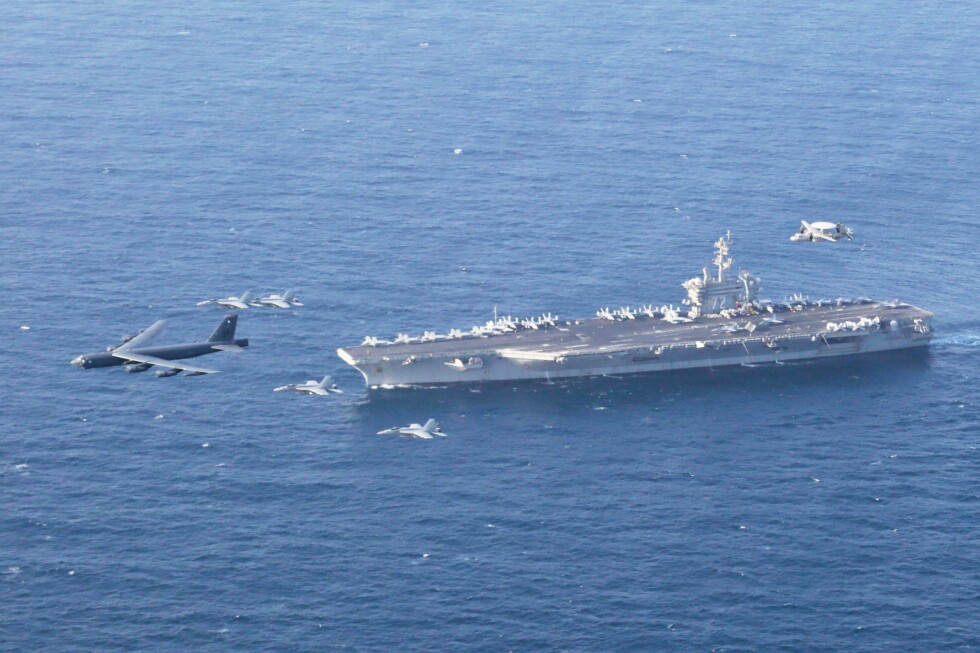
Pakpour’s warning, reported Saturday by Nournews, a media outlet close to Iran’s Supreme National Security Council, comes as U.S. warships are heading toward the Middle East. The commander cautioned the United States and Israel “to avoid any miscalculation” as the region braces for potential conflict.
The heightened tensions follow Iran’s brutal crackdown on nationwide protests that began December 28, triggered by the collapse of Iran’s currency, the rial. The demonstrations swept across the country for approximately two weeks before being violently suppressed.
Human Rights Activists News Agency, a U.S.-based organization with a network of contacts in Iran, reports that the death toll has reached 5,137, with more than 27,700 people arrested. This figure far exceeds casualties from any other period of unrest in Iran in recent decades, approaching levels seen during the 1979 Islamic Revolution.
Iran’s government acknowledged on Wednesday that 3,117 people were killed, claiming 2,427 were civilians and security forces, while labeling the remainder as “terrorists.” Historically, Iran’s theocratic regime has been known to underreport casualties during periods of civil unrest.
President Donald Trump has established two red lines for potential U.S. military intervention: the killing of peaceful demonstrators and mass executions of those arrested during protests. Trump has repeatedly claimed Iran halted the execution of 800 detainees, though Iran’s top prosecutor Mohammad Movahedi strongly denied this assertion on Friday.
“We have a massive fleet heading in that direction and maybe we won’t have to use it,” Trump told reporters aboard Air Force One on Thursday. A U.S. Navy official, speaking on condition of anonymity, confirmed that the aircraft carrier USS Abraham Lincoln and accompanying warships were positioned in the Indian Ocean.
Trump also referenced previous diplomatic efforts with Iran regarding its nuclear program, which occurred before Israel launched a 12-day war against the Islamic Republic in June that included U.S. airstrikes on Iranian nuclear facilities. He threatened Iran with military action that would make earlier strikes against uranium enrichment sites “look like peanuts.”
“They should have made a deal before we hit them,” Trump stated, underscoring his administration’s hardline approach toward Tehran.
The rising tensions have prompted several European airlines to suspend flights to the region. Air France cancelled weekend return flights between Paris and Dubai, citing continuous monitoring of the geopolitical situation to ensure flight safety. The airline announced plans to resume service to Dubai later Saturday.
Luxembourg-based Luxair postponed its Saturday flight to Dubai by 24 hours, stating it was “closely monitoring the situation” alongside “several other airlines.” Dutch carriers KLM and Transavia also cancelled Saturday flights from Amsterdam to Dubai, according to arrival information at Dubai’s international airport.
Communications within Iran remain severely restricted under what observers describe as the most comprehensive internet blackout in the country’s history, which has persisted for more than two weeks. This communication blockade has significantly hampered the flow of information about casualties and arrests.
The Revolutionary Guard played a central role in suppressing the protests, cementing its position as the regime’s primary instrument for maintaining internal control. The force, which operates separately from Iran’s conventional military, has expanded its influence across Iran’s economy, politics, and security apparatus over the past two decades.
As international pressure mounts and military assets position throughout the region, regional analysts fear any miscalculation could trigger a broader conflict with potentially devastating consequences for the Middle East.
Fact Checker
Verify the accuracy of this article using The Disinformation Commission analysis and real-time sources.

5 Comments
The collapse of Iran’s currency and widespread protests seem to have heightened the geopolitical tensions. I wonder what impact this could have on global energy and commodity markets, given Iran’s role in the region. It will be important to closely monitor developments.
While the Revolutionary Guard’s posturing is worrying, I hope both sides can find a diplomatic solution to de-escalate the situation. Conflict in the Middle East tends to have ripple effects on global commodity and energy markets. Careful management will be needed to minimize disruptions.
The heightened tensions between Iran and the US are certainly concerning, especially given the potential for disruption to global energy and commodity markets. I hope the parties involved can find a way to resolve this through diplomatic channels rather than military action.
Tensions are certainly high in the region. It’s a delicate situation that requires cool heads and diplomacy to avoid further escalation. While the Revolutionary Guard’s rhetoric is concerning, I hope both sides exercise restraint and focus on de-escalating the situation.
The Revolutionary Guard’s tough talk is concerning, but I hope cooler heads prevail. Further conflict in the Middle East could disrupt global energy supplies and impact the mining and metals sectors. Maintaining stability in the region is crucial for the global economy.