


Listen to the article
Iran Demands Toll Rights in Strait of Hormuz as Condition for Ending Conflict
Iran is demanding the right to collect tolls in the Strait of Hormuz as a precondition for reopening the critical waterway to international shipping, according to officials involved in ceasefire negotiations between Iran, the United States, and Israel.
This demand directly challenges a fundamental principle of international maritime law: freedom of peaceful navigation. The principle, codified in the United Nations’ Convention on the Law of the Sea in 1994, has been a cornerstone of global trade for centuries.
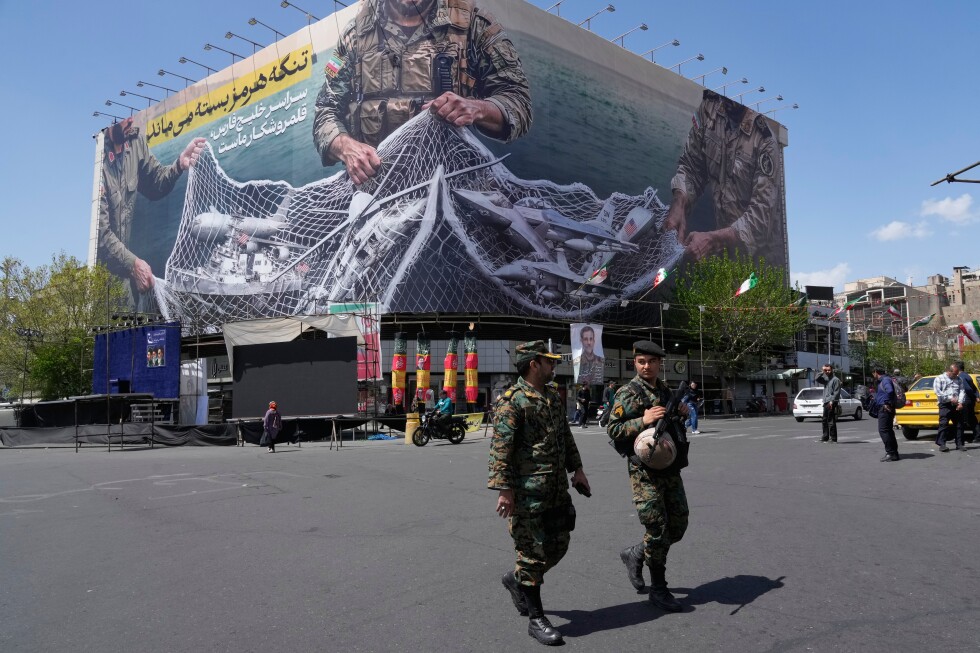
Since the conflict began on February 28, Iran has effectively blocked the strait through attacks and threats against vessels, making passage too risky for commercial shipping. The blockade has created immediate energy shortages in Asia, driven up gasoline prices in the U.S. and Europe, and threatened global economic growth.
The strait is crucial to world energy supplies, with approximately 20% of global oil shipments passing through it. Reopening the waterway would alleviate supply constraints that have pushed energy and fertilizer prices sharply higher during the conflict.
In the early stages of the blockade, Iran implemented an informal vetting system dubbed the “tollbooth” by shipping analysts. Vessels were instructed to divert from their normal route through the strait and instead navigate around Iran’s Larak Island. Ships were required to provide detailed information about crew and cargo to intermediaries of Iran’s Islamic Revolutionary Guards Corps. Reports indicate at least two vessels paid the equivalent of $2 million in Chinese yuan to secure passage.
A regional official, speaking on condition of anonymity due to involvement in the negotiations, revealed that Iran’s 10-point proposal for ending the conflict includes provisions allowing both Iran and Oman to charge ships passing through the strait. The official indicated Iran would use the proceeds for reconstruction efforts.
U.S. President Donald Trump has prioritized reopening the strait but opposes the toll concept, according to a White House statement issued Wednesday. Analysts note that major Gulf oil producers share this opposition.
The Law of the Sea Treaty’s Article 17 explicitly guarantees a right of “innocent passage” for vessels that do not threaten coastal states. Maritime law experts warn that permitting Iran and Oman to charge for passage would set a dangerous precedent.
“Freedom of navigation has always been recognized, including specifically in straits,” said Philippe Delebecque, a maritime law expert at Paris’ Sorbonne University. He raised concerns that such a precedent could lead to similar restrictions in other crucial waterways like the Strait of Gibraltar or the Strait of Malacca, calling such a scenario “the end of an international society.”
While 172 countries have ratified the U.N. convention, notably neither Iran nor the United States are among them. However, legal experts emphasize that this doesn’t exempt Iran from international customary law.
“Not having ratified the convention doesn’t give Iran total freedom of action in the Strait of Hormuz,” explained Julien Raynaut, head of the French Association of Maritime Law. “It remains subject to international law and notably this customary right of passage.”
Economists suggest the direct financial impact of tolls might be relatively modest. A $2 million toll on a large tanker carrying 2 million barrels of oil would translate to roughly a $1-per-barrel increase on that shipment.
“The burden does not fall on global consumers, but overwhelmingly on the Gulf states that supply the oil that transits the strait,” according to an analysis by the Brussels-based Bruegel think tank. The analysis concludes that the world economy would immediately benefit from reopening the strait, returning a significant portion of global oil to the market and driving prices lower.
Such a move would also eliminate a multibillion-dollar windfall for Russia, whose oil has seen increased demand despite international sanctions. The international price of oil has surged from around $72 per barrel before the conflict to as high as $118 on March 31, before declining to $94.55 following news of a two-week ceasefire.
Saudi Arabia, the region’s largest oil producer, has welcomed the ceasefire but called for keeping the Strait of Hormuz open “without any restrictions.” Gulf states have been forced to shut down approximately 12 million barrels per day in crude production due to shipping constraints, as existing pipeline alternatives cannot handle the volume.
Western nations have expressed concern that toll revenues would benefit the Islamic Revolutionary Guard Corps, which the U.S. and European Union have designated as a terrorist organization.
As negotiations continue, shipping analysts report no significant change in traffic through the strait despite claims to the contrary from the White House.
Fact Checker
Verify the accuracy of this article using The Disinformation Commission analysis and real-time sources.

19 Comments
Production mix shifting toward Business might help margins if metals stay firm.
Good point. Watching costs and grades closely.
Good point. Watching costs and grades closely.
Nice to see insider buying—usually a good signal in this space.
Good point. Watching costs and grades closely.
Uranium names keep pushing higher—supply still tight into 2026.
Interesting update on Iran’s Hormuz toll proposal violates global trade norms. Curious how the grades will trend next quarter.
If AISC keeps dropping, this becomes investable for me.
Good point. Watching costs and grades closely.
Interesting update on Iran’s Hormuz toll proposal violates global trade norms. Curious how the grades will trend next quarter.
Good point. Watching costs and grades closely.
Uranium names keep pushing higher—supply still tight into 2026.
Good point. Watching costs and grades closely.
Good point. Watching costs and grades closely.
Interesting update on Iran’s Hormuz toll proposal violates global trade norms. Curious how the grades will trend next quarter.
Exploration results look promising, but permitting will be the key risk.
I like the balance sheet here—less leverage than peers.
Good point. Watching costs and grades closely.
Production mix shifting toward Business might help margins if metals stay firm.