


Listen to the article
The war in Iran is highlighting the vulnerabilities in President Donald Trump’s fossil fuel-focused energy strategy, as global oil prices surge past $100 per barrel and American consumers face gasoline prices approaching $4 per gallon.
Since returning to office last year, Trump has aggressively rolled back climate policies implemented during the Biden administration, favoring oil and other fossil fuels as the cornerstone of his “American energy dominance” agenda. This approach has left the country with fewer alternative energy options at a critical moment of international instability.
“The biggest short-term losers of the war will be U.S. consumers of oil and gas, as energy prices rise,” said Peter Gleick, a climate scientist and co-founder of the Pacific Institute. The situation has become particularly dire as the Strait of Hormuz, a crucial channel for global oil transport, remains effectively blocked due to Iranian targeting of maritime traffic.
Energy policy experts point to a fundamental weakness in the administration’s strategy. “It turns out fossil fuels have their own supply risks, and the administration has no answers,” said Tyson Slocum, energy director at Public Citizen. He noted that Trump’s campaign promise to cut energy bills in half has instead resulted in higher electric bills as data center demand increases across the country.
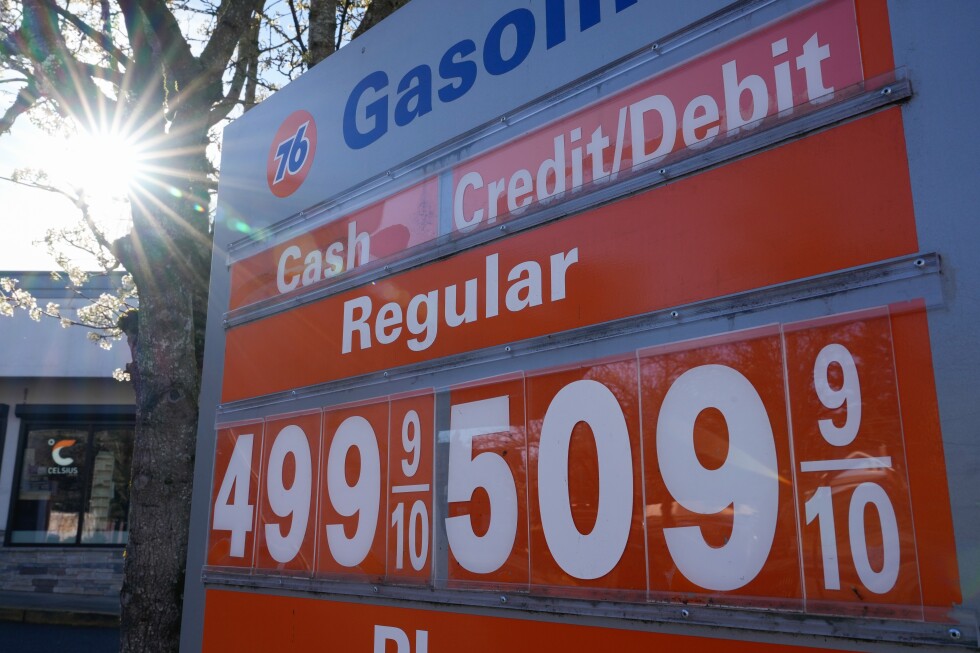
At the pump, Americans are feeling immediate effects. The national average for gasoline has jumped to approximately $3.88 per gallon, according to AAA—a significant increase from the sub-$3 prices Trump boasted about in his State of the Union address just last month.
The timing could prove politically problematic for Republicans in this midterm election year, with affordability ranking among voters’ top concerns. “We’re always concerned when gas prices go up,” acknowledged Republican Senator Mike Rounds of South Dakota, while his colleague Senator Thom Tillis of North Carolina added, “Gas drives the affordability issue.”
Trump has downplayed these concerns, calling the conflict a “very small price to pay” after years of what he characterized as terror from Iranian leadership. “I thought it would be worse—much worse, actually. It’s not bad. And it’s going to be over with pretty soon,” he stated during a White House event with Japan’s prime minister.
The president’s energy vision represents a complete reversal from his predecessor’s policies. Under Biden, the administration implemented regulations forcing coal-fired power plants to capture emissions or shut down and approved nearly $375 billion to boost clean energy—the largest climate investment by any nation in history.
Trump’s hostility toward renewable energy, particularly offshore wind, has manifested in blocking dozens of clean energy projects and canceling billions in grants meant to promote alternatives to fossil fuels. He has derided climate initiatives as the “Green New Scam” and called climate change “the greatest con job ever perpetrated on the world” during a United Nations address last year.
“Dig we must. That’s the Trump policy of lots of oil,” the president stated at a recent White House event.
To address the immediate crisis, the administration has released millions of barrels from the Strategic Petroleum Reserve and temporarily lifted sanctions on Russian oil shipments already at sea. Officials are also considering using the U.S. Navy to escort tankers through the Strait of Hormuz and are negotiating with countries dependent on Middle Eastern crude to form a coalition to patrol the waterway.
Despite these efforts, prices remain elevated. “We are currently experiencing what is the largest oil supply disruption in history,” said Gregory Brew, a senior analyst at the Eurasia Group, speaking at an event hosted by the Cato Institute.
Energy Secretary Chris Wright has acknowledged that prices will likely remain high for weeks but framed the situation as “short-term pain to solve a long-term problem” as the U.S. and Israel attempt to “defang” Iran. “There’s no guarantees in wars at all,” Wright told ABC News. “This is short-term pain to get through to a much better place.”
UN Secretary-General António Guterres offered a different perspective on the crisis, suggesting that the turmoil demonstrates “the fastest path to energy security” is accelerating a transition away from fossil fuels toward renewable energy. “There are no price spikes for sunlight and no embargoes on the wind,” he noted.
As the conflict continues, American consumers remain caught in the crossfire of geopolitical tensions and energy policy decisions, with no immediate relief in sight.
Fact Checker
Verify the accuracy of this article using The Disinformation Commission analysis and real-time sources.

16 Comments
This crisis in Iran underscores the vulnerabilities inherent in an energy strategy heavily reliant on fossil fuels. Developing a more balanced, resilient energy portfolio that includes renewable sources and critical minerals could help mitigate the impact of future supply disruptions.
Well said. Reducing our dependence on oil and gas, while bolstering domestic production of clean energy technologies and strategic minerals, should be a top priority for policymakers. It’s a complex challenge, but one that’s vital for our long-term energy security.
The Trump administration’s laser focus on fossil fuels has left the US more exposed to global energy shocks. Diversifying our energy mix and building up domestic clean energy production capacity could enhance our resilience.
Good point. Overreliance on oil and gas creates economic risks that could be mitigated by transitioning to a more balanced, sustainable energy portfolio. It’s a complex challenge, but one we need to address urgently.
This situation highlights the need for a balanced, pragmatic energy policy that doesn’t put all our eggs in one basket. Reducing our dependence on oil and gas could pay dividends during times of instability.
Agreed. A more diversified energy portfolio would make us less susceptible to volatility in global oil markets. It’s an opportunity to accelerate the transition to renewables.
The chaos in Iran is a stark reminder that overreliance on fossil fuels can leave us vulnerable. Diversifying our energy mix to include more renewable sources could help insulate us from global supply shocks.
Absolutely, we need to invest more in clean energy solutions to enhance our energy security. Fossil fuels will always carry inherent geopolitical risks.
The situation in Iran is a wake-up call that our current energy strategy leaves us vulnerable. Diversifying our energy mix to include more renewables, energy storage, and critical minerals could enhance our energy security and resilience.
Well said. Transitioning to a more sustainable, balanced energy portfolio is not just an environmental imperative, but a vital national security issue. It’s time to take bold action to reduce our fossil fuel dependence.
This crisis underscores the geopolitical volatility inherent in fossil fuel dependence. Investing in renewable energy, energy efficiency, and energy storage technologies could insulate us from these supply disruptions in the future.
Absolutely. Reducing our reliance on imported oil and gas, while strengthening domestic clean energy capabilities, should be a top national security priority. The long-term benefits would outweigh the short-term costs.
It’s concerning to see how quickly geopolitical tensions can disrupt global energy supplies and send prices skyrocketing. This underscores the importance of developing domestic energy sources, including critical minerals for clean tech.
Exactly. Securing a reliable supply of strategic minerals like lithium, cobalt, and rare earths is crucial for expanding renewable energy and electric vehicles. Reducing our vulnerability should be a top priority.
The Trump administration’s relentless focus on oil and gas has created new risks and weaknesses in our energy system. Investing in a broader range of energy sources, including renewables and critical minerals, could help insulate us from global supply shocks.
Absolutely. Diversifying our energy mix is crucial for enhancing our energy security and resilience. It’s an opportunity to reduce our exposure to geopolitical volatility and accelerate the transition to a more sustainable energy future.