


Listen to the article
Iran’s attack on Qatar’s natural gas facility this week has raised serious concerns beyond immediate energy market disruptions, threatening to destabilize global technology supply chains that depend on a critical, yet often overlooked resource: helium.
Qatar, which controls approximately one-third of the world’s helium supply, was forced to halt production shortly after hostilities began three weeks ago. The latest Iranian strikes against Qatar’s energy infrastructure have compounded the problem, with the state-owned gas company QatarGas announcing a 14% reduction in helium exports due to “extensive” damage that will take years to repair.
“It makes the story worse,” said Phil Kornbluth, president of Kornbluth Helium Consulting. “Your best case scenario would be you’re back producing some helium in six weeks or something like that. As it looks right now, that’s highly unlikely.”
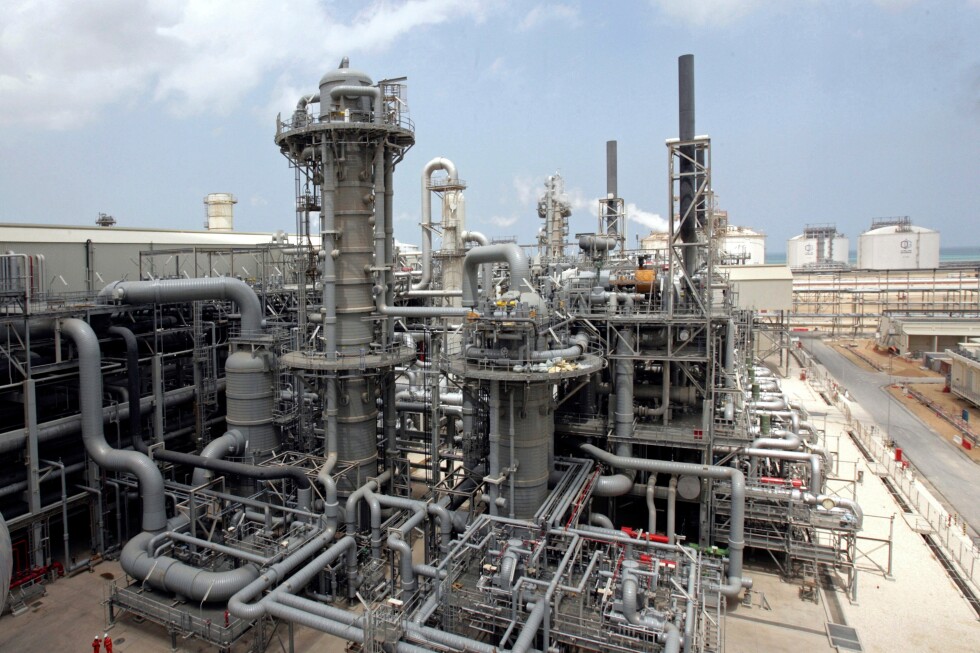
The disruption stems from damage to Qatar’s Ras Laffan facility, the world’s largest liquefied natural gas plant, which separates helium as a byproduct through cryogenic distillation. QatarGas declared force majeure on March 4, signaling its inability to fulfill contractual obligations due to circumstances beyond its control.
Market impacts are already apparent, with spot prices for helium doubling since the crisis began. While spot trading represents only about 2% of normal market activity, Kornbluth warns that contract prices “could go up a lot” if the outage persists. The full impact hasn’t yet materialized, as helium shipments that would have been filled in early March would still be in transit to Asian markets.
“Nobody’s run out of helium yet. But it’s a few weeks out when the shortage really hits,” Kornbluth cautioned.
The implications extend far beyond party balloons. Helium plays a crucial role in semiconductor manufacturing, where it’s used to cool silicon wafers during the etching process that creates transistor structures. This application is particularly significant for advanced chips used in artificial intelligence applications produced in Asian fabrication plants.
“You really want to maintain a constant temperature over the wafer. And in order to do that, you need to be able to draw heat away,” explained Jacob Feldgoise, an analyst at Georgetown University’s Center for Security and Emerging Technology. “Helium is an excellent thermal conductor.”
Jong-hwan Lee, a professor of semiconductor devices at South Korea’s Sangmyung University, emphasized that “under current semiconductor manufacturing processes, there’s no viable replacement for helium to cool wafers.”
The medical industry also depends on helium to cool superconducting magnets in MRI machines, while the space sector uses it to purge rocket fuel tanks—a demand expected to grow with increased launches by companies like SpaceX and Blue Origin.
Helium’s unique atomic properties create additional challenges for the supply chain. Its tiny molecules can escape through the smallest gaps, requiring specialized transport containers that cost approximately $1 million each and can only store helium for 35-48 days before warming causes gas to escape through pressure release valves.
“About 200 of these containers are stuck in the Middle East,” Kornbluth noted. “It’s going to take a fair amount of time to get these containers out of Qatar and to get them somewhere else where they might be able to be filled with helium.”
Beyond Qatar, the United States is the largest helium producer, accounting for 81 million cubic meters last year. Algeria and Russia are other major suppliers, though Russian helium faces sanctions from the United States and European Union.
Asian semiconductor manufacturers are particularly vulnerable to this disruption. Fitch Ratings reported that South Korea—home to Samsung Electronics and SK Hynix, the world’s largest memory chip makers—imports about 65% of its helium from Qatar. While these companies likely have several months of inventory, Lee stressed the importance of securing alternative sources.
The Seoul government has identified helium among 14 semiconductor supply chain materials requiring special monitoring due to war-related vulnerabilities. “Even disruptions affecting just a handful of materials could destabilize the entire semiconductor manufacturing process as each stage of production depends on the previous one,” Lee warned.
Despite these concerns, experts suggest a full-blown helium crisis remains unlikely. Kornbluth explained that the industry prioritizes allocation based on importance, with critical sectors like semiconductor manufacturing and medical applications at the front of the line. Additionally, since helium represents a small portion of overall chip production costs, manufacturers would likely absorb higher prices to secure necessary supplies.
Major semiconductor companies including Samsung, SK Hynix, and Taiwan Semiconductor Manufacturing Company have indicated they don’t anticipate significant immediate impacts, though they continue monitoring the situation closely.
Fact Checker
Verify the accuracy of this article using The Disinformation Commission analysis and real-time sources.

8 Comments
The damage to Qatar’s helium facilities is yet another example of how geopolitical conflicts can have far-reaching consequences for the global economy. I hope a resolution can be reached soon to restore this crucial supply.
The world’s helium supply is heavily concentrated in Qatar, so any disruptions there can have major ripple effects. This highlights the need to diversify sources and build strategic reserves of this irreplaceable gas.
Agreed. Increased investment and development of new helium production facilities in other regions could help mitigate future supply shocks.
Concerning news about the disruption to global helium supply due to the conflict in Qatar. Helium is a critical resource for many high-tech industries, so this could have far-reaching implications if the damage takes years to repair.
I wonder how this will impact prices and availability of helium-dependent products like MRIs, semiconductors, and quantum computers. Supply chain resilience is crucial for critical materials.
Helium is not often in the spotlight, but this incident shows how interdependent our modern economies are on certain critical materials. Diversifying supply sources and developing domestic/regional production capabilities should be a priority.
Absolutely. Relying too heavily on a single country or region for vital resources leaves us vulnerable to disruptions. Resilience and redundancy are key.
While the immediate impact may be on technology supply chains, the broader economic and geopolitical consequences of this conflict in the Middle East are concerning. Maintaining stable energy and resource flows is vital for global stability.