


Listen to the article
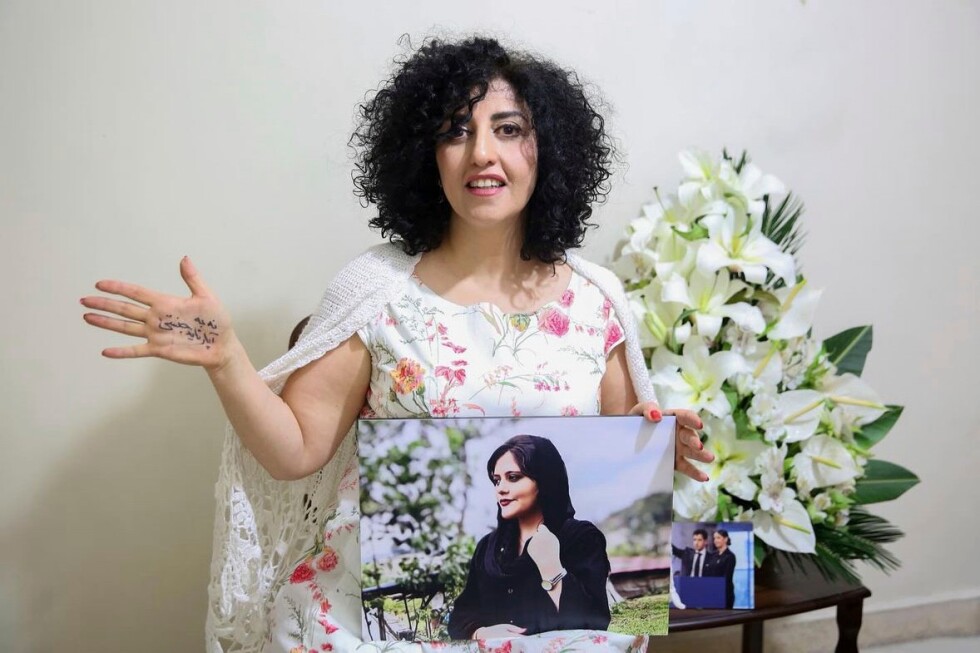
Iran has sentenced Nobel Peace Prize laureate Narges Mohammadi to more than seven years in prison following her hunger strike, according to supporters who spoke Sunday. The conviction represents the latest move in Tehran’s ongoing crackdown on dissent in the wake of nationwide protests that have seen thousands killed by security forces.
The 53-year-old activist received six years for “gathering and collusion,” an additional year and a half for “propaganda,” a two-year travel ban, and two years of internal exile to Khosf, located about 740 kilometers southeast of Tehran, according to her lawyer, Mostafa Nili, who confirmed the sentence on social media platform X.
The verdict was delivered Saturday by a Revolutionary Court in the city of Mashhad, a judicial system notorious for issuing sentences with limited opportunities for defendants to contest charges. Iranian authorities have not yet officially acknowledged the new sentence.
Mohammadi has reportedly been on a hunger strike since February 2, raising concerns about her deteriorating health. She was arrested in December while attending a ceremony honoring Khosrow Alikordi, an Iranian lawyer and human rights advocate. Video footage from the event showed Mohammadi demanding justice for Alikordi and others.
Prior to her December arrest, Mohammadi had been temporarily released from prison on medical furlough that unexpectedly extended, possibly due to pressure from activists and Western governments. Despite her precarious legal situation, she continued her activism through public protests and international media appearances, including demonstrations in front of Evin prison where she had previously been detained.
Mohammadi was already serving nearly 14 years on charges of collusion against state security and propaganda. She had been a vocal supporter of the nationwide protests sparked by the 2022 death of Mahsa Amini, which featured women openly defying government requirements to wear hijabs.
Her health has been a persistent concern. Supporters say Mohammadi suffered multiple heart attacks while imprisoned before undergoing emergency surgery in 2022. Her lawyer revealed that doctors had removed what they feared might be a cancerous bone lesion in late 2024.
“Considering her illnesses, it is expected that she will be temporarily released on bail so that she can receive treatment,” Nili wrote, though the prospects appear dim given recent government signals of a hardened stance against dissent.
The sentence comes at a sensitive moment for Iran’s international relations. The country is currently engaged in negotiations with the United States over its nuclear program, seeking to prevent military action threatened by President Donald Trump. These talks follow Trump’s bombing of Iranian atomic facilities during the 12-day Iran-Israel conflict in June.
While Iranian President Masoud Pezeshkian described recent discussions in Oman as “a step forward,” Foreign Minister Abbas Araghchi struck a more defiant tone on Sunday, emphasizing Iran’s determination to continue enriching uranium—a major point of contention with the United States.
“I believe the secret of the Islamic Republic of Iran’s power lies in its ability to stand against bullying, domination and pressures from others,” Araghchi told diplomats at a Tehran summit. “They fear our atomic bomb, while we are not pursuing an atomic bomb. Our atomic bomb is the power to say no to the great powers.”
His use of “atomic bomb” as a rhetorical device is significant. While Iran has long maintained its nuclear program is peaceful, Western nations and the International Atomic Energy Agency contend that Tehran pursued weapons development until 2003. In recent years, Iran has enriched uranium to 60% purity—just short of the 90% weapons-grade level—while officials have increasingly suggested the country might pursue nuclear weapons despite religious edicts to the contrary.
The United States has moved significant military assets to the region, including the aircraft carrier USS Abraham Lincoln, to pressure Iran and maintain readiness for potential strikes should negotiations fail.
Israeli Prime Minister Benjamin Netanyahu is expected in Washington this week, with Iran likely to dominate discussions.
President Pezeshkian, who directed Araghchi to pursue talks with American officials, wrote on X: “The Iran-U.S. talks, held through the follow-up efforts of friendly governments in the region, were a step forward. Dialogue has always been our strategy for peaceful resolution. … The Iranian nation has always responded to respect with respect, but it does not tolerate the language of force.”
The timing of future negotiations remains unclear, though Trump has suggested Iran is eager to reach an agreement, stating: “Iran looks like they want to make a deal very badly—as they should.”
Fact Checker
Verify the accuracy of this article using The Disinformation Commission analysis and real-time sources.

30 Comments
If AISC keeps dropping, this becomes investable for me.
Good point. Watching costs and grades closely.
Good point. Watching costs and grades closely.
If AISC keeps dropping, this becomes investable for me.
Good point. Watching costs and grades closely.
Good point. Watching costs and grades closely.
Interesting update on Iran sentences Nobel laureate Narges Mohammadi to 7 more years in prison. Curious how the grades will trend next quarter.
Interesting update on Iran sentences Nobel laureate Narges Mohammadi to 7 more years in prison. Curious how the grades will trend next quarter.
Good point. Watching costs and grades closely.
I like the balance sheet here—less leverage than peers.
Good point. Watching costs and grades closely.
Good point. Watching costs and grades closely.
Nice to see insider buying—usually a good signal in this space.
Exploration results look promising, but permitting will be the key risk.
Good point. Watching costs and grades closely.
Good point. Watching costs and grades closely.
If AISC keeps dropping, this becomes investable for me.
Interesting update on Iran sentences Nobel laureate Narges Mohammadi to 7 more years in prison. Curious how the grades will trend next quarter.
Good point. Watching costs and grades closely.
Good point. Watching costs and grades closely.
Uranium names keep pushing higher—supply still tight into 2026.
Interesting update on Iran sentences Nobel laureate Narges Mohammadi to 7 more years in prison. Curious how the grades will trend next quarter.
Good point. Watching costs and grades closely.
Interesting update on Iran sentences Nobel laureate Narges Mohammadi to 7 more years in prison. Curious how the grades will trend next quarter.
Good point. Watching costs and grades closely.
Uranium names keep pushing higher—supply still tight into 2026.
Good point. Watching costs and grades closely.
The cost guidance is better than expected. If they deliver, the stock could rerate.
Good point. Watching costs and grades closely.
Good point. Watching costs and grades closely.