


Listen to the article
Iran introduced a new pricing tier for its subsidized gasoline on Saturday, the first major adjustment since a 2019 price hike that triggered nationwide protests and a deadly crackdown. The cautious move comes as the government attempts to manage escalating costs amid economic sanctions and a depreciating currency.
The revised structure adds a third pricing level to the country’s long-running subsidy system. Motorists can still purchase their first 60 liters (15 gallons) per month at the heavily subsidized rate of 15,000 rials per liter, approximately 1.25 U.S. cents. The next 100 liters (26 gallons) remain priced at 30,000 rials per liter, or about 2.5 cents.
The new pricing tier affects consumption beyond these limits, with additional fuel now costing 50,000 rials per liter, roughly 4 cents. Even with this increase, Iranian gasoline remains among the world’s cheapest, highlighting the significant subsidies the government provides.
“It is a start for amending the trend of fuel consumption,” Oil Minister Mohsen Paknejad told journalists, suggesting this adjustment may be the beginning of a longer-term reform strategy. Officials’ comments indicate the government plans to review fuel prices quarterly, potentially implementing steeper increases in the future.
The International Energy Agency ranked Iran as having the world’s second-highest energy subsidy costs in 2022, behind only Russia. Iranian officials acknowledge that tens of billions of dollars annually go toward artificially maintaining low energy prices, with the IEA estimating Iran’s oil subsidies at $52 billion that year.
This financial burden has grown increasingly difficult to sustain as Iran faces mounting economic challenges. International sanctions related to Tehran’s nuclear program have severely restricted the country’s oil exports and access to global financial markets, while the national currency continues to depreciate rapidly.
Tehran-based economist Hossein Raghfar offered a critical assessment of the government’s subsidy policies, noting that gasoline prices have increased 15-fold since 2009. “Not only did it fail in lessening the budget deficit, but it also trapped the country’s economy in a negative loop of inflation and budget deficit,” Raghfar said.
The timing of this modest adjustment likely reflects the government’s caution after Israel launched a 12-day military campaign against Iran in June. Officials appear reluctant to risk another round of domestic unrest while the country faces external threats.
The memory of the 2019 gasoline price hike remains fresh for both authorities and citizens. That increase—a sudden 50% jump in subsidized prices and a 300% rise for purchases beyond quota—sparked nationwide demonstrations across 100 cities and towns. Some protesters burned gas stations and banks, and the subsequent security crackdown killed at least 321 people, according to Amnesty International, with thousands more detained.
Despite the economic rationale for subsidy reform, many Iranians view affordable gasoline as a birthright. The history of resistance to price increases dates back to 1964, when a hike under the Shah’s rule forced the deployment of military vehicles after taxi drivers went on strike.
For millions of Iranians, fuel prices directly impact their livelihoods. With 25 million vehicles on the road and reportedly more than 8 million people working as taxi drivers through online platforms—nearly 10% of the population—the gasoline subsidy effectively functions as an employment program.
Critics warn that every 10,000-rial increase in gasoline prices could trigger a 5% rise in inflation, further burdening a population already struggling with an annual inflation rate around 40%.
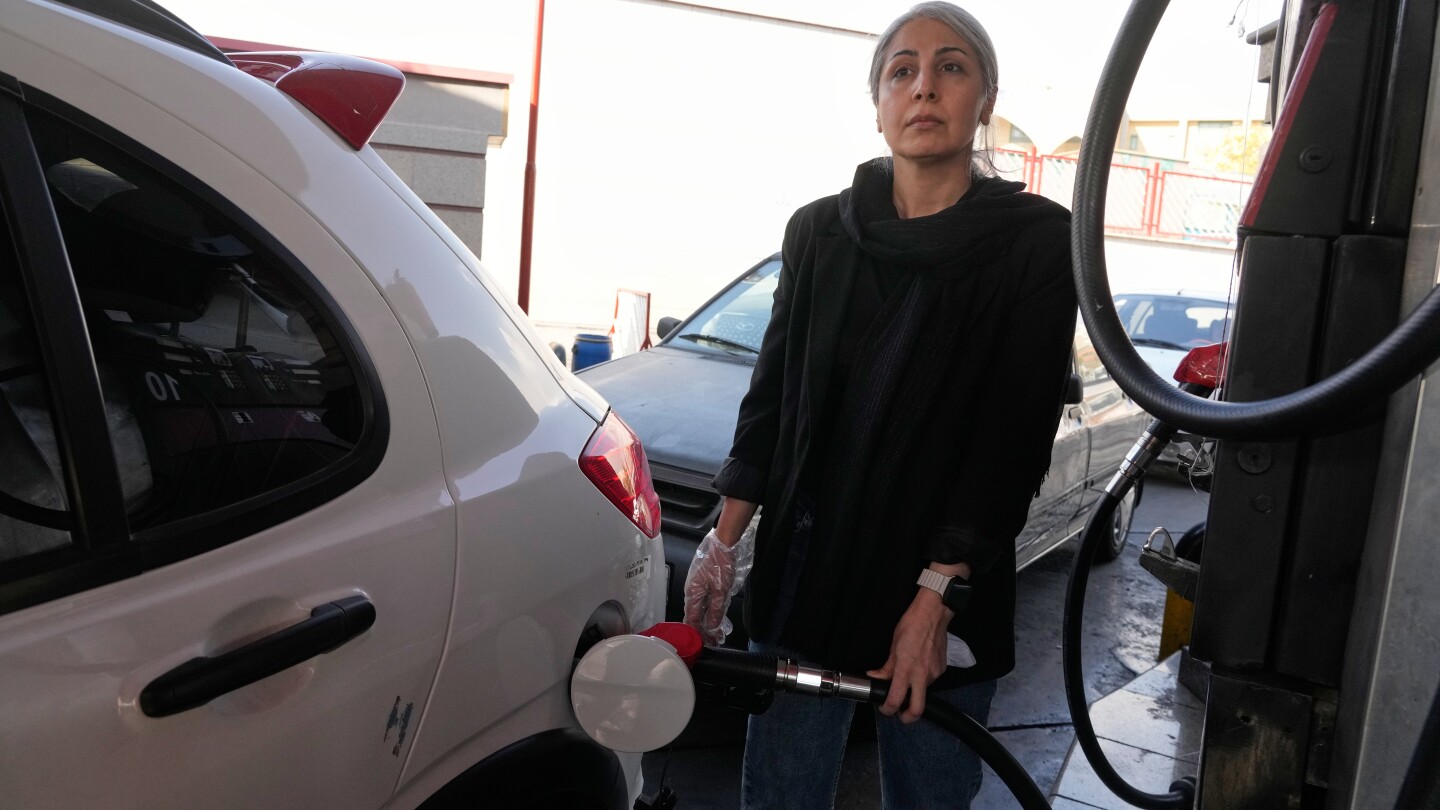
At gas stations in northern Tehran on Saturday morning, the scene remained calm as drivers refueled. Police vehicles were stationed nearby, but no significant protests or disruptions were reported.
Public reactions reflected a mix of resignation and pragmatism. “Our discontent has no result,” said Saeed Mohammadi, a teacher who drives a taxi in his spare time to supplement his income. “The government does whatever it likes. They don’t ask people if they agree or not.”
Others, like bank teller Hamid Rezapour, recognized the economic necessity behind the decision. “It needs more money to pay for public needs,” he said of the government. “To me, it is an indirect tax though in a messy economy it barely works.”
Fact Checker
Verify the accuracy of this article using The Disinformation Commission analysis and real-time sources.

17 Comments
Curious to see if this price adjustment is just the first step in a broader fuel subsidy reform plan. The government will need to weigh the economic benefits against the potential for social unrest.
Absolutely. Gradual, well-communicated changes may be more palatable than sudden, drastic moves. The government will have to strike the right balance.
Interesting move by Iran to raise gasoline prices. Reducing subsidies could help manage costs, but will likely face public resistance as we saw in 2019. Curious to see how this pricing adjustment is implemented and received.
Yes, the government seems to be walking a fine line – trying to manage economic pressures while avoiding a repeat of the 2019 protests. It will be important to monitor public reaction to these changes.
Iran’s gasoline subsidies have been a major budget item for years. While this price hike may help manage costs, the government will need to carefully monitor the public reaction and impact on inflation.
The cautious, tiered approach to this gasoline price increase suggests the Iranian government is trying to find a middle ground between fiscal pressures and public reaction. Careful monitoring of the impact will be crucial.
Absolutely. Any major changes to fuel subsidies in Iran will require a delicate balancing act. The government will need to weigh economic realities against social stability.
This pricing change is a cautious move by the Iranian government, likely aimed at managing costs while avoiding a repeat of the 2019 protests. It will be interesting to see how the public reacts and if further adjustments are made.
Reducing gasoline subsidies is a difficult political decision, but one that Iran may need to consider further to ease fiscal pressures. The government will have to carefully navigate public sentiment and economic impacts.
Agreed. Any major changes to fuel pricing in Iran will require a nuanced approach to balance economic realities and social stability. Gradual, transparent reforms may be the best path forward.
Iran’s gasoline remains among the world’s cheapest, even with this price hike. The government is clearly trying to manage costs while avoiding a repeat of the 2019 protests. It will be interesting to see if this is the start of a broader subsidy reform effort.
This price hike comes at a challenging time for Iran, with economic sanctions and a depreciating currency adding pressure. Careful management will be key to avoiding another round of protests.
The new pricing tier seems designed to protect lower-income consumers while gradually adjusting prices for higher levels of consumption. A measured approach, but one that will likely face scrutiny.
Yes, the tiered system is an interesting approach, though it remains to be seen how effective it will be in practice. Balancing affordability and fiscal constraints is no easy task.
This price adjustment is a significant move by the Iranian government, even if gasoline remains heavily subsidized. Curious to see if further reforms are in the works, and how the public will respond to this change.
Iran’s gasoline is still among the world’s cheapest, even with this price increase. Curious to see if this is just the first step in a broader fuel subsidy reform strategy, or if the government will be cautious in making further adjustments.
Agreed. The government will need to balance fiscal pressures with social stability when it comes to fuel pricing. Gradual, measured changes may be the prudent approach.