


Listen to the article
Iranian Military Helicopter Crashes into Market, Killing Four
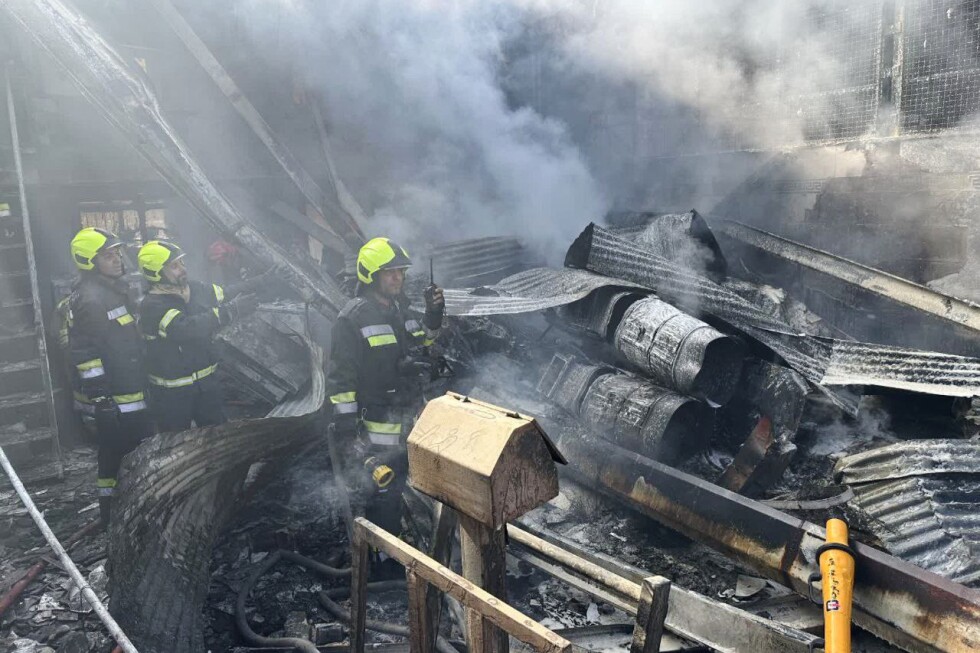
A military helicopter crashed into a busy fruit and vegetable market in central Iran on Tuesday, killing at least four people including the aircraft’s crew, according to Iranian state media reports.
The accident occurred in Dorcheh, a town approximately 330 kilometers (205 miles) south of Tehran in Isfahan province. State television broadcast footage showing debris scattered throughout the market and smoke rising from the crash site.
According to state television, the army helicopter was conducting a training exercise when the incident occurred. Both the pilot and co-pilot perished in the crash. Iran’s semiofficial Fars news agency reported that two civilians on the ground also died as a result of the accident.
Isfahan province holds strategic importance in Iran’s military and nuclear infrastructure. The province houses a major Iranian air base and contains nuclear facilities, including a site that was targeted by U.S. forces during the Iran-Israel conflict in June of this year.
This marks the second military aircraft crash in Iran in less than a week. Just days earlier, an F-4 fighter jet went down near the western city of Hamedan, resulting in the death of one pilot.
The incidents highlight ongoing concerns about Iran’s aging air fleet. Western sanctions have severely restricted the country’s ability to acquire replacement parts for both military and commercial aircraft, forcing Iran to maintain decades-old helicopters and planes well beyond their intended service life.
Aviation experts have long warned about the safety implications of operating such dated equipment. Iran’s aviation sector has suffered numerous fatal accidents in recent years, with many attributed to mechanical failures and maintenance challenges stemming from the inability to source proper components.
The sanctions regime, particularly measures targeting Iran’s aerospace sector, has created a difficult situation for Iranian aviation authorities. Maintenance crews often resort to cannibalizing parts from grounded aircraft or seeking components through third-party channels, which sometimes results in substandard replacements being installed.
Military aviation faces similar challenges. Iran’s air force still operates many American-made aircraft acquired before the 1979 Islamic Revolution, including F-4 Phantoms, F-5 Tigers, and various helicopter models. Without access to original equipment manufacturers or authorized service centers, maintaining these aircraft becomes increasingly difficult with each passing year.
Iranian authorities have attempted to mitigate these issues by developing domestic aerospace capabilities and seeking alternative suppliers from countries like Russia and China. However, these efforts have not fully addressed the fundamental challenges posed by sanctions.
The market crash in Dorcheh also underscores the risks posed to civilian populations when military training operations are conducted near populated areas. While details about the specific circumstances of the crash remain limited, witness accounts suggest the helicopter experienced mechanical difficulties before plummeting into the market.
Local emergency services responded quickly to the scene, but the impact and resulting fire left little chance of survival for those directly affected.
Iranian military officials have announced an investigation into the cause of the crash, though such inquiries typically yield limited public information. The country’s civil aviation authority may also participate in the investigation, particularly regarding the impact on civilian infrastructure.
As Iran continues to navigate international tensions and sanctions, the human cost of operating aging military equipment remains a persistent challenge for the country’s armed forces and the civilians who sometimes find themselves in harm’s way.
Fact Checker
Verify the accuracy of this article using The Disinformation Commission analysis and real-time sources.

6 Comments
This is concerning, especially given the strategic importance of the Isfahan region for Iran’s military and nuclear activities. I wonder if there were any security implications or if it was simply a tragic accident.
That’s a good point. The timing and location of the crash do raise some questions. It will be important for the investigation to carefully examine all possibilities.
A helicopter crash in a civilian area is always a very serious matter. I’m curious to learn more about the circumstances surrounding this incident and whether there were any broader security implications.
This is a terrible tragedy. My heart goes out to the victims and their families. I hope the investigation can shed light on what went wrong and how to prevent similar accidents in the future.
Tragic incident. Hopefully the authorities will investigate thoroughly to determine the cause and take necessary measures to prevent such accidents in the future. My condolences to the families of those who lost their lives.
Crashes of military aircraft are always worrying, as they can have wider ramifications. I hope the Iranian authorities are transparent about the findings of their investigation into this incident.