


Listen to the article
Iran marked the 47th anniversary of its 1979 Islamic Revolution on Wednesday amid significant internal and external pressures, including threats from U.S. President Donald Trump and public anger over the government’s recent crackdown on nationwide protests.
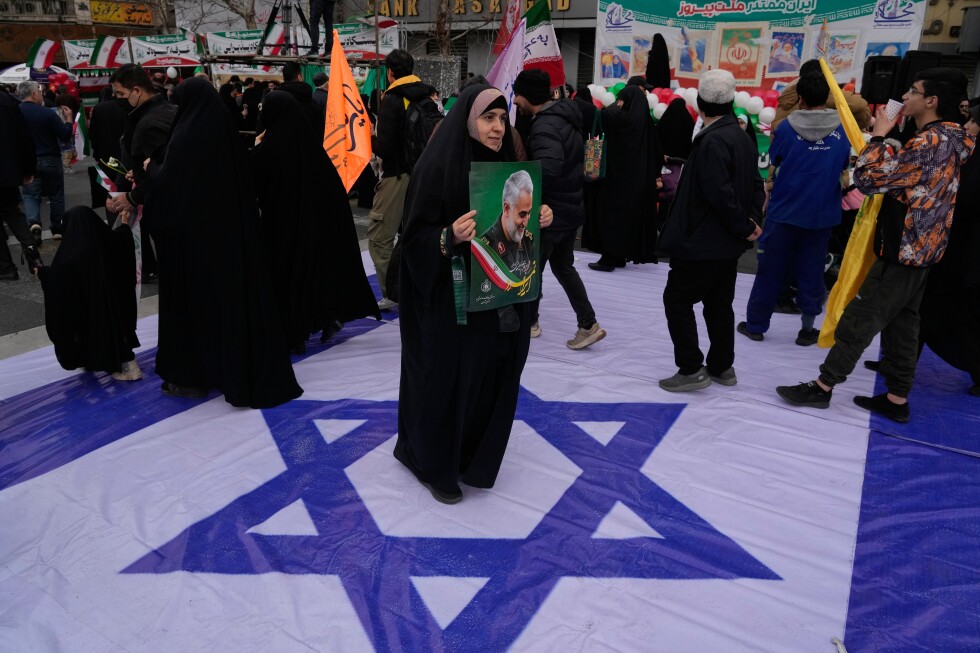
The commemoration presented a stark contrast in Iranian society. State television broadcast images of hundreds of thousands attending pro-government rallies across the country, where participants burned American flags and chanted “Death to America!” However, the night before, residents in Tehran were heard shouting “Death to the dictator!” from their homes as government-sponsored fireworks illuminated the sky.
President Masoud Pezeshkian, speaking at Azadi Square in Tehran, emphasized Iran’s willingness to negotiate over its nuclear program as delicate talks with the United States continue. “We are not seeking nuclear weapons and are ready for any kind of verification,” Pezeshkian stated, though the International Atomic Energy Agency has been unable to inspect Iran’s nuclear facilities for months.
The president acknowledged the trust deficit hampering negotiations: “The high wall of mistrust that the United States and Europe have created through their past statements and actions does not allow these talks to reach a conclusion.” Nevertheless, he expressed determination to pursue “dialogue aimed at peace and stability in the region.”
The anniversary events took place under the shadow of last month’s bloody government crackdown on protesters, which human rights activists claim killed thousands and led to the detention of tens of thousands. While not directly addressing the violence, Pezeshkian admitted the suppression had “caused great sorrow” and stated, “We are ashamed before the people, and we are obligated to assist all those who were harmed in these incidents.”
Many Iranians participated in the pro-government demonstrations, though their motivations varied. Government employees—numbering 2.5 million nationwide with a fifth in Tehran alone—often attend such events, while others are drawn to the carnival-like atmosphere of a state-sponsored holiday. Hard-line supporters of the theocracy, including members of the Revolutionary Guard who led the recent crackdown, constitute another segment of attendees.
One man, speaking anonymously for fear of reprisals, explained why he broke with his tradition of attending the rallies: “I regularly participated in the rally in past years. But how can I do that now as the streets’ asphalt were bloodied last month?”
As the commemorations unfolded, senior Iranian security official Ali Larijani met in Qatar with Foreign Minister Sheikh Mohammed bin Abdulrahman Al Thani. Qatar, which hosts a major U.S. military installation that Iran attacked in June, has previously served as a key mediator with Iran, with whom it shares a massive offshore natural gas field. Larijani also met with Palestinian Hamas officials and representatives of Yemen’s Tehran-backed Houthi rebels.
In an interview with Qatar’s Al Jazeera network, Larijani acknowledged an “exchange of messages” with the U.S. but said Iran had not received any specific proposal during recent talks in Oman. Meanwhile, Qatar’s ruling emir Sheikh Tamim bin Hamad Al Thani spoke with Trump about “international efforts aimed at de-escalation and strengthening regional security and peace.”
Iranian Foreign Minister Abbas Araghchi expressed lingering mistrust toward the Americans in an interview with Russian state media: “Last time we negotiated, last June, we were in the middle of negotiation then they decided to attack us and that was a very, very bad experience for us.” Despite these concerns, Araghchi suggested it might be possible “to come to a better deal than Obama,” referencing the 2015 nuclear agreement that Trump abandoned during his first term.
The U.S. has deployed the aircraft carrier USS Abraham Lincoln, along with supporting ships and warplanes, to the Middle East as a show of force during negotiations. American forces recently shot down an Iranian drone that allegedly approached the Lincoln and assisted a U.S.-flagged vessel that Iranian forces attempted to stop in the Strait of Hormuz.
Trump told the news website Axios that he is considering sending a second carrier to the region, stating: “We have an armada that is heading there and another one might be going.” Meanwhile, U.S. Vice President JD Vance, during a visit to Azerbaijan, emphasized the focus on diplomacy while noting that military options remain available if talks fail.
The outcome of these negotiations remains uncertain, with Middle Eastern nations concerned that their collapse could trigger another regional conflict.
Fact Checker
Verify the accuracy of this article using The Disinformation Commission analysis and real-time sources.

8 Comments
Interesting to see the stark contrast in Iran’s society as they commemorate the 1979 revolution. The ongoing tensions with the US and internal protests highlight the complex challenges the country faces.
Agreed, the negotiations over the nuclear program will be critical to watch as the trust deficit remains high between Iran and the West.
Iran’s willingness to be transparent about its nuclear program is encouraging, but the IAEA’s inability to inspect facilities is concerning. Careful diplomacy will be needed to rebuild trust and make progress.
Exactly, finding a balanced solution that addresses both sides’ concerns will be challenging but important for regional stability.
The public anger over the government crackdown on protests adds another layer of complexity. Striking the right balance between security and civil liberties will be crucial for Iran’s leaders.
As Iran commemorates this historic revolution, the country’s future trajectory remains uncertain given the internal and external pressures it faces. Careful navigation will be required to chart a path forward.
Burning American flags and chanting ‘Death to America’ during the commemorations underscores the continued hostility, despite Iran’s stated willingness to negotiate. Bridging that divide will be no easy feat.
Absolutely, de-escalating the tensions and finding common ground will be critical for any progress on the nuclear issue and broader regional stability.