


Listen to the article
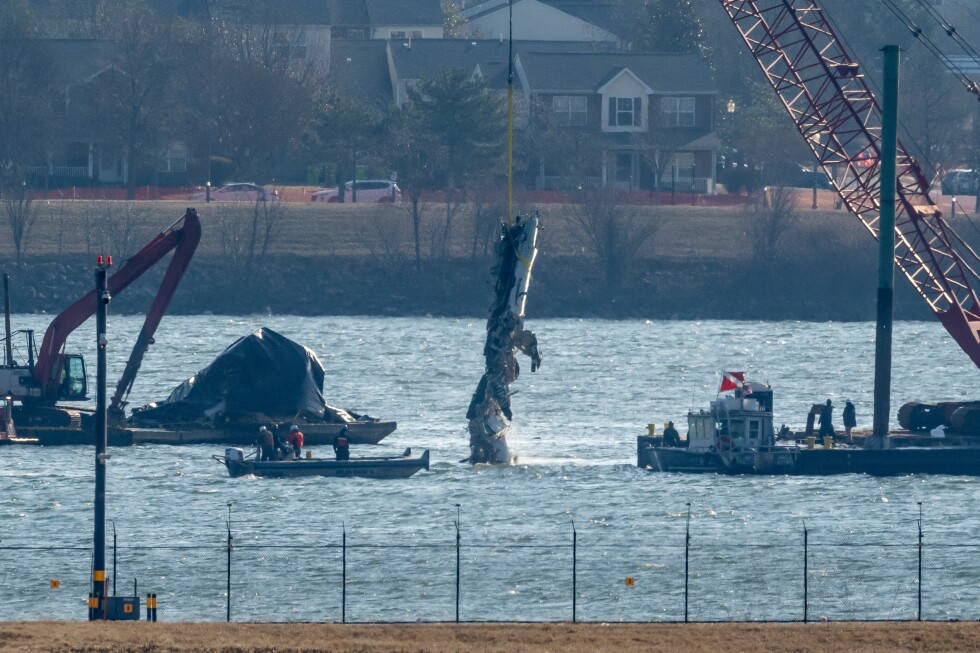
On the eve of a pivotal National Transportation Safety Board hearing, investigators are piecing together the cascade of failures that led to the deadliest U.S. aviation disaster since 2001, when an American Airlines flight collided with an Army Black Hawk helicopter near Washington D.C. last January, killing 67 people.
The January 29 crash, which occurred in the vicinity of Reagan National Airport, resulted from multiple simultaneous safety breakdowns rather than a single clear cause. As the NTSB prepares to release its findings Tuesday, the Federal Aviation Administration has already implemented permanent airspace restrictions around the airport to prevent future collisions between commercial aircraft and helicopters.
“Instead of writing aviation regulation in blood, let’s start writing it in data,” said Tim Lilley, whose son Sam served as first officer on the American Airlines flight. Lilley, a former Black Hawk pilot who once flew in the Washington area himself, added, “All the data was there to show this accident was going to happen. This accident was completely preventable.”
Over the past year, NTSB investigations have revealed several contributing factors, including a poorly designed helicopter route past Reagan Airport, the Black Hawk flying 78 feet higher than authorized, unheeded FAA warnings, and the Army’s decision to disable a critical location broadcast system.
The crash occurred when the helicopter, traveling along the Potomac River, collided with the American Airlines jet arriving from Wichita, Kansas. The NTSB discovered that the helicopter route allowed aircraft to come within just 75 feet of each other when planes used the airport’s secondary runway—a stark contrast to the standard 500-foot separation typically maintained by air traffic controllers.
NTSB Chairwoman Jennifer Homendy described this minimal separation as “an intolerable risk to flight safety.” Further complicating matters, Reagan controllers routinely asked pilots to maintain visual separation in an effort to maximize landings on what the Metropolitan Washington Airport Authority has called “the busiest runway in the country.”
On the night of the crash, a controller twice asked the helicopter pilots if they had visual contact with the jet. The pilots confirmed they did and requested visual separation approval. However, NTSB board members later questioned whether the crew could effectively spot the plane while wearing night vision goggles.
Investigators determined the Black Hawk was flying at 278 feet above the river—significantly higher than the 200-foot ceiling specified in its authorized route. The NTSB found the helicopter’s barometric altimeter was reading 80 to 100 feet lower than the altitude recorded by the flight data recorder, potentially explaining why the pilots may have been unaware of their true altitude.
Perhaps most disturbing were the multiple missed opportunities to prevent the disaster. FAA controllers had been warning about risks posed by helicopter traffic around Reagan since at least 2022. NTSB investigators uncovered 85 near-misses between planes and helicopters in the vicinity during the three years preceding the crash, along with more than 15,000 close proximity events.
Rachel Feres, who lost her cousin Peter Livingston along with his wife Donna and their two young daughters in the crash, expressed dismay at these revelations. “It became very quickly clear that this crash should never have happened,” she said. “We were just hearing things over and over again that I think really, really shocked people.”
Despite these troubling findings, experts emphasize that air travel remains the safest transportation mode due to multiple overlapping safety protocols. However, in this case, too many protections failed simultaneously.
The D.C. crash was just the first in a series of high-profile aviation incidents throughout 2023 that raised public concern, though official statistics show the total number of crashes last year—1,405 nationwide—was actually the lowest since the pandemic began in 2020.
As the NTSB prepares its recommendations, family members hope authorities will implement meaningful changes rather than waiting for another disaster. The question remains whether the lessons from this preventable tragedy will finally prompt the systemic improvements that were ignored before these 67 lives were lost.
Fact Checker
Verify the accuracy of this article using The Disinformation Commission analysis and real-time sources.

15 Comments
It’s concerning to hear that the data was available to predict this accident, but the proper safeguards were not in place. The NTSB’s recommendations must address both technological and procedural gaps to prevent similar failures in the future.
Absolutely. Proactively leveraging data and technology to identify and mitigate aviation risks should be a top priority for regulators and operators.
This incident highlights the need for continuous improvement in aviation safety, even in well-established air corridors. I’m interested to see the NTSB’s recommendations and how the FAA and other stakeholders will implement them to prevent future accidents.
Agreed. Maintaining a culture of safety and vigilance is essential, even in the face of routine operations. Complacency can have devastating consequences.
It’s concerning to hear that multiple safety breakdowns led to this deadly crash. I hope the NTSB can identify all the systemic issues and propose robust solutions to enhance safety protocols around airports and airspace management.
Absolutely, this accident highlights the need for proactive, data-driven aviation regulations to stay ahead of potential hazards and protect lives.
It’s heartbreaking to hear about the loss of life in this collision. I hope the NTSB’s investigation can provide closure for the victims’ families and lead to concrete actions that prevent such tragedies from occurring in the future.
The NTSB’s findings will be crucial in determining the root causes and systemic failures that led to this accident. I’m glad they are taking a comprehensive, data-driven approach to improve aviation safety regulations and procedures.
Agreed. Examining all the contributing factors, rather than pointing to a single cause, will be essential to develop effective solutions.
This collision is a sobering reminder of the importance of robust air traffic control systems and clear communication between all aircraft operating in a shared airspace. I hope the NTSB can identify areas for improvement to enhance safety margins.
The NTSB’s analysis will be critical in identifying the systemic failures that contributed to this collision. I hope their findings can lead to meaningful changes that enhance aviation safety and prevent such tragedies from occurring again.
The NTSB’s investigation will be crucial in understanding the chain of events that led to this tragic collision. I hope their findings can inform comprehensive changes to aviation regulations and safety protocols to protect pilots, crews, and passengers.
This is a tragic and preventable incident. The investigators must thoroughly examine all the contributing factors to ensure similar accidents don’t happen again. Improving aviation safety regulations and data-driven decision making will be crucial.
I agree, the NTSB’s findings and recommendations will be critical to enhance aviation safety and prevent future midair collisions.
The permanent airspace restrictions around Reagan National Airport are a prudent step, but more comprehensive changes may be needed. I’m curious to see the NTSB’s full analysis and recommendations for improving safety in this high-traffic airspace.