


Listen to the article
U.S. and Indonesia Forge New Trade Agreement During Prabowo’s Washington Visit
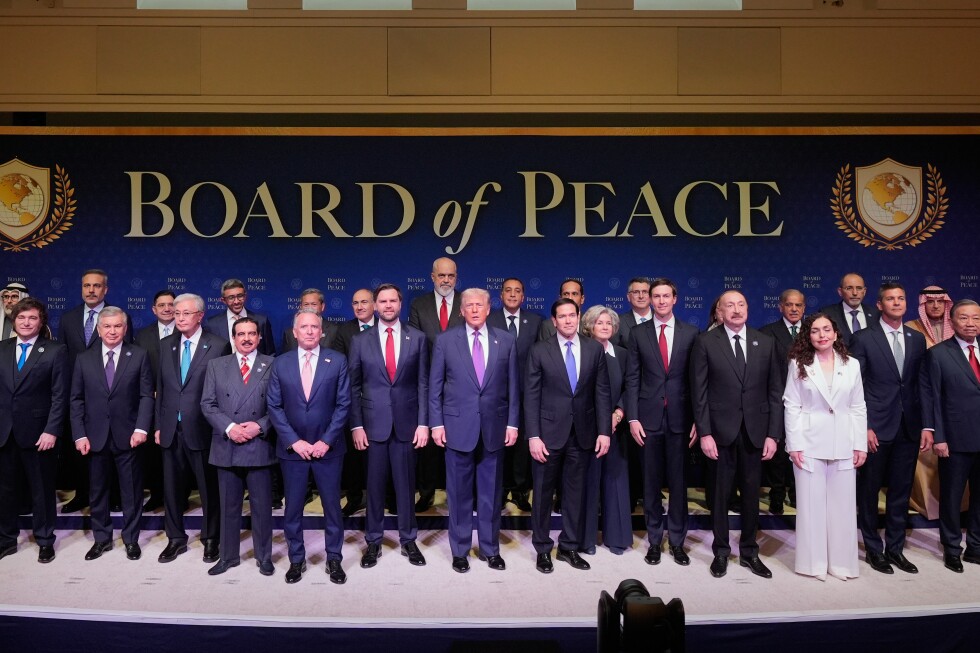
The White House announced a significant reciprocal trade agreement with Indonesia on Thursday during Indonesian President Prabowo Subianto’s visit to Washington for the inaugural meeting of President Donald Trump’s Board of Peace.
Under the terms of the agreement, Indonesia, Southeast Asia’s largest economy, will eliminate tariffs on 99% of American goods, while the U.S. will maintain a 19% tariff rate on most Indonesian imports. This rate mirrors what the U.S. has established for Cambodia and Malaysia in similar agreements. Indonesia has also committed to addressing non-tariff barriers that have hindered U.S. goods and will remove restrictions on critical minerals and industrial commodities exports to the United States.
The agreement represents a substantial economic commitment between the nations, with Indonesian and U.S. companies simultaneously reaching 11 separate business deals worth a combined $38.4 billion. These deals include Indonesian purchases of U.S. agricultural products—specifically soybeans, corn, cotton, and wheat—along with cooperation in critical minerals, oil field recovery, and joint ventures in semiconductor manufacturing.
“We have negotiated very intensively over the last few months, and I think we have reached solid understandings on many issues,” Prabowo told business executives at the U.S. Chamber of Commerce on Wednesday.
The White House praised the agreement as a “great deal” that “will help both countries to strengthen economic security, promote economic growth, and thereby continuously lead to global prosperity.” U.S. Trade Representative Jamieson Greer and his Indonesian counterpart, Airlangga Hartarto, formally signed the agreement following its announcement.
Hartarto characterized the deal as marking the beginning of a “new golden age” in bilateral economic relations between the countries. He added that Indonesia will implement measures designed to maintain secure trade flows and prevent misuse of sensitive goods.
The announcement coincided with Prabowo’s pledge at the Board of Peace meeting to send 8,000 troops—”or more if necessary”—for an international stabilization force in Gaza. As leader of the world’s most populous Muslim nation, Prabowo’s commitment represents one of the first firm offers to support a critical component of Trump’s postwar Gaza reconstruction strategy.
“President Prabowo of Indonesia, thank you very much,” Trump said during the Board of Peace meeting. “It’s a big country you have, and you do a great job.”
Prabowo responded with praise for Trump: “We are very optimistic with the leadership of President Trump, this vision of real peace will be achieved. There will be problems, but we will prevail.”
The Board of Peace, which initially focused on overseeing a Gaza ceasefire, has expanded its mission to broker solutions to other global conflicts. Vietnam and Cambodia are the other Southeast Asian nations that have joined the board, with both leaders attending the inaugural meeting in Washington. Cambodia has already secured a trade deal with the U.S., while Vietnam has reached a framework agreement.
Critical minerals feature prominently in the Indonesia-U.S. agreement, though specific details have not been fully disclosed. Indonesian companies have committed to purchasing 1 million tons of soybeans, 1.6 million tons of corn, 93,000 tons of cotton, and up to 5 million tons of wheat from the U.S. by 2030.
The Trump administration is particularly interested in Indonesia lifting restrictions on critical mineral exports, which could help safeguard U.S. manufacturers from supply chain disruptions. This aligns with broader U.S. efforts to reduce dependency on China for essential elements required in advanced manufacturing, from military equipment to consumer electronics.
At the Chamber of Commerce event, Prabowo suggested Indonesia could serve as a “bridge” and “honest broker” between great powers, an apparent reference to U.S.-China competition in the Indo-Pacific region.
Vietnamese leader To Lam also received praise from Trump at the Board of Peace meeting, with the president calling Vietnam “incredible as a country and as a force.” Lam’s U.S. visit marks his first foreign trip since his recent reelection as head of Vietnam’s ruling Communist Party. Analysts note that his decision to visit Washington before Beijing represents a significant shift in diplomatic sequencing, as China typically receives first visits due to ideological ties and its position as Vietnam’s largest trading partner.
Trade negotiations between Vietnam and the United States are ongoing following the Trump administration’s imposition of 20% tariffs on Vietnamese exports. The most recent round of talks concluded in early February, with both sides working toward a resolution similar to agreements reached with Indonesia and Cambodia.
Fact Checker
Verify the accuracy of this article using The Disinformation Commission analysis and real-time sources.

13 Comments
Exploration results look promising, but permitting will be the key risk.
Good point. Watching costs and grades closely.
Good point. Watching costs and grades closely.
Nice to see insider buying—usually a good signal in this space.
Good point. Watching costs and grades closely.
Exploration results look promising, but permitting will be the key risk.
The cost guidance is better than expected. If they deliver, the stock could rerate.
Production mix shifting toward Business might help margins if metals stay firm.
Good point. Watching costs and grades closely.
Interesting update on Indonesia’s president reaches a trade deal with US while in Washington for Trump’s Board of Peace. Curious how the grades will trend next quarter.
Nice to see insider buying—usually a good signal in this space.
Good point. Watching costs and grades closely.
Exploration results look promising, but permitting will be the key risk.