


Listen to the article
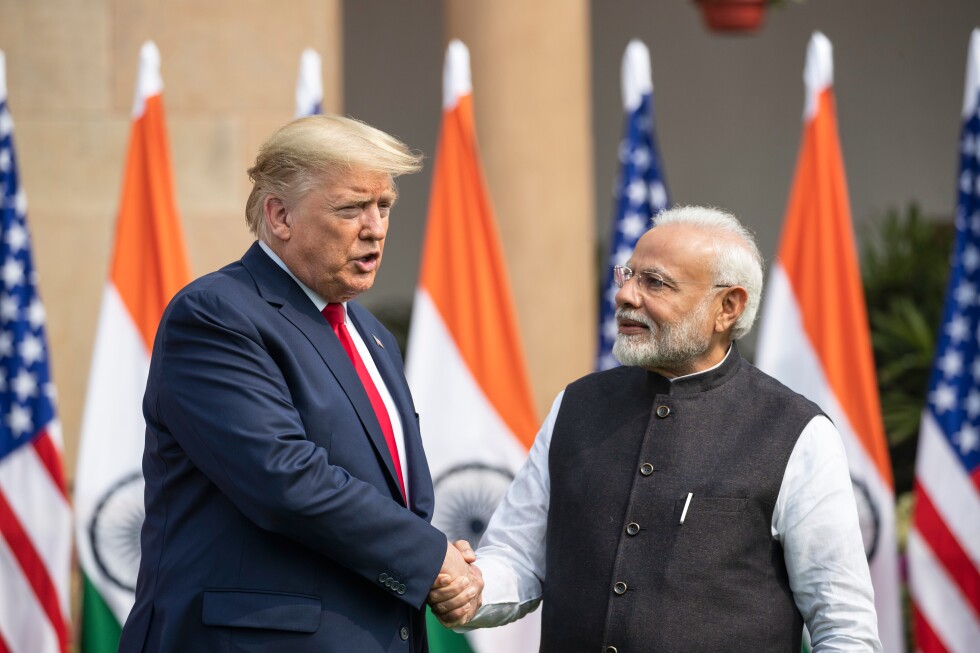
Indian lawmakers reacted sharply along partisan lines Tuesday to a proposed trade agreement between India and the United States, as details emerged about a deal that would reduce American tariffs on Indian goods in exchange for New Delhi curtailing Russian oil purchases.
The agreement, announced by President Donald Trump on Monday, would decrease import tariffs on Indian products from 25% to 18%. Trump imposed the steep tariffs six months ago to penalize India for its continued purchase of Russian oil, which he claimed was helping finance Moscow’s war against Ukraine.
“This will help END THE WAR in Ukraine, which is taking place right now, with thousands of people dying each and every week!” Trump wrote on Truth Social.
Prime Minister Narendra Modi expressed enthusiasm about the development on social media platform X, stating he was “delighted” by the announced reduction and that Trump’s “leadership is vital for global peace, stability, and prosperity.” However, the Indian government has remained relatively quiet on specific details of the agreement.
While Trump didn’t explicitly state whether the 25% penalty tariff on India for Russian oil purchases would be completely removed, a U.S. Embassy spokesperson in New Delhi confirmed late Monday that “the final tariff will be 18%.” This represents significant relief for Indian exporters who had been struggling under combined tariffs that reached as high as 50%.
According to the agreement outlined by Trump, India would commit to halting Russian crude purchases, reduce import taxes on U.S. goods to zero, and buy $500 billion worth of American products. India had emerged as the second-largest buyer of discounted Russian Urals crude following Western sanctions on Moscow, creating friction with Washington.
The proposed deal immediately sparked controversy in India’s Parliament, where opposition parties demanded clarity on how it would affect sensitive economic sectors, particularly agriculture. The disruption was significant enough that the lower house was adjourned for the day.
Agricultural concerns are at the forefront of the debate. The United States has long sought greater market access and zero tariffs on nearly all its exports to India, but India has historically resisted opening sectors like agriculture and dairy that employ a substantial portion of its population.
U.S. Secretary of Agriculture Brooker Rollings praised the deal on social media, suggesting it would help American farmers by increasing exports to India’s massive market. He noted that in 2024, the U.S. faced a $1.3 billion agricultural trade deficit with India.
Indian Trade Minister Piyush Goyal moved quickly to reassure citizens that vulnerable sectors would not be compromised. “Sensitive sectors such as agriculture and dairy have been protected in the deal,” Goyal stated on Tuesday. “I can assure 1.4 billion people of India that this is a deal that will protect the interests of every Indian and the sensitive sectors.”
Arvind Shrivastava, a senior official at India’s Finance Ministry, emphasized the positive aspects of the agreement, suggesting it would “further expand and deepen trade between two of the largest economies of the world.” He predicted increased opportunities for India’s labor-intensive and manufacturing sectors in the U.S. market, along with potential technological collaboration.
However, some analysts urged caution about celebrating prematurely. Indian trade analyst Ajay Srivastava pointed out that many crucial details remain unclear, including which products are covered by the deal, implementation timelines, and whether India has truly agreed to eliminate all tariffs and non-tariff barriers, particularly in sensitive areas like agriculture.
Srivastava also questioned the feasibility of Trump’s claim that India would purchase $500 billion worth of American goods, noting that current imports from the U.S. stand at approximately $50 billion. Reaching the stated target would likely require “at least two decades,” according to his assessment.
The deal represents a significant potential shift in India’s energy procurement strategy. Since Russia’s invasion of Ukraine, India has maintained that its energy purchases were driven purely by market conditions and the needs of its 1.4 billion citizens, never explicitly indicating whether it would reduce or halt Russian oil imports.
Fact Checker
Verify the accuracy of this article using The Disinformation Commission analysis and real-time sources.

8 Comments
This trade agreement seems like a measured response by Modi to maintain ties with the US while also reducing India’s reliance on Russian oil. Balancing these geopolitical and economic factors is a delicate challenge.
Reducing tariffs on Indian goods is a positive step, but the impact on the domestic agriculture industry should be carefully considered. India will need to find the right balance between trade and food security.
This deal seems like a pragmatic move by Modi to maintain strong ties with the US while also reducing Russia’s oil revenues. Curious to see how the opposition’s concerns over the impact on agriculture play out.
Good point. Maintaining a diversified trade and energy portfolio is crucial for India’s economy and geopolitical positioning. The agriculture sector will need support to adapt to any changes.
It’s encouraging to see progress on the US-India trade front, but the opposition’s concerns about the agricultural sector deserve attention. Thoughtful implementation will be key to ensure broad-based benefits.
Absolutely. Any trade deal needs to take into account the potential disruptions to vulnerable sectors like agriculture. Protecting livelihoods should be a priority alongside commercial interests.
Interesting to see the response from both sides on this potential trade deal. Reducing tariffs could boost bilateral trade, but the impact on India’s agriculture sector is a valid concern that needs to be addressed.
I agree, the details will be important to understand the full implications. Balancing trade interests with domestic policy priorities is always a delicate act for governments.