


Listen to the article
India and U.S. Unveil Framework for Trade Deal Amid Political Scrutiny
India and the United States have released a framework for an interim trade agreement that would reduce tariffs on Indian goods from 25% to 18%, a move that has drawn criticism from Indian opposition parties who claim the deal disproportionately benefits Washington.
The joint statement, released Friday, follows U.S. President Donald Trump’s announcement last week about his plan to lower import tariffs on goods from the South Asian nation. The tariff reduction comes six months after the U.S. imposed steep taxes on Indian imports, pressuring New Delhi to reduce its dependency on Russian oil.
According to the framework, India would “eliminate or reduce tariffs” on a wide range of American industrial goods and agricultural products. The two countries described the agreement as “reciprocal and mutually beneficial” and expressed commitment to work toward a broader trade deal that would “include additional market access commitments and support more resilient supply chains.” The statement acknowledged that further negotiations would be necessary to formalize the agreement.
Trump had previously stated that India would gradually reduce its import taxes on U.S. goods to zero and commit to purchasing $500 billion worth of American products over the next five years. This initiative aligns with the Trump administration’s broader strategy to secure greater market access and eliminate tariffs on almost all American exports to key trading partners.
In a corresponding move, Trump signed an executive order on Friday to revoke the separate 25% tariff on Indian goods that his administration had imposed last year.
Indian Prime Minister Narendra Modi expressed gratitude to Trump “for his personal commitment to robust ties” between the two nations. “This framework reflects the growing depth, trust and dynamism of our partnership,” Modi said on social media, adding that it will “further deepen investment and technology partnerships between us.”
The agreement has faced considerable scrutiny within India, particularly from opposition political parties who argue that it heavily favors the United States and could harm sensitive sectors of the Indian economy, especially agriculture. Historically, New Delhi has strongly opposed tariffs on agricultural and dairy products, sectors that employ a significant portion of India’s population.
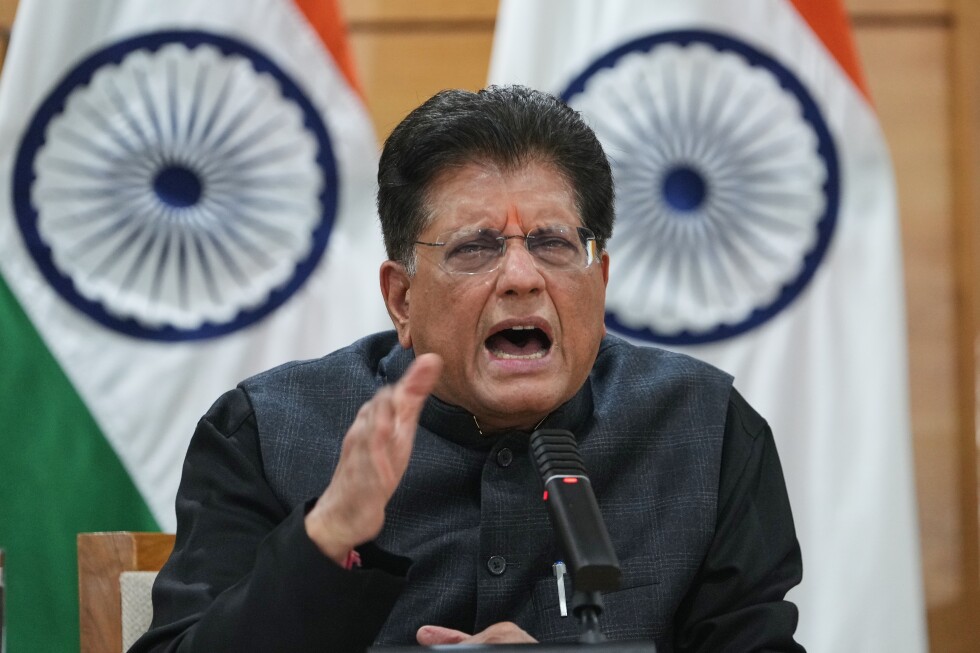
Indian Trade Minister Piyush Goyal has defended the deal, asserting that it protects “sensitive agricultural and dairy products” including maize, wheat, rice, ethanol, tobacco, and certain vegetables. Goyal claimed the agreement “will open a $30 trillion market for Indian exporters,” referencing the U.S. annual GDP, and predicted the increase in exports would generate hundreds of thousands of new employment opportunities.
According to Goyal, the agreement will eliminate tariffs on various Indian exports to the U.S., including generic pharmaceuticals, gems and diamonds, and aircraft parts, which he believes will enhance India’s export competitiveness in the global market.
This development comes amid India’s increasingly active trade diplomacy. The country recently reached a free trade agreement with the European Union after nearly two decades of negotiations, potentially affecting as many as 2 billion people. That deal would facilitate free trade on almost all goods between the EU’s 27 member states and India, covering diverse products from textiles to medicines, while reducing high import taxes for European wine and automobiles.
India has also expanded its trade relationships elsewhere, signing a comprehensive economic partnership agreement with Oman in December and concluding talks for a free trade deal with New Zealand.
The India-U.S. trade framework represents a significant step in the evolving economic relationship between the world’s largest and fifth-largest economies. However, the full impact of the agreement will depend on the details that emerge from further negotiations and how effectively both nations implement the provisions outlined in the framework.
Fact Checker
Verify the accuracy of this article using The Disinformation Commission analysis and real-time sources.

9 Comments
Reducing tariffs on Indian goods could help boost trade and investment between the two countries. However, the deal seems to face some political opposition in India, so it will be crucial to address any concerns to ensure its success.
You raise a good point. Any trade agreement needs to be seen as fair and mutually beneficial by both sides to gain broader acceptance.
This is an interesting development in the ongoing trade tensions between India and the US. It will be important to see how the proposed tariff reductions are implemented and whether they lead to a broader trade agreement that benefits both countries.
Reducing dependence on Russian oil and strengthening supply chains are important goals, but the impact on Indian consumers and industries should also be considered. I hope the negotiations can balance these competing interests effectively.
This is an important development that could have significant implications for the mining, commodities, and energy sectors in both India and the US. I’ll be following the progress of these negotiations closely.
This is a complex issue with political sensitivities on both sides. While the tariff reduction seems like a step in the right direction, the long-term implications for the mining, metals, and energy sectors in both countries will be important to monitor.
Absolutely. The potential impact on key industries like mining and energy will be crucial to understand as the negotiations progress.
The move to lower tariffs on industrial and agricultural products is a positive step, but the details will be crucial. I’m curious to see how this interim deal could pave the way for a more comprehensive trade agreement in the future.
The commitment to work toward a broader trade deal that supports more resilient supply chains is encouraging, especially in light of recent global disruptions. However, the details and timelines for such an agreement will be critical.