


Listen to the article
Affordable Housing Program in Honolulu Faces Scrutiny Amid Delays and Mixed Results
At a celebration last April marking the opening of PenseMetro, a city-subsidized affordable housing development in Makiki, Honolulu Mayor Rick Blangiardi emphasized the critical need for such projects. “This is exactly what we know we need to create,” he declared. “It is absolutely on the money, at the right time, incredibly needed.”
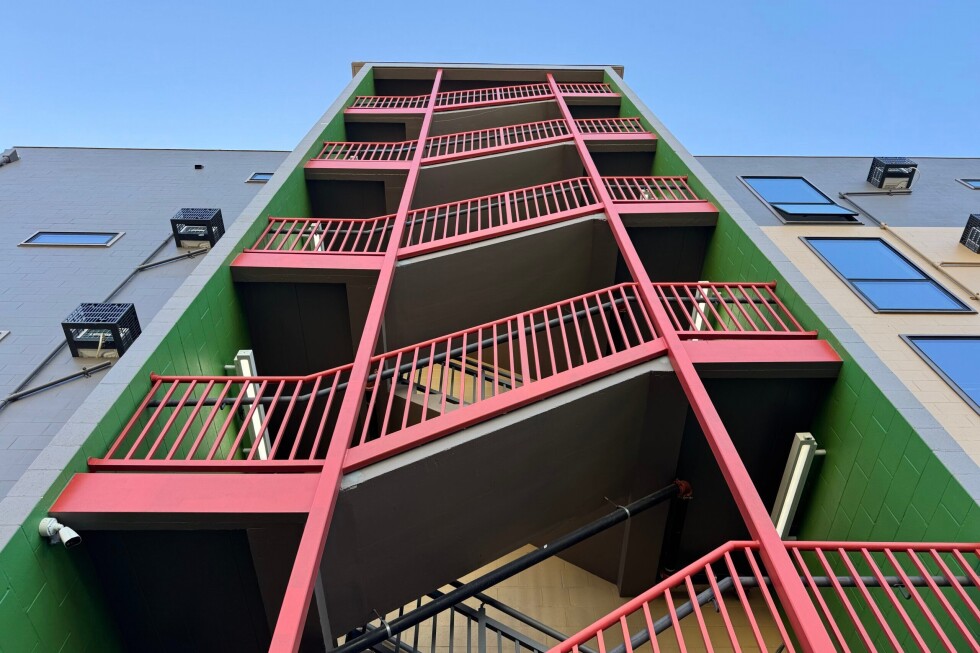
Nearly ten months later, the 29-unit rental building at the corner of Pensacola and Lunalilo Streets sits vacant, awaiting final permit approvals. On some nights, homeless individuals seek shelter in its ground-floor parking area, an ironic contrast to its intended purpose.
“It is incredibly frustrating,” said Nathaniel Char, Makiki Neighborhood Board chair. “We had the blessing April of last year… and it’s sitting empty.”
The building was among the first to break ground under Honolulu’s Bill 7 program, an initiative now facing intense debate at the city council level. Some council members want to dramatically scale back the program while others advocate for expanding developer subsidies.
Bill 7, launched in 2019, eased zoning restrictions for low-rise rental developments in areas designated for apartments and mixed-use projects, provided at least 80% of units were reserved for residents earning no more than the area’s median income—approximately $106,000 for a single person.
The incentive package includes 15-year exemptions from property taxes, wastewater system charges, and building permit fees. Recently, the City Council began offering developers pre-construction grants up to $50,000 per unit and post-construction grants up to $12,000 per unit.
According to Department of Planning and Permitting spokesperson Davis Pitner, the program has delivered six completed projects with occupancy certificates, adding 189 units to Oahu’s housing inventory. Another 16 projects are under construction, with 41 more under review.
However, a proposal introduced last month by council members Esther Kiaʻāina and Scott Nishimoto threatens to significantly restrict the program. Their bill would eliminate fee exemptions, reduce maximum building heights to match underlying zoning requirements, and move up the program’s expiration date from 2030 to 2027.
The council members’ proposal states that Bill 7 was designed to temporarily “accelerate the construction of affordable rental housing,” suggesting the “extended repeal date may exceed the period of time needed to accomplish that goal.”
The proposed changes sparked fierce opposition at a January council meeting. Developers, housing advocates, the Hawaiʻi Government Employees Association, AARP Hawaiʻi, and numerous others testified against the modifications, arguing they would exacerbate Oahu’s housing shortage—projected to reach 25,000 units by next year.
U.S. Senator Brian Schatz, who rarely comments on local legislation, submitted testimony opposing the changes. “Oʻahu residents face an acute and worsening housing crisis, and people need all the help they can get from their government,” Schatz wrote, expressing “deep concern regarding bills which would make it harder to build housing and make our existing housing crisis worse.”
Council members Matt Weyer and Tyler Dos Santos-Tam voted against the bill in its first round, an unusual move in council proceedings. “I have to vote against moving it forward,” Weyer said, “because ending the program next year puts a lot of projects on the line.”
Kiaʻāina later clarified that her primary concern involves height allowances of up to 60 feet for affordable rental projects—taller than what underlying zoning typically permits in her Kailua district. She also questions the wisdom of increasing developer subsidies, which Weyer and council member Val Okimoto proposed in separate legislation.
Council member Andria Tupola announced that a comprehensive bill to revise the affordable rental housing program is forthcoming, incorporating stakeholder feedback. “I’m going to be very clear that my stance is not to kill Bill 7 projects or to end the program,” she stated.
Meanwhile, PenseMetro’s extended vacancy stems from construction complications rather than program design. Developer Don Huang, principal of Collaborative Seven Companies, cited numerous setbacks: power lines required relocation, transformer equipment faced order delays, and elevator inspections stalled due to staffing vacancies at the state’s Boiler and Elevator Inspection Branch.
“It just got delayed,” Huang explained. “I can’t point fingers at anybody right now.”
Despite his project’s challenges, Huang considers Bill 7 successful for incentivizing small and mid-sized developers to build housing. However, affordability remains questionable. PenseMetro’s originally projected monthly studio rent of $1,400 has increased to $1,900 due to inflation and construction complications.
“I’m not going to defend myself on that,” Huang acknowledged. “It is the price.”
PenseMetro awaits final building inspections before receiving its occupancy certificate, which Huang expects within two weeks. Residents should be able to move in shortly thereafter, bringing the long-delayed project to fruition amid ongoing debate about the future of affordable housing development in Honolulu.
Fact Checker
Verify the accuracy of this article using The Disinformation Commission analysis and real-time sources.

12 Comments
As someone familiar with the housing challenges in Honolulu, I’m not surprised to see this issue come up. The city has struggled for years to deliver affordable units, often bogged down by bureaucratic hurdles. I hope they can learn from this experience and find ways to speed up the process going forward.
You raise a good point. Honolulu has grappled with affordable housing shortages for a long time. Streamlining the process for projects like this one could go a long way in addressing the crisis.
This is a tough situation – on one hand, the city clearly needs more affordable housing, but on the other, the program seems to have some major implementation issues. I’m curious to see how the city council debates around Bill 7 play out and what solutions they come up with.
Agreed, the city council debate will be important to watch. They’ll need to balance the need for affordable units with streamlining the process to get them built and occupied quickly.
Wow, that’s really frustrating to hear about these affordable rentals sitting empty for so long. It seems like a clear disconnect between the city’s housing needs and the bureaucratic process. I hope they can streamline the permitting and get these units occupied soon.
You’re right, the delays are very concerning given the housing crisis in Honolulu. The city needs to find ways to fast-track these affordable projects without sacrificing quality or community input.
This is a complex challenge without any easy answers. On one hand, the city clearly needs more affordable housing options. But the delays and mixed results with this particular program raise some valid concerns. I hope the city can find ways to streamline the process while still maintaining quality and community oversight.
Absolutely, balancing those priorities will be key. It’s a tough line to walk, but getting these units occupied should be the top priority given the housing crisis in Honolulu.
It’s really concerning to see these affordable units sitting vacant when there’s such high demand. The city needs to figure out where the bottlenecks are and how to remove them. Perhaps more oversight and accountability around the permitting process could help get these projects across the finish line faster.
Agreed, increased accountability and transparency around the permitting process could make a big difference. The city needs to make this a top priority to get these much-needed units occupied.
Vacant affordable units while homelessness persists is a frustrating paradox. I wonder what the key bottlenecks are in the permitting and occupancy process that are causing these delays. Perhaps the city could learn from other municipalities that have found ways to accelerate affordable housing projects.
That’s a great point about learning from other cities. There may be some best practices they could adopt to reduce red tape and get these units filled faster. It’s an issue that requires creative solutions.