


Listen to the article
European Leaders Sound Alarm Over Greenland Crisis at Davos Forum
Tensions flared at the World Economic Forum in Davos, Switzerland on Tuesday as global leaders confronted the growing crisis over U.S. President Donald Trump’s push to seize Greenland and his administration’s imposition of related trade tariffs.
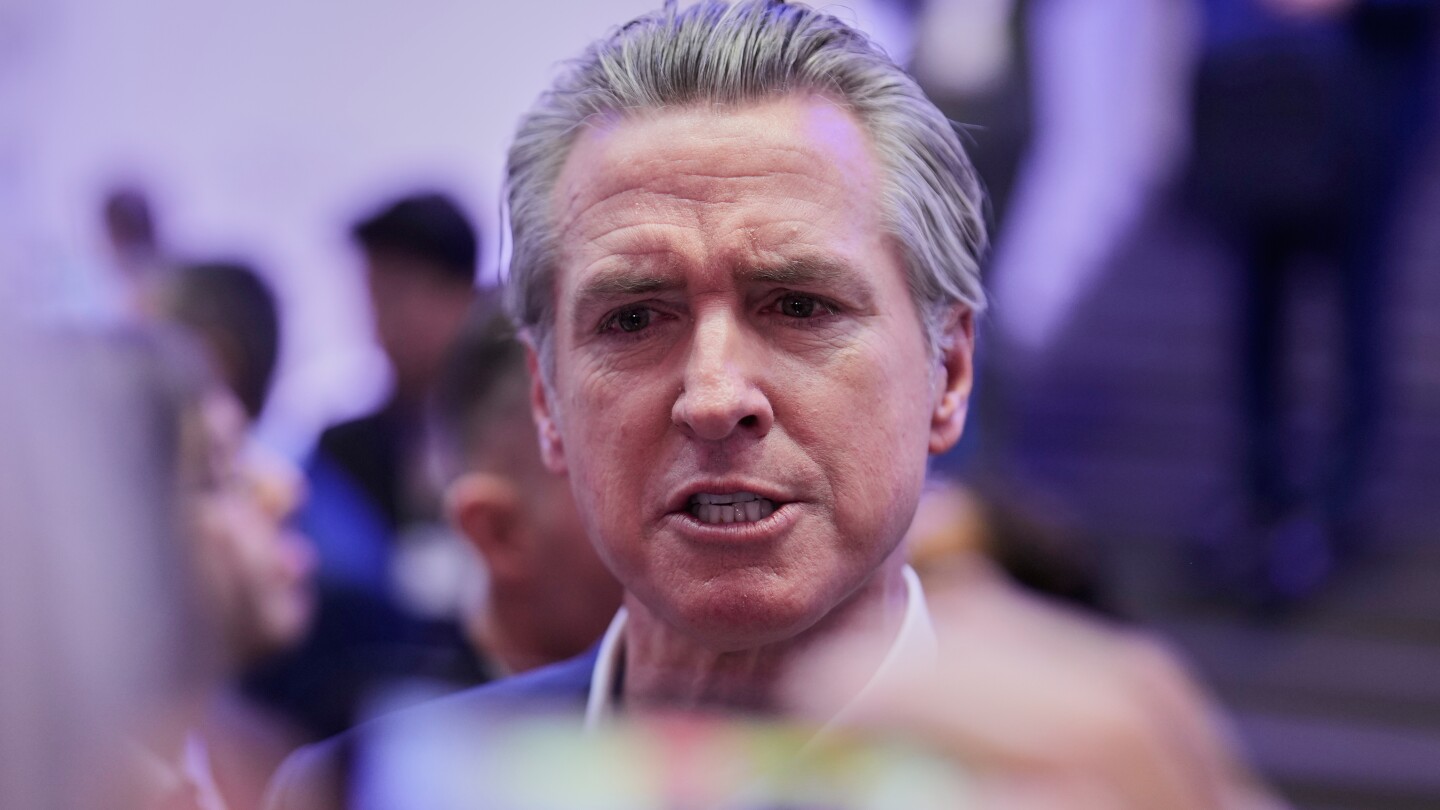
The annual gathering of political and business elites took on an unusually confrontational tone, with California Governor Gavin Newsom delivering profanity-laced criticism of what he described as international weakness in the face of American aggression.
French President Emmanuel Macron, speaking while wearing aviator sunglasses due to an eye infection, warned attendees about what he characterized as “a new colonial approach” that threatens to undermine decades of international cooperation. His comments directly targeted the Trump administration’s recent actions regarding Greenland, the semi-autonomous Danish territory rich in natural resources.
“It’s a shift towards a world without rules. Where international law is trampled underfoot and where the only law that seems to matter is that of the strongest, and imperial ambitions are resurfacing,” Macron said, after opening with an ironic joke about living in a time of “peace, stability and predictability.”
The French leader specifically condemned “competition from the United States of America, through trade agreements that undermine our export interests,” and the “endless accumulation of new tariffs that are fundamentally unacceptable, even more so when they are used as leverage against territorial sovereignty.”
Canadian Prime Minister Mark Carney offered a different approach, advocating for stronger collaboration among medium-sized powers to counter great power pressure. “Great powers can afford for now to go it alone. They have the market size, the military capacity, and the leverage to dictate terms. Middle powers do not,” Carney emphasized.
He urged nations caught between major powers to unite rather than compete for favor. “In a world of great power rivalry, the countries in between have a choice: compete with each other for favor or to combine to create a third path with impact,” he said, adding firmly that Canada “stands with Greenland and Denmark and fully supports their unique right to determine Greenland’s future.”
The most dramatic statements came from California’s Governor Newsom, who berated world leaders for what he viewed as ineffective diplomacy with the Trump administration. “I can’t take this complicity. People rolling over. I should’ve brought a bunch of knee pads for all the world leaders,” said Newsom, a prominent Democrat.
“I hope people understand how pathetic they look on the world stage. I mean, at least from an American perspective, it’s embarrassing,” he continued, adding colorfully: “Diplomacy with Donald Trump? He’s a T-Rex. You mate with him or he devours you.”
U.S. Treasury Secretary Scott Bessent, representing the Trump administration until the President’s scheduled Wednesday appearance, attempted to downplay the growing rift. “I think our relations have never been closer,” Bessent claimed, urging attendees to “calm down the hysteria” and “take a deep breath” regarding the Greenland situation.
Belgian Prime Minister Bart De Wever took a firm stance, declaring that “so many red lines have been crossed” in Europe. “Being a happy vassal is one thing. Being a miserable slave is something else. If you back down now you’re going to lose your dignity,” De Wever stated during a panel on redefining Europe’s global position.
Quoting Italian philosopher Antonio Gramsci, the Belgian leader said it was up to Trump to decide “if he wants to be a monster – yes or no,” and warned that Trump’s actions could end “80 years of Atlanticism.”
European Commission President Ursula von der Leyen struck a more measured but equally concerned tone, calling the proposed additional tariffs “a mistake, especially between long-standing allies.” She emphasized that “a deal is a deal,” referencing a trade agreement reached with the U.S. last July.
The EU’s top official warned that a “downward spiral” in Western relations would only benefit their adversaries. “We consider the people of the United States not just our allies, but our friends,” von der Leyen said, while also acknowledging that Europe must adapt to changing realities: “If this change is permanent, then Europe must change permanently too.”
The unprecedented diplomatic clash sets the stage for President Trump’s anticipated address to the forum on Wednesday, with many observers wondering whether his appearance will escalate or defuse the growing international crisis over Greenland’s future and the broader implications for global trade and security alliances.
Fact Checker
Verify the accuracy of this article using The Disinformation Commission analysis and real-time sources.

17 Comments
This Greenland crisis underscores the need for a rules-based international order that can mediate disputes and protect the sovereignty of smaller nations. Unilateral actions and great power rivalries risk undermining decades of hard-won progress.
The Greenland situation is a complex mix of geopolitics, economic interests, and environmental concerns. Finding a balanced, sustainable solution that respects all stakeholders will be a major challenge for global leaders.
The Trump administration’s aggressive posturing on Greenland seems to have backfired, provoking a strong international backlash. Diplomacy and cooperation may be a more effective path forward.
Agreed. Unilateral actions and confrontational rhetoric often make complex situations even more intractable. A multilateral, consensus-building approach may yield better results.
The use of profanity by Governor Newsom reflects the strong emotions this issue is stirring up. While blunt language may grab attention, I hope the discussion can remain focused on finding practical solutions that respect international law and norms.
Well said. Maintaining civility and a solutions-oriented approach will be crucial as this situation unfolds.
While the US may view Greenland as strategically important, the territory’s indigenous population and the Danish government must have a central role in any discussions about its future. Respecting local autonomy should be a top priority.
The confrontational tone at Davos reflects the high stakes involved in the Greenland issue. Careful diplomacy and a willingness to compromise will be essential to defusing tensions and finding a mutually acceptable path forward.
Tensions are certainly high over the Greenland situation. It’s a complex geopolitical issue with competing economic and security interests at play. I’m curious to hear more perspectives on potential solutions that balance national sovereignty, environmental concerns, and resource development.
You raise a good point. Finding the right balance will require nuanced diplomacy and a willingness to compromise from all sides.
While the US may view Greenland as strategically important, the territory’s indigenous people and the Danish government must have a say in any plans for development or control. Respecting local autonomy should be a priority.
Absolutely. Any attempts to override the wishes of the Greenlandic people or the Danish government would be a violation of international norms and principles of self-determination.
This Greenland issue highlights the ongoing tension between national security, economic interests, and environmental protection. It will be a delicate balancing act for policymakers to navigate.
Greenland’s natural resource wealth is undoubtedly a key factor driving the US interest, but the sovereignty and environmental concerns of the local population should not be overlooked. A balanced, sustainable approach is needed.
Absolutely. Any development plans must prioritize the rights and interests of the Greenlandic people above narrow economic or geopolitical objectives.
President Macron’s comments about a ‘new colonial approach’ are quite pointed. It will be interesting to see how this issue evolves and whether the international community can come together to address it constructively.
Agreed. The geopolitical tensions and accusations of ‘imperial ambitions’ make this a delicate situation that requires careful navigation.