


Listen to the article
Soaring Utility Bills Crush West Virginia Residents Despite Energy-Rich Resources
Every month, Rebecca Michalski braces herself before opening her electric bill. Living on a fixed income in Rainelle, West Virginia, she’s watched in horror as her heating costs have spiraled out of control. Her February charge was $940.08—more than her entire monthly check.
“Every time you see that power bill, you’re just sick,” Michalski said, sorting through statements totaling thousands of dollars. “I already know before I open it. I just dread seeing how much.”
Despite taking conservation measures like keeping lights off during the day and using just one energy-efficient lamp at night, she’s fallen further behind on payments. During a recent arctic blast, she was forced to take out a loan after receiving a disconnection notice.
Michalski is far from alone. Thousands of West Virginians have taken to social media to share screenshots of their skyrocketing utility bills, which now often exceed their rent or mortgage payments. These residents live in one of America’s most energy-rich yet poorest regions, where many families must choose between heating their homes or buying food.
The situation presents a stark contrast to President Donald Trump’s campaign promise to “make America affordable again” by cutting electricity bills by half during his first 18 months in office. “And if it doesn’t work out, you’ll say, ‘Oh well, I voted for him, I still got them down a lot,'” he told supporters.
Instead, electricity prices nationwide increased 4.8% in February compared to a year earlier, while piped natural gas prices rose 10.9%, both outpacing inflation. Recent attacks on Iran by the U.S. and Israel have sent energy costs climbing even higher.
In West Virginia, the average household electricity rate per kilowatt-hour has surged 73% from 2015 to 2025, natural gas has increased 51% per 1,000 cubic feet, and water has risen 45% per 1,000 gallons, according to West Virginia’s Public Service Commission.
The state, which once had the nation’s cheapest electricity rates, has experienced one of America’s fastest utility price increases—all while sitting atop vast reserves of coal, oil, and natural gas.
Coal’s Costly Crown
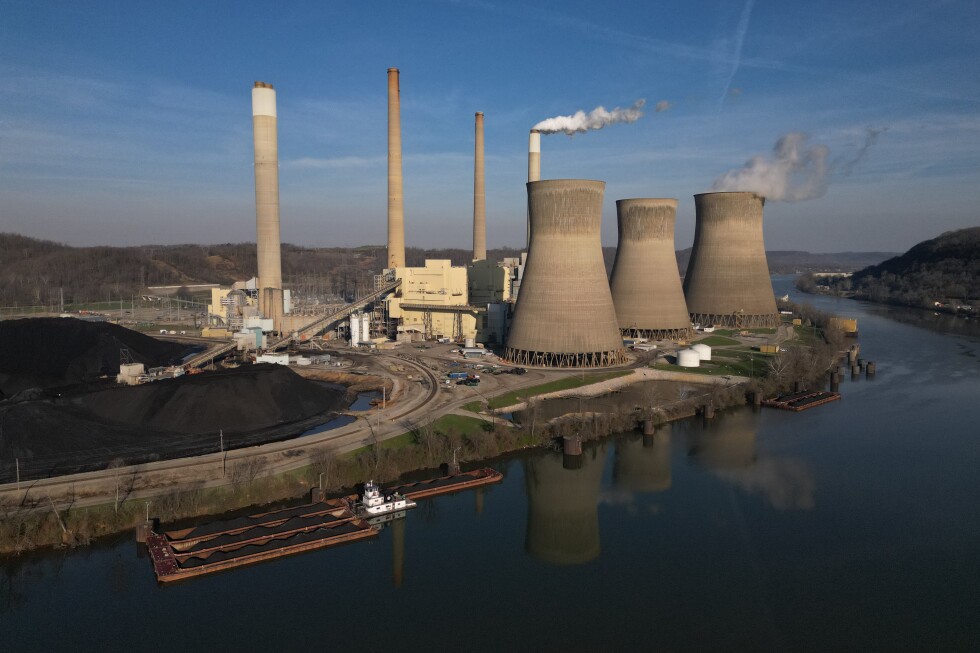
Coal remains dominant in West Virginia’s energy landscape, accounting for approximately 87% of electricity production—far more than anywhere else in the country. The state has doubled down on aging coal-fired plants despite the rest of the nation transitioning to cleaner, cheaper alternatives like natural gas (which West Virginia produces in abundance), nuclear power, and renewables.
“If you’re not 100% in on coal, then you’re a traitor… It’s like a measure of patriotism,” said Jamie Van Nostrand, policy director at the nonprofit Future of Heat Initiative and former West Virginia University professor. “I think if you went to the average West Virginian and said, ‘Yeah, we understand you want to support the coal industry, but do you want to support it to the extent that you’re OK paying twice as much as you should be for electricity?'”
The Trump administration has pushed to keep unprofitable coal-powered plants open, rolled back pollution standards, and provided hundreds of millions of dollars to improve them. The White House defends these actions, with spokesperson Taylor Rogers stating: “Lowering electricity prices is a top priority for President Trump. He is aggressively unleashing reliable energy sources like coal and natural gas.”
However, the economic reality for West Virginians tells a different story. The state is the only place in America where median inflation-adjusted household income was lower in 2023 than in 1970, according to the Urban Institute. This means residents are spending increasingly larger portions of their paychecks on utilities compared to people in other states.
“It only makes the rich richer”
More than one in three West Virginia households is considered energy burdened, spending over 6% of their income on electricity and other fuel costs. About 20% are low-income residents bearing some of the highest energy costs in the state.
Last year, Trump eliminated the staff of a federal program that assists low-income Americans with heating bills and proposed cutting all its funding. Congress eventually allocated money for the program, but billions were delayed due to the government shutdown. Many struggling West Virginians fall into a gap where they earn just enough to be ineligible for assistance but not enough to afford their bills.
Jennifer Brown of Kingwood is caught in this predicament. She works for West Virginia’s federally funded Head Start program, and her husband is a postal worker. With four children, their combined utility costs can reach $1,000 monthly during winter, exceeding their $798 mortgage.
“Every month we get our utility bills, I’m so angry. I’m like, ‘Why is this so high?'” Brown said. “And we can’t figure it out. Nothing seems to be wrong… and we’re not wasteful.”
Small businesses have also been devastated by rising energy costs. In Ravenswood, bakery owner Heather Santee had her power abruptly terminated just before Valentine’s Day. Though behind on payments, she believes she could have caught up had she been able to fulfill holiday orders. Instead, the disconnection forced her out of business and left tenants in apartments upstairs without heat.
“Once I started getting those high electric bills in the winter, I was like, ‘This will be what closes me down,'” Santee said. “West Virginia is holding back a lot of people because they are allowing these bills to be so high.”
The situation has created concerns over Big Tech data centers being built in the state, which Governor Patrick Morrisey has celebrated as economic wins. These facilities can use enough electricity to power 100,000 homes, potentially further straining the grid and increasing costs for residents.
“We just roll back regulations and we keep being promised that deregulating and privatizing our systems is gonna fix everything, and it never does,” said Caitlin Ware, a pastor who advocates for clean water in southern West Virginia. “It only makes the rich richer, and it only puts us in a worse situation.”
Utility costs have become a potential election issue, with consumer advocacy organization PowerLines reporting that investor-owned gas and electric utility companies requested nearly $31 billion in rate increases last year nationwide—double the amount from the previous year.
“Electric bills have gone up 40% over the last five years,” said Charles Hua, PowerLines founder. “This is likely to continue to rise. This is definitely something that the Trump administration and President Trump are very concerned about.”
For residents like Michalski, who once supported Trump, the situation has become unbearable. “It’s breaking me,” she said about her skyrocketing power bills. “And there’s nothing that can be done for it, unless the president does something. And I don’t see him doing it. He’s had plenty of time.”
Fact Checker
Verify the accuracy of this article using The Disinformation Commission analysis and real-time sources.

14 Comments
It’s a shame that residents in an energy-rich state like West Virginia are struggling to afford basic heating and electricity. This underscores the importance of developing sustainable and equitable energy policies that prioritize local community needs.
Absolutely. This situation highlights the complex challenges around energy access and affordability that many communities face, even when resources are plentiful. Innovative solutions are clearly needed.
It’s troubling to see energy costs outpacing rent and mortgage payments in West Virginia. This speaks to the broader challenge of making the energy transition inclusive and beneficial for all communities, not just the most affluent.
Well said. The energy transition must be designed to support the most vulnerable populations, not exacerbate existing inequalities. Innovative solutions and community-focused policies are needed to address this issue.
The situation in West Virginia is a stark reminder that the benefits of energy resources do not always translate to affordability and accessibility for local communities. More must be done to ensure equitable access to reliable and affordable energy.
You’re right, this issue speaks to the broader challenge of ensuring the energy transition benefits all communities, not just the most affluent. Innovative policies and community-focused solutions are needed to address this problem.
This is a complex issue that highlights the need for comprehensive energy policies that balance economic, social, and environmental considerations. West Virginia’s energy resources should be leveraged to provide affordable and reliable power for all residents.
Absolutely. Balancing these competing priorities is crucial, and policymakers must work closely with local communities to develop tailored solutions that meet their unique needs and circumstances.
This is a concerning situation for the residents of West Virginia. Even with abundant energy resources, rising utility costs are putting a significant strain on household budgets. It highlights the need for affordable and accessible energy solutions for all communities.
You’re right, the disconnect between abundant resources and high costs is troubling. Policymakers should explore ways to ensure energy affordability and security for vulnerable populations, especially in energy-producing regions.
It’s disheartening to see West Virginia residents struggling with unaffordable utility bills, especially given the state’s abundant energy resources. This highlights the need for comprehensive energy policies that prioritize local community needs and ensure equitable access to affordable power.
Agreed. Policymakers should work closely with West Virginia communities to develop tailored solutions that leverage the state’s energy resources to provide reliable and affordable power for all residents, not just the most privileged.
This is a heartbreaking situation. Families in West Virginia should not have to choose between heating their homes or buying food. The state’s energy resources should be leveraged to provide affordable and reliable power for all residents.
You make a good point. Energy security and affordability are fundamental needs, and policymakers must find ways to ensure equitable access, especially for vulnerable populations in resource-rich areas.