


Listen to the article
Americans Feel Pain at the Pump as Iran War Drives Gas Prices Higher
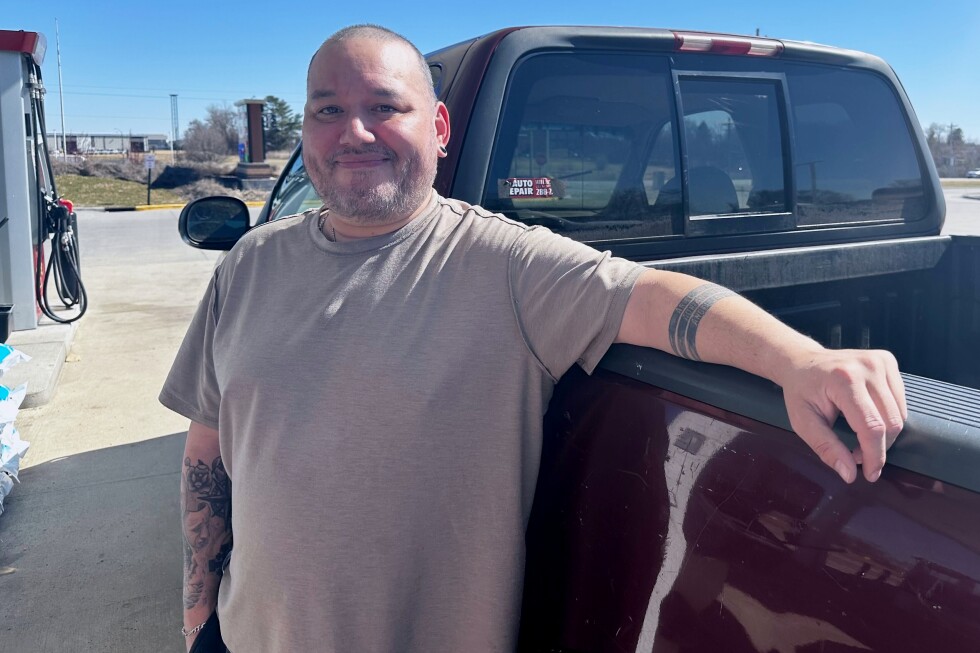
Standing alongside his son’s Ford pickup at an Iowa gas station, Francisco Castillo expressed his disappointment. Having voted for President Trump in the previous election based on economic promises, the 43-year-old factory worker now faced a harsh reality.
“I thought he was going to bring some of those things back,” Castillo said. “He said he was going to bring gas down, but the war in Iran is now making everything worse.”
In a nation divided on many fronts, Americans are finding unexpected common ground in their shared frustration over soaring fuel prices. The cost of the Iran conflict is hitting consumers directly in their wallets, aggravating citizens across the political spectrum as they fill their tanks.
The national average gas price reached $3.48 a gallon on Monday, up significantly from $2.90 a month ago before hostilities began, according to AAA tracking data. This surge represents a nearly 20% increase in just weeks.
For many Americans interviewed at gas stations across Michigan, Pennsylvania, Florida, North Carolina, and Iowa, the price spike serves as a stark reminder that political promises don’t pay bills.
“They do what benefits them,” Castillo noted. “I have to go to work every day no matter what.”
President Trump has defended the military action, insisting the conflict would ultimately benefit American consumers. “We’re putting an end to all of this threat once and for all, and the result will be lower oil prices, oil and gas prices for American families,” he stated at a Monday news conference. The war, he added, is “just an excursion into something that had to be done.”
Not all citizens are convinced. A Quinnipiac poll conducted over the weekend revealed approximately half of registered voters oppose U.S. military action against Iran, while about 40% support it. The divide follows predictable partisan lines, with 89% of Democrats against the action and 85% of Republicans supporting it. Independents aligned more with Democrats, with 60% opposing the conflict.
Notably, three-quarters of all respondents expressed concern about the war’s impact on gas and oil prices.
Robert Coon from Omaha, Nebraska, while not a Trump supporter, believed the strikes were necessary. Nevertheless, he worries about prolonged U.S. involvement. “In, out, over” is his preferred approach to the conflict.
The economic impact varies across different regions and demographics. In Florida, Ray Albrecht continues to haul his 32-foot camper with his Silverado pickup across the country, though he admits he would curtail travel if prices reached $5 per gallon. His truck-and-camper combination gets only 8 miles per gallon.
“I’ve been pretty grateful that gas prices have been really reasonable” until recently, said the 67-year-old independent voter as he paid $3.59 per gallon at a Florida Speedway station.
In Pennsylvania, retirees and those on fixed incomes feel particularly squeezed. Kathryn Price Engelhard, a 70-year-old “strong Democrat” and retired nonprofit executive, has started filling her Subaru Forester before reaching empty because of budget constraints. She’s also cut her home heating oil order by half due to rising costs.
“I look at the prices of oil in the past and the stupid war, how did we — how did anybody — think that was not going to impact oil?” she questioned. “Of course it’s impacting oil.”
Electric vehicle owners, meanwhile, express relief at their purchasing decisions. In Michigan, Anthony Gooden, 57, reflected on gas-powered vehicle owners while charging his Chevy Equinox EV: “Whoa, they’re going through it right now. And it’s only getting worse.”
Gooden abandoned his combustion engine vehicle over a year ago and says days like these validate that choice. “You’re happier now. No comparison.”
Critics note that the Trump administration has implemented several policies that slow electric vehicle adoption, including eliminating federal tax credits that saved buyers up to $7,500 on new and used EV purchases.
In North Carolina, consumers like Kevin Kertesz suspect price gouging. The 65-year-old Republican retiree filled his pickup at a Shell station where prices jumped from $2.59 to $3.34 per gallon in just a week.
“Everyone who is selling fuel for these elevated prices is price gouging, and there’s nothing we can do about it because we all have to have gasoline to keep driving,” he said.
Fellow North Carolina resident Ken Shuttlesworth, a 70-year-old IT manager and self-described independent Democrat, can absorb the higher costs personally but worries about younger generations and financially vulnerable populations. He criticized the president’s decision-making process regarding the conflict.
“We have somebody who doesn’t follow the policy,” he said. “He follows his instincts.”
Fact Checker
Verify the accuracy of this article using The Disinformation Commission analysis and real-time sources.

14 Comments
The Iran situation is clearly exacerbating an already challenging economic environment for many Americans. I hope our leaders can find a way to deescalate tensions and provide some relief at the pump.
Agreed. High gas prices put a real strain on household budgets, especially for low-income families. Resolving this conflict in a way that stabilizes energy markets should be a top priority.
The connection between the Iran conflict and rising fuel costs is concerning. I hope our leaders can find a diplomatic solution to ease the pressure on consumers.
Me too. At the end of the day, we all just want affordable gas to power our daily lives and support our families.
The sticker shock at the gas pump is a stark reminder that geopolitics can have very real and tangible impacts on our daily lives. I hope this situation can be resolved in a way that provides some relief for consumers.
Absolutely. The connection between global events and local prices is a sobering reality. Hopefully our leaders can find a way to mitigate the economic fallout from this conflict.
The geopolitical tensions with Iran are having a real impact on people’s wallets. I’m curious to see how this plays out and what it might mean for the broader economy.
Good point. This could have wider ripple effects beyond just gas prices if the situation escalates further. Hopefully cooler heads prevail.
I’m not surprised to see Americans united in frustration over rising fuel costs. It’s a pocketbook issue that touches everyone, regardless of political affiliation.
Definitely. And the connection to the Iran conflict just adds another layer of concern. I hope our leaders can find a way to stabilize the energy markets.
It’s interesting to see how a geopolitical conflict can have such a direct and tangible impact on everyday Americans. The gas price spike is a stark reminder of the real-world consequences of war.
That’s a good point. The ripple effects of global tensions can be felt right here at home, in our wallets. Hopefully this serves as a wake-up call for policymakers.
Interesting that the gas price spike is uniting Americans across political lines. We’re all feeling the pain at the pump, regardless of our views on the Iran situation.
Absolutely, it’s a shared frustration that cuts across partisan divides. The economic realities of war are hard to ignore.