


Listen to the article
A historic Mississippi River crossing connecting Iowa and Wisconsin is set to be demolished Friday in a rare public spectacle, marking the end of a nearly century-long chapter in the region’s transportation history.
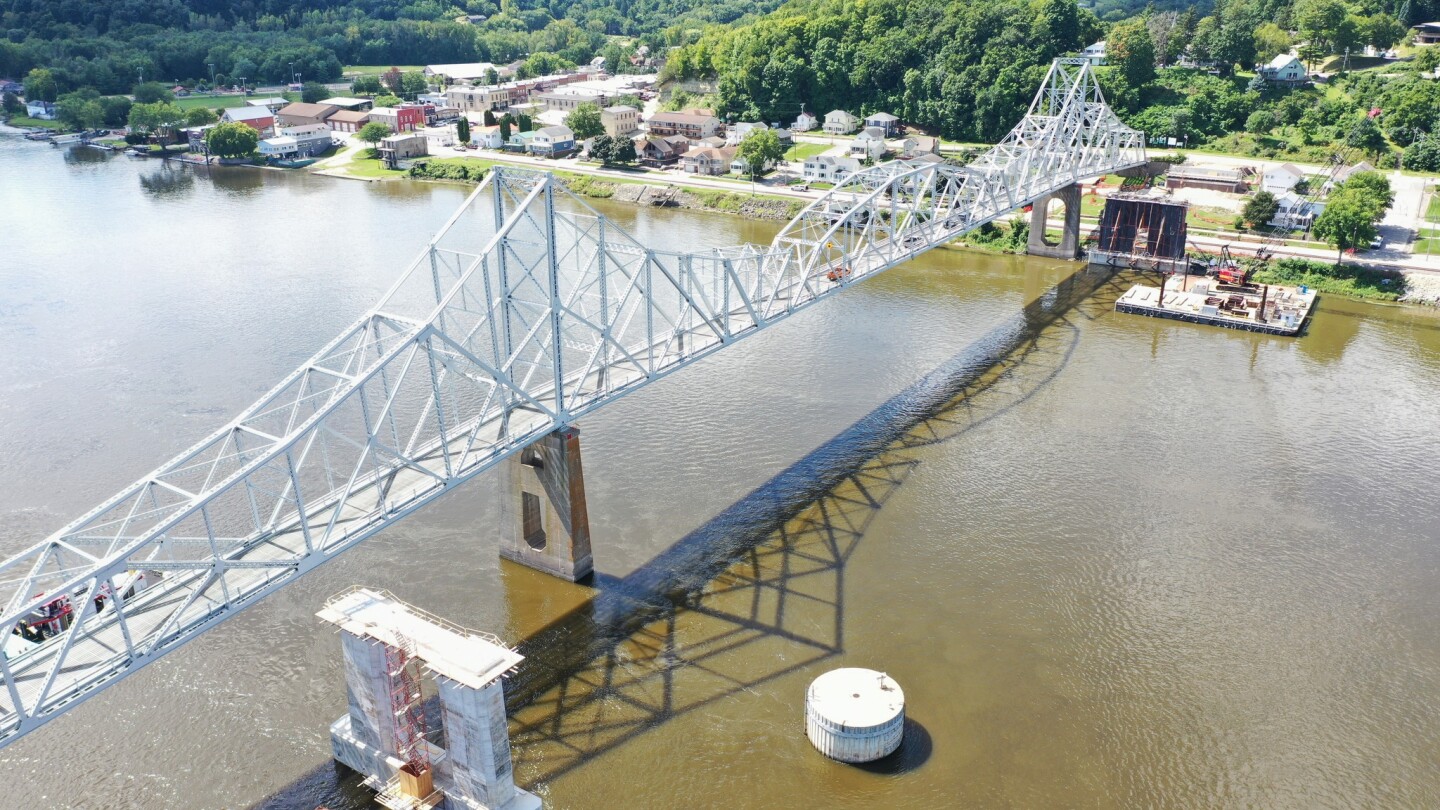
The Mississippi River Bridge, locally known as the Black Hawk Bridge, has spanned the mighty waterway since 1931, linking the small community of Lansing, Iowa, with Wisconsin’s western shore. The structure’s distinctive cantilever design, featuring a central arch flanked by two tower-like trusses, has made it an iconic landmark in the area.
“It carries a lot of sentimental value to, I mean, literally tens of thousands of people,” said Lansing Mayor Michael Verdon, reflecting on the bridge’s significance to generations of local residents.
The aging structure closed to traffic last October after serving as the only crossing option for approximately 30 miles in either direction. Until its closure, the bridge carried about 2,100 vehicles daily, providing a vital connection between the two states for both residents and commercial traffic.
While the bridge holds deep nostalgic value, its narrow lanes created hazardous conditions for modern traffic. Mayor Verdon noted that when two large trucks met on the span, passage became particularly treacherous. The bridge’s position on the river also made it vulnerable to barge strikes due to challenging river geography and the configuration of the bridge piers.
The demolition process will unfold in stages, with engineers planning to implode the center span first, followed by the eastern section later in the day. The western portion, which extends over residential areas and railroad tracks, will be dismantled through more controlled methods at a future date to ensure safety.
Iowa Department of Transportation spokesperson Daniel Yeh explained that while crews have already removed some components of the structure, implosion represents the most efficient approach for eliminating the largest sections of the superstructure. Officials anticipate large crowds will gather to witness the historic event, which will also be streamed live online for those unable to attend in person.
In the bridge’s absence, a ferry service has been established to maintain the vital connection between the states while construction progresses on its replacement. The new crossing, representing a $140 million investment in the region’s infrastructure, is projected to enter service in 2027, providing a modern, safer alternative designed to meet contemporary transportation needs.
The small community of Lansing, with just 968 residents, maintains deep connections to its river heritage. Mayor Verdon highlighted the town’s rich history as a hub for steamboats, fur trading, and commercial fishing—activities that have shaped the community’s identity for generations.
Not wanting to lose all physical connection to the historic structure, community members are planning to salvage materials from the demolished bridge to create keepsakes and construct a tribute that will preserve its memory within the city. These efforts reflect the bridge’s importance not merely as infrastructure but as a cultural touchstone for the region.
The Black Hawk Bridge’s demolition represents a bittersweet moment of transition for the communities it has served—acknowledging both the necessity of modern infrastructure and the emotional attachment to a structure that has defined the landscape for nearly a century.
The controlled demolition of such a significant structure over a major waterway involves complex engineering considerations and environmental protections to minimize impact on the Mississippi River ecosystem, underscoring the technical challenges involved in replacing aging American infrastructure.
Fact Checker
Verify the accuracy of this article using The Disinformation Commission analysis and real-time sources.

10 Comments
The Mississippi River Bridge has been a vital transportation link for the region for almost a century. While it’s sad to see it go, I understand the need for a safer, more modern crossing. I’m curious to learn about the potential economic and social impacts of its closure.
The demolition of this historic bridge will certainly be a bittersweet moment for the community. I hope the new crossing can capture some of the iconic design elements and character of the old Black Hawk Bridge.
I wonder if there are any plans to preserve or memorialize the bridge’s legacy, such as through public art or historical exhibits.
Sad to see this iconic bridge go, but it’s understandable that modern traffic needs safer, wider crossings. The demolition will likely be a spectacle worth watching for locals and bridge history buffs.
I wonder what will replace the Black Hawk Bridge and how the new crossing will be designed to handle current traffic demands while preserving the area’s character.
The closure of this bridge will certainly create some logistical challenges for local residents and businesses. I’m curious to hear more about the plans for a replacement crossing and how the community is preparing for the transition.
Demolishing a nearly 100-year-old bridge is no small feat. I wonder if the engineers involved have had to overcome any unique technical challenges during the planning and execution of this project.
It’s interesting to see how the evolution of transportation needs can lead to the retirement of even the most iconic infrastructure. I hope the new crossing can serve the community well while still honoring the history and significance of the Black Hawk Bridge.
It’s interesting that a bridge constructed nearly a century ago has managed to serve the community for so long. I’m curious to learn more about the bridge’s unique cantilever design and its historical significance.
I hope the demolition is carried out safely and respectfully, honoring the bridge’s legacy as an iconic landmark in the region.