


Listen to the article
Hungarian authorities have seized a shipment of Ukrainian cash and gold valued at approximately $82 million, escalating tensions between the two neighboring countries amid Hungary’s upcoming parliamentary election.
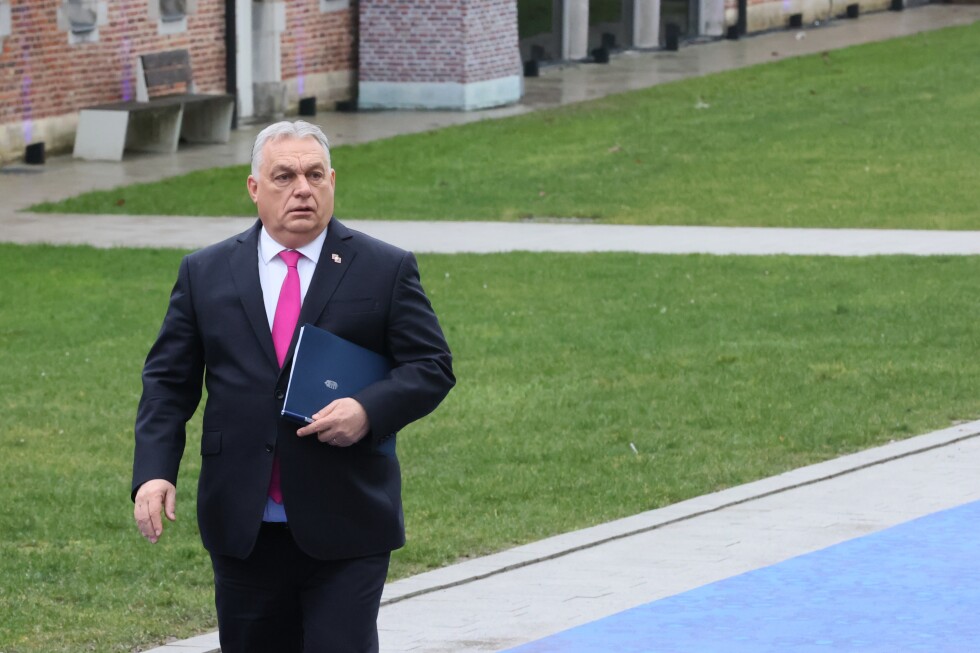
Prime Minister Viktor Orbán issued a decree Monday ordering that the assets be held for up to 60 days while Hungary’s National Tax and Customs Administration investigates. The shipment, containing $40 million and 35 million euros in cash, along with 9 kilograms of gold, was intercepted last Thursday while being transported by road through Hungary from Austria to Ukraine.
Hungarian officials claimed they suspected money laundering, releasing video footage showing masked commandos from the Counter Terrorism Center arresting seven employees of Ukraine’s state-owned Oschadbank who were traveling in two armored vehicles. The bank employees were detained for over 24 hours before being expelled from Hungary late Friday, with authorities providing no explanation for their release.
Ukrainian officials have vehemently denied any wrongdoing, insisting this was a routine transfer of assets between state banks. Foreign Minister Andrii Sybiha condemned Hungary’s actions on social media, accusing Orbán’s government of “falling down a spiral of lawlessness” and attempting to “legalize the illegal seizure.”
“This is a de facto recognition that Hungary’s actions lack any legal grounds,” Sybiha wrote. “They are just adding lawlessness on top of lawlessness.”
The seizure takes place against a backdrop of increasingly strained relations between Budapest and Kyiv. Hungary, which shares a border with Ukraine, has maintained close ties with Russia despite the ongoing war. Orbán’s government has repeatedly obstructed European Union efforts to provide military assistance to Ukraine and has opposed sanctions against Moscow.
The timing of the incident is particularly significant as Hungary approaches a crucial parliamentary election on April 12. Orbán, who has ruled Hungary since 2010, faces an unprecedented challenge from center-right opponent Péter Magyar and his Tisza party, which is currently leading in most opinion polls.
Orbán’s decree specifically instructs the tax authority to investigate whether Ukrainian cash shipments have benefited “Hungarian criminal organizations, terrorist organizations present in Hungary or political organizations.” This language has raised concerns that the investigation could be weaponized against Magyar’s Tisza party, which Orbán and his media allies have repeatedly accused, without evidence, of receiving financing from Ukraine.
The investigation is being conducted under Hungary’s “state of danger” in response to the war in Ukraine, which grants Orbán’s government extraordinary powers to rule by decree without parliamentary approval.
In recent weeks, Orbán has intensified his anti-Ukraine rhetoric as part of his election campaign. He has labeled Ukraine as Hungary’s “enemy” and warned that if he loses power, Hungary would face bankruptcy and its young people would be sent to die on the frontlines of the war.
Further cementing its position, Hungary’s parliament on Tuesday passed a resolution authorizing the government to oppose Ukraine’s path to European Union membership and reject any initiatives to supply Ukraine with weapons or funding.
The seizure represents the latest flashpoint in Hungary’s increasingly isolated position within the EU and NATO regarding support for Ukraine. While most Western allies have united behind Kyiv following Russia’s invasion, Orbán has maintained his longstanding friendly relationship with Russian President Vladimir Putin, frequently obstructing consensus on providing military aid to Ukraine.
As the investigation proceeds, international observers will be closely watching whether Hungary’s actions represent legitimate law enforcement concerns or a politically motivated move ahead of a tight election race.
Fact Checker
Verify the accuracy of this article using The Disinformation Commission analysis and real-time sources.

6 Comments
As an investor in the mining/metals space, I’m curious to see if this incident has any impact on global commodity prices or the operations of companies active in the region. Transparency from all parties will be key to understanding the full implications.
This story underscores the importance of robust regulatory frameworks and effective international cooperation when it comes to the movement of large sums of cash and precious metals. I hope the relevant authorities can find a resolution that upholds the rule of law.
As someone interested in mining and commodities, I’m following this story closely. The potential involvement of Ukrainian state banks and large sums of cash/gold makes this a significant development. I hope the truth comes out and that the two countries can find a resolution.
This incident highlights the geopolitical complexities surrounding the flow of capital and natural resources, especially in times of conflict. I’ll be watching to see how Hungary and Ukraine navigate this situation and whether it has broader implications for the mining/commodities sector.
This is a concerning escalation of tensions between Hungary and Ukraine. While we don’t have all the details, it’s crucial that any seized assets are handled transparently and in accordance with international law. I hope the two countries can work to resolve this dispute diplomatically.
The timing of this asset seizure, with Hungary’s election coming up, raises some eyebrows. I’d be curious to hear more about the investigation into suspected money laundering and whether there is clear evidence to justify the action. Transparency from both sides will be important here.