


Listen to the article
Hungary has announced it will block a planned €90 billion ($106 billion) European Union loan to Ukraine until Russian oil shipments through the Druzhba pipeline resume, escalating tensions between Budapest and Kyiv amid the ongoing conflict with Russia.
The oil flow to Hungary and Slovakia has been halted since January 27, following what Ukrainian officials described as damage to the pipeline from a Russian drone attack. The Druzhba pipeline, which means “friendship” in Russian, is a critical infrastructure that transports Russian crude across Ukrainian territory into Central Europe.
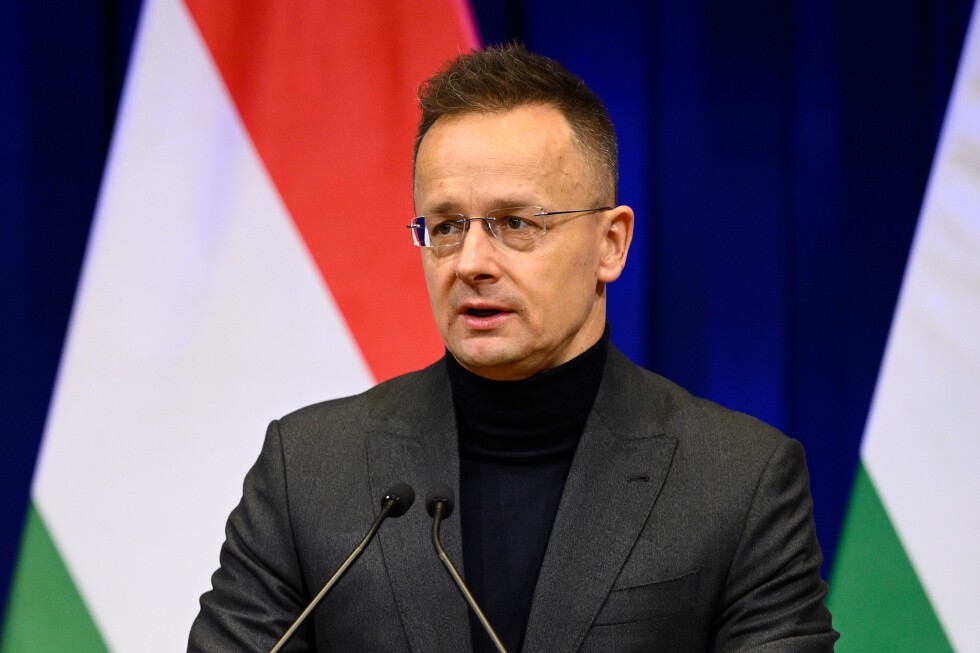
In a confrontational video posted on social media Friday evening, Hungarian Foreign Minister Péter Szijjártó accused Ukraine of deliberately blocking oil supplies and attempting to “blackmail” Hungary. “We will not give in to this blackmail. We do not support Ukraine’s war, we will not pay for it,” Szijjártó stated firmly. “As long as Ukraine blocks the resumption of oil supplies to Hungary, Hungary will block European Union decisions that are important and favorable for Ukraine.”
This latest move comes just days before the fourth anniversary of Russia’s full-scale invasion of Ukraine and follows Hungary’s earlier decision to suspend diesel shipments to Ukraine until oil flows through the Druzhba pipeline resume.
Both Hungary and Slovakia, which received temporary exemptions from the EU’s ban on Russian oil imports, have claimed Ukraine is intentionally holding up supplies, though neither country has provided evidence to support these allegations.
The significance of this blockade extends beyond bilateral relations. The €90 billion loan package, approved by the EU in December, represents critical financial support for Ukraine’s military and economic needs over the next two years. The interest-free loan is part of the EU’s broader strategy to help Ukraine withstand Russian aggression while rebuilding its economy.
Hungary’s position stands in stark contrast to that of most European nations, which have significantly reduced or entirely eliminated Russian energy imports since the war began in February 2022. Under Prime Minister Viktor Orbán’s leadership, Hungary has not only maintained but increased its reliance on Russian oil and gas, citing economic necessity.
Orbán, widely regarded as the Kremlin’s closest ally within the European Union, has consistently opposed sanctions against Russia and efforts to target Moscow’s energy revenues that help finance the war. His government has frequently threatened to use its veto power to block EU assistance to Ukraine, creating friction within the bloc’s unified response to Russian aggression.
The Hungarian prime minister has long argued that Russian fossil fuels are indispensable to Hungary’s economy, claiming that switching to alternative energy sources would trigger an immediate economic collapse. However, energy policy experts have disputed this assessment, suggesting that Hungary has options for diversification that it has chosen not to pursue.
The loan package for Ukraine did not receive unanimous support among EU members. Initially, Hungary, Slovakia, and the Czech Republic opposed the plan, but a compromise was eventually reached whereby they agreed not to block the loan in exchange for promises of protection from any financial consequences.
This latest diplomatic standoff highlights the complex web of energy dependencies, political alliances, and economic considerations shaping Europe’s response to the war in Ukraine. As Russian oil continues to flow through select channels into Europe despite widespread sanctions, the situation underscores the challenges in completely severing energy ties with Moscow while maintaining economic stability in certain EU regions.
With Ukraine’s survival dependent on continued Western support, Hungary’s blocking maneuver represents a significant challenge to EU unity at a critical juncture in the conflict.
Fact Checker
Verify the accuracy of this article using The Disinformation Commission analysis and real-time sources.

26 Comments
This is a complex situation where competing national interests and geopolitical realities are colliding. While Hungary has a legitimate interest in maintaining its energy supply, blocking EU financial aid to Ukraine over the Druzhba pipeline dispute seems like an overly confrontational approach that could undermine broader European unity.
You make a fair point. Hungary’s hardline stance risks escalating tensions and dividing the EU at a critical time. Maintaining a cohesive European response to the war in Ukraine should be the priority, even if it requires difficult compromises on energy security issues.
The Druzhba pipeline is a vital piece of energy infrastructure, so disruptions to its operations can have far-reaching consequences. Hungary’s decision to block EU aid to Ukraine over this issue seems like a risky geopolitical gambit that could further strain relations within the union.
You raise a good point. Maintaining the flow of Russian oil through the Druzhba pipeline is clearly a priority for Hungary, even if it means withholding support for Ukraine. This highlights the complex trade-offs involved in the EU’s response to the war.
This dispute over the Druzhba pipeline highlights the complex interdependencies and competing priorities within the EU. It will be crucial for all parties to find a diplomatic solution that balances energy security, support for Ukraine, and preserves EU unity.
Absolutely. Navigating these geopolitical tensions while ensuring reliable energy supplies will require skillful statecraft and compromise from all sides.
This is a complex situation with geo-political implications. Hungary’s stance seems to be driven by self-interest in maintaining its energy security, though its actions could undermine EU unity. It will be interesting to see how this dispute plays out and whether a diplomatic resolution can be found.
You’re right, this issue highlights the delicate balance between national interests and collective action. It will require skillful negotiation to reconcile the differences between Hungary and Ukraine.
This is a challenging situation where energy security and geopolitical considerations are clashing. Hungary’s hardline stance on blocking EU aid to Ukraine until the Druzhba pipeline resumes operations is understandable from an energy perspective, but it risks undermining the broader international response to Russia’s invasion.
You make a fair point. Hungary’s position is likely motivated by a desire to ensure its own energy supply, but using EU financial support as leverage could further divide the union at a critical time. Diplomacy and compromise may be needed to find a middle ground.
The Druzhba pipeline disruption is undoubtedly a significant issue, but Hungary’s decision to leverage EU aid to Ukraine as a bargaining chip seems like a risky and potentially counterproductive move. Maintaining a unified European response to the war should be the priority, even if it requires difficult compromises.
I agree. While Hungary’s energy security concerns are understandable, using Ukraine’s financial lifeline as a bargaining chip is a concerning tactic that could further strain EU unity. Striking the right balance between national interests and collective action will be critical going forward.
This is a complex situation that underscores the challenges the EU faces in maintaining a united front on the Ukraine conflict, particularly when national energy security concerns come into play. Hungary’s stance reflects its heavy dependence on Russian oil, but its actions could undermine broader EU efforts to support Ukraine.
Agreed. Navigating these geopolitical tensions while ensuring reliable energy supplies for all EU member states will be a critical test of the bloc’s cohesion and diplomatic skills.
The disruption to the Druzhba pipeline is a significant issue that impacts multiple European countries, not just Hungary. While Hungary has a legitimate interest in maintaining its energy security, blocking crucial EU aid to Ukraine seems like an overly confrontational approach that could backfire politically.
Agreed. Hungary’s hardline stance risks escalating tensions and undermining the EU’s unified response to the war in Ukraine. A more nuanced, diplomatic approach that balances energy concerns with support for Ukraine may be more constructive in the long run.
It’s disappointing to see Hungary leverage its position within the EU to pursue its own narrow interests at the expense of broader European unity. Blocking financial aid to Ukraine over the Druzhba pipeline dispute seems like a short-sighted tactic that could backfire.
I agree, Hungary’s actions here appear to be more about political posturing than pragmatic policymaking. The EU needs to find a way to maintain a cohesive response to the war in Ukraine, even as individual members pursue their own energy security concerns.
The disruption of Russian oil shipments through the Druzhba pipeline is a significant development. Hungary’s decision to block EU aid to Ukraine over this issue reflects the country’s heavy reliance on Russian energy and its efforts to protect its own interests. This could further strain relations within the EU.
Agreed. Hungary’s move is a concerning sign of the challenges the EU faces in maintaining a united front on the Ukraine conflict, especially when national energy security concerns come into play.
This is a complex situation where national interests and geopolitical realities are colliding. Hungary’s decision to block EU financial aid to Ukraine over the Druzhba pipeline dispute suggests it is prioritizing its own energy security over broader European unity and support for Ukraine.
You make a fair point. Hungary’s actions here seem to be driven more by narrow self-interest than a concern for the overall European response to the war. Maintaining a cohesive EU position will be crucial, even as individual members grapple with their own energy challenges.
This is a complex geopolitical situation with significant energy and economic implications. It’s concerning to see Hungary leverage EU financial support for Ukraine to push its own agenda around Russian oil supplies. Maintaining unity among EU members is crucial during this conflict.
Agreed, this move by Hungary risks undermining the collective EU response to Russia’s invasion of Ukraine. Careful diplomacy will be needed to balance energy security concerns with support for Ukraine.
The disruption of Russian oil shipments through Ukraine is a significant development with far-reaching implications. Hungary’s decision to block EU aid to Ukraine over this issue reflects the country’s heavy reliance on Russian energy and its efforts to protect its own interests, which could further strain EU unity.
You raise a good point. This dispute highlights the delicate balance the EU must strike between supporting Ukraine and ensuring energy security for member states. Resolving this issue will require nuanced diplomacy and compromise.