


Listen to the article
America and Israel’s attack on Iran triggered widespread flight disruptions across the Middle East on Saturday, as multiple countries closed their airspace and several key hub airports were directly affected by strikes.
The closures in Israel, Qatar, Syria, Iran, Iraq, Kuwait, and Bahrain, along with a “temporary and partial closure” of UAE airspace, led to more than 1,800 flight cancellations by major Middle Eastern carriers. The disruption affected approximately 90,000 passengers who typically transit daily through Dubai, Abu Dhabi, and Doha airports via Emirates, Qatar Airways, and Etihad, according to aviation analytics firm Cirium.
Dubai International Airport, one of the world’s busiest aviation hubs, reported four people injured, while Zayed International Airport in Abu Dhabi confirmed one person killed and seven others injured in what officials described as a drone strike. Kuwait International Airport also reported being hit.
Though Iran did not publicly claim responsibility for these retaliatory strikes, Gulf nations attributed them to Iran, noting the attacks extended beyond American military bases that Iran had previously identified as potential targets.
“For travelers, there’s no way to sugarcoat this,” said Henry Harteveldt, airline industry analyst and president of Atmosphere Research Group. “You should prepare for delays or cancellations for the next few days as these attacks evolve and hopefully end.”
The airspace closures forced airlines to reroute flights, with many now traversing Saudi Arabia instead. These detours add hours to flight times and increase fuel consumption, raising costs for airlines that will likely be passed on to consumers through higher ticket prices if the conflict continues.
The diverted air traffic also puts pressure on Saudi air traffic control systems, potentially causing additional slowdowns to maintain safety. Meanwhile, countries with closed airspace are losing substantial revenue from overflight fees typically paid by airlines.
Mike McCormick, former Federal Aviation Administration air traffic control overseer and current professor at Embry-Riddle Aeronautical University, suggested partial airspace reopenings might be possible in the coming days. “Those countries will be able to go through and say, okay, we can reopen this portion of our space but we’ll keep this portion closed,” McCormick explained. “In the next 24 to 36 hours, we’ll see how airspace use evolves as the kinetic activity gets more well defined.”
The duration of these disruptions remains unclear. For context, a previous Israeli and U.S. attack on Iran in June reportedly lasted 12 days.
Airlines urged passengers to verify flight status before heading to airports as the situation evolved rapidly. Many carriers issued waivers allowing affected travelers to rebook without additional fees.
Jonathan Escott, whose Emirates flight from Newcastle, England to Dubai was cancelled, expressed the uncertainty facing many travelers: “No one knows. No one really knows what’s going on with the conflict, really. Not Emirates, Emirates don’t have a clue. No one has a clue.”
At least 145 aircraft en route to cities like Tel Aviv and Dubai were diverted to airports in Athens, Istanbul, and Rome. Some flights were forced to turn back to their origin, including one plane that spent nearly 15 hours in the air after leaving Philadelphia, reaching Spain before returning.
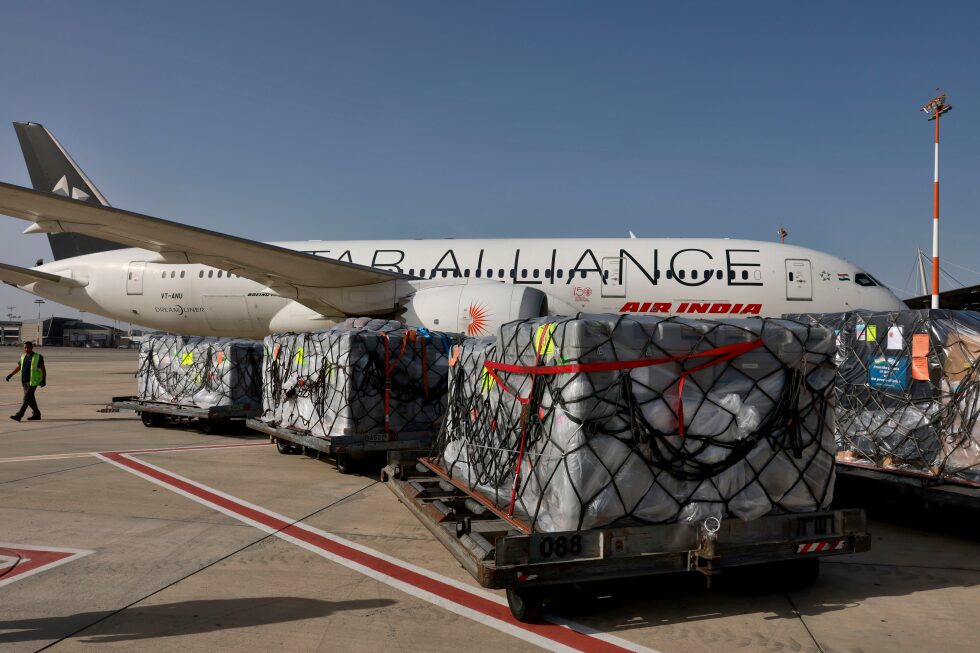
India’s civil aviation agency designated much of the Middle East as a high-security risk zone at all altitudes. Air India cancelled all flights to the region, while Turkish Airlines suspended flights to Lebanon, Syria, Iraq, Iran, and Jordan until Monday, with additional suspensions to Qatar, Kuwait, Bahrain, UAE and Oman.
U.S. carriers Delta and United suspended Tel Aviv services through the weekend. KLM had already halted flights there earlier in the week. Multiple European airlines including Lufthansa, Air France, and Transavia cancelled all Lebanon flights, while American Airlines suspended Philadelphia-Doha service.
Virgin Atlantic announced it would avoid Iraqi airspace, potentially lengthening flight times to India, the Maldives, and Riyadh. The airline was already avoiding Iranian airspace and said all flights would carry appropriate fuel reserves in case of necessary rerouting. British Airways suspended flights to Tel Aviv and Bahrain until next week, with Saturday flights to Amman, Jordan also cancelled.
“Travelers should anticipate that there will be a lot of disruptions,” Harteveldt cautioned. “If you haven’t left home, chances are you won’t be leaving home if you’re supposed to travel to or through these destinations for at least several days. And if you are returning home, you will have to be very creative about how you get home.”
Fact Checker
Verify the accuracy of this article using The Disinformation Commission analysis and real-time sources.

9 Comments
As someone invested in mining and energy stocks, I’m closely watching this unfolding situation. Attacks on airports and airspace closures in the Middle East could delay or disrupt the shipment of critical commodities like oil, copper, lithium, and uranium. This type of geopolitical instability is concerning for the markets.
As a frequent traveler in the region, this attack and airspace closures are very concerning. The impact on passenger volumes and logistics at major hubs like Dubai and Abu Dhabi is likely to be substantial. I wonder if there will be knock-on effects for commodity supply chains that rely on these transportation networks.
Good point. The disruption to air cargo and supply chains in the region could have broader economic implications beyond just passenger travel.
This is certainly a concerning situation for travelers in the region. Strikes on major aviation hubs like Dubai and Abu Dhabi will likely cause widespread delays and disruption. I wonder how long it will take to restore full operations and get passengers to their destinations.
Yes, the closure of airspace in multiple countries is quite disruptive. Hopefully the situation can be resolved quickly to minimize further travel chaos.
The attack on Iran and the resulting flight disruptions across the Middle East are very troubling. This will have a significant economic impact on the aviation and tourism industries in the region. I hope the parties involved can de-escalate the situation and restore stability as soon as possible.
Absolutely. The fallout from these attacks is going to be felt far and wide. Restoring normal flight operations will be critical to mitigate the damage.
This is a troubling development that could have ripple effects across global commodity markets. Strikes on major airports in the Middle East could disrupt shipments of key resources like oil, minerals, and metals. I hope the situation deescalates quickly to minimize any supply chain issues.
Agreed. Maintaining the stability and reliability of transportation infrastructure is crucial for commodity producers and traders. This attack threatens to create significant logistical challenges.