


Listen to the article
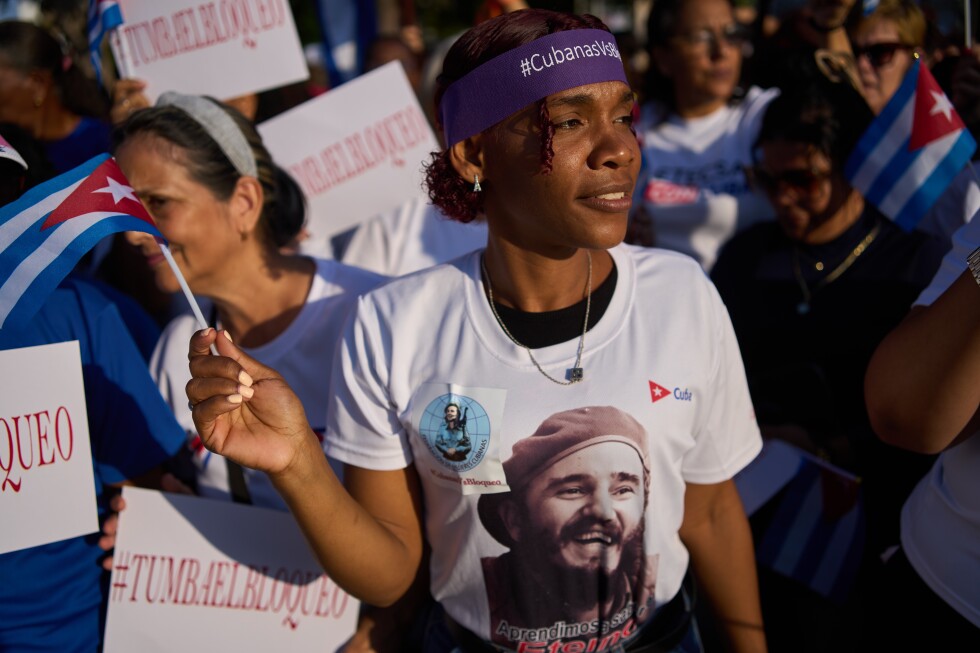
Hundreds of Cuban women took to the streets of Havana on Tuesday to protest against U.S. sanctions that they say are crippling their nation’s economy and causing widespread hardship across the Caribbean island.
The demonstration, organized by the Federation of Cuban Women, an influential organization with strong ties to the government and Communist Party, honored the memory of Vilma Espín, the federation’s founder and wife of former president Raúl Castro.
Protesters gathered at a park dedicated to a 19th-century independence hero, waving Cuban flags and holding signs with messages such as “Down with the Blockade.” Many carried images of revolutionary leader Fidel Castro and Espín, who herself was a prominent guerrilla fighter during the Cuban Revolution.
Several high-ranking officials led the rally, including Deputy Prime Minister Inés María Chapman, Deputy Foreign Minister Josefina Vidal, and Mariela Castro, daughter of Raúl Castro and Espín.
“This policy of abuse has to stop,” Vidal told The Associated Press during the event. “The Cuban people don’t deserve this. It’s the most comprehensive, all-encompassing, and longest-running system of coercive measures ever imposed against an entire country.”
Vidal, who played a key role in the historic 2014 diplomatic breakthrough between Cuba and the United States during Barack Obama’s presidency, described the embargo as a form of collective punishment prohibited under international law.
The rally comes at a particularly difficult moment for Cuba’s economy. In early January, U.S. actions against Venezuela disrupted critical oil shipments to the island. Later that month, President Donald Trump threatened sanctions against any nation selling or supplying oil to Cuba, further tightening the economic pressure.
The energy crisis has eased somewhat in recent days after a Russian tanker delivered 730,000 barrels of crude oil to Cuba, ending a three-month petroleum drought. Russia has announced plans to send a second shipment. Trump has reportedly indicated he would not oppose these Russian deliveries, despite his administration’s broader policy of isolating Cuba.
Cuba currently produces only about 40% of the fuel it consumes, and the shortage has had devastating effects across the island. Public transportation has been severely curtailed, healthcare services disrupted, and production of essential goods and services hampered. These problems have deepened an economic crisis that has afflicted Cuba for the past five years.
For ordinary Cubans, the impact is deeply personal. “I am here fighting for the people of Cuba,” said Leydys de la Cruz, a 57-year-old seamstress who participated in Tuesday’s demonstration. “I would ask Trump to leave us in peace. The situation is very bad because of the blockade he’s imposed on us.”
Georgina Reyes, a 36-year-old IT technician, expressed similar sentiments: “I would tell him that we don’t hurt anyone… Please don’t hurt us.”
The Trump administration has maintained pressure for regime change in Cuba and has threatened more aggressive actions. Secretary of State Marco Rubio, whose parents emigrated from Cuba, has consistently advocated for the release of political prisoners and economic liberalization on the island.
While both governments have acknowledged ongoing discussions, the scope and substance of these talks remain unclear. The current diplomatic impasse represents a significant reversal from the Obama-era thaw in relations, which had raised hopes for normalized ties between the longtime adversaries.
For Cuba, which has endured various forms of U.S. sanctions since 1960, the current crisis highlights the island’s continued vulnerability to external economic pressure, particularly in the energy sector. Analysts suggest that finding alternative suppliers and reducing dependency on imported fuel remain critical challenges for the Cuban government as it navigates this latest chapter in its complicated relationship with its powerful northern neighbor.
Fact Checker
Verify the accuracy of this article using The Disinformation Commission analysis and real-time sources.

14 Comments
This protest by Cuban women is a powerful reminder of the real-world consequences of economic sanctions. While the US and Cuba have a long, contentious history, the wellbeing of the Cuban people should be the top priority. I hope a diplomatic solution can be found.
Agreed. Sanctions often end up hurting vulnerable populations the most. A more nuanced, humanitarian approach is needed here to address the root issues.
This protest highlights the very real human toll of geopolitical disputes. While the US-Cuba relationship is complex, the wellbeing of the Cuban people should be the top priority. I hope this rally helps bring more attention to the devastating impacts of the energy blockade.
Agreed. Sanctions often end up disproportionately harming vulnerable populations. A more compassionate, diplomatic approach is clearly needed to address the underlying issues here.
The Cuban women’s rally against the US energy blockade is a powerful display of resistance. It’s critical to understand the real-world impacts these sanctions have on the Cuban people’s daily lives and livelihoods.
Agreed. The blockade seems to be causing significant hardship, and the Cuban people deserve to have their basic needs met.
It’s admirable that these Cuban women are speaking out and demanding change. The US blockade has clearly had a devastating impact on the country’s energy infrastructure and economic development. This is an important issue that deserves more attention.
I agree. The Cuban people shouldn’t have to bear the brunt of political tensions between their government and the US. A diplomatic solution seems long overdue.
The Cuban women’s rally against the US energy blockade is an important act of resistance. These sanctions have had a devastating impact on the country’s infrastructure and economy, and the Cuban people should not have to bear that burden. I hope this protest sparks greater awareness and action.
Absolutely. The human rights implications of this blockade are deeply concerning. The international community should pressure the US to reconsider this policy and its impact on ordinary Cubans.
This protest highlights the human toll of geopolitical disputes. While the US and Cuba have a complex history, the wellbeing of ordinary citizens should be the priority. I hope a diplomatic solution can be reached to ease the suffering.
Absolutely. Sanctions often end up harming vulnerable populations the most. A more humanitarian approach is needed here.
While the geopolitical factors are complex, the human rights implications of this blockade are deeply concerning. I hope the international community will put pressure on the US to reconsider this policy and its impact on the Cuban people.
Absolutely. The Cuban people deserve to have their basic needs met, regardless of political disputes. This protest highlights the urgent need for a more compassionate approach.