


Listen to the article
Silicon Valley Warms to Humanoid Robots as AI Boom Fuels Investment
Robots have long been considered a risky investment in Silicon Valley—too complex, capital-intensive and, in the words of venture capitalist Modar Alaoui, “boring, honestly.” But the commercial explosion in artificial intelligence has reinvigorated long-held ambitions to develop humanoid robots capable of moving and working like humans.
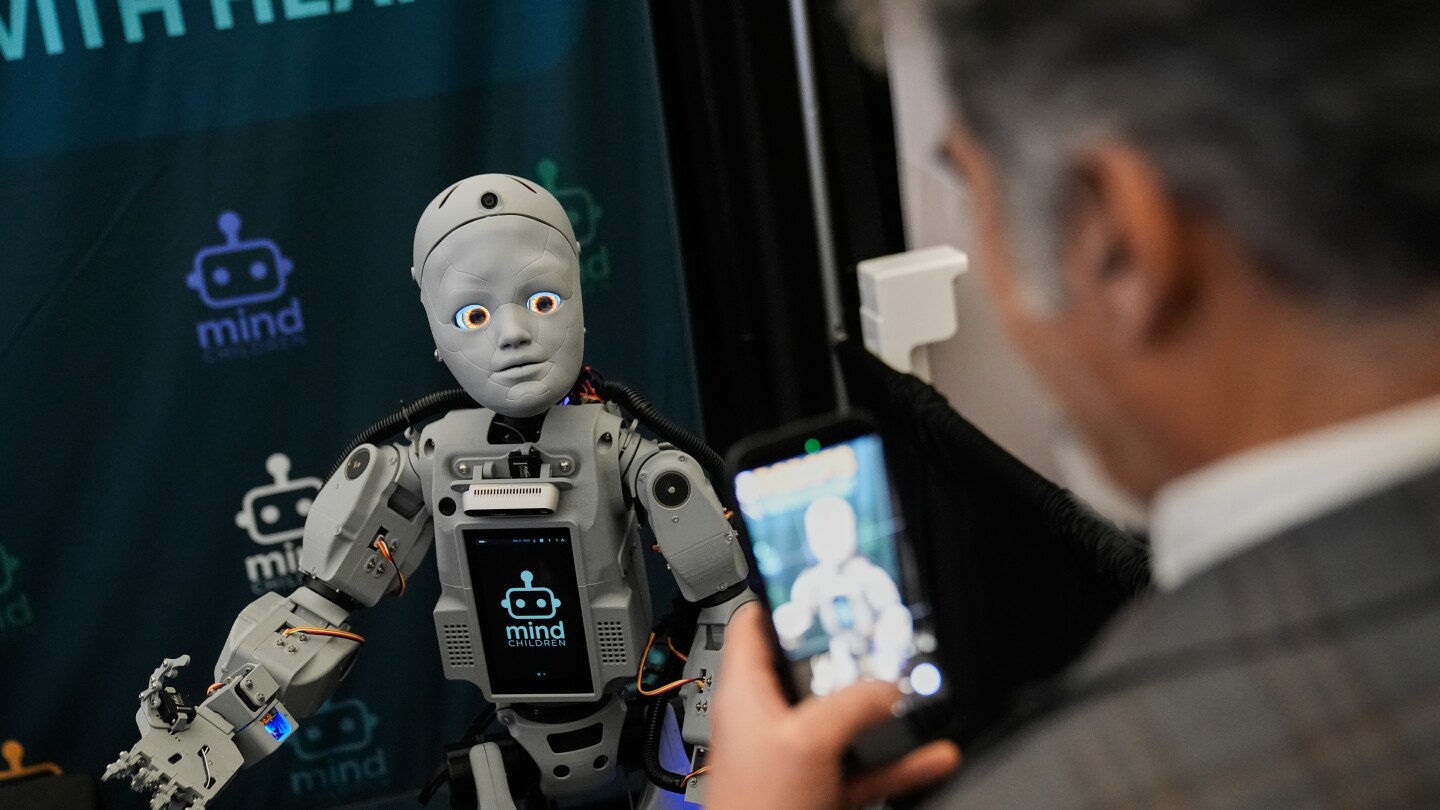
This renewed interest was on full display at the Humanoids Summit in Mountain View, California this week. The event, founded by Alaoui, drew more than 2,000 attendees, including top robotics engineers from Disney, Google, and dozens of startups eager to showcase their technologies and debate the industry’s future.
“Many researchers now believe humanoids or some other kind of physical embodiment of AI are going to become the norm,” said Alaoui. “The question is really just how long it will take.”
One of the more eye-catching demonstrations came from Disney, which plans to deploy a walking robotic version of “Frozen” character Olaf at Disneyland theme parks in Hong Kong and Paris early next year. While such entertainment robots are already feasible, the timeline for developing “general purpose” robots capable of productive work in workplaces or homes remains much further off.
Even at this industry conference, set in the Computer History Museum—a monument to Silicon Valley’s technological triumphs—skepticism about truly humanlike robots achieving mainstream adoption persisted.
“The humanoid space has a very, very big hill to climb,” cautioned Cosima du Pasquier, founder and CEO of Haptica Robotics, which works to give robots a sense of touch. The Stanford University postdoctoral researcher, who incorporated her startup just a week before the conference, added, “There’s a lot of research that still needs to be solved.”
According to McKinsey & Company, approximately 50 companies worldwide have raised at least $100 million each to develop humanoids. The research shows China leads with roughly 20 companies, followed by North America with about 15. China’s dominant position stems partly from government incentives for component production and robot adoption, including a mandate issued last year “to have a humanoid ecosystem established by 2025,” explained McKinsey partner Ani Kelkar.
Chinese firms had a strong presence in the expo section of the summit. The most commonly displayed humanoids were made by China’s Unitree, which American researchers often purchase as relatively affordable platforms to test their own software.
In the United States, the emergence of generative AI chatbots like OpenAI’s ChatGPT and Google’s Gemini has energized the decades-old robotics industry. Investor excitement has funneled substantial capital into ambitious startups aiming to give physical form to the latest AI technologies.
The connection goes beyond mere funding crossover—the same technical breakthroughs powering sophisticated AI chatbots are helping robots perform tasks more effectively. When combined with computer vision, robots using “visual-language” models can be trained to better understand their surroundings.
Not everyone shares the enthusiasm. Robotics pioneer Rodney Brooks, who co-founded iRobot (maker of the Roomba vacuum), wrote in September that “today’s humanoid robots will not learn how to be dexterous despite the hundreds of millions, or perhaps many billions of dollars, being donated by VCs and major tech companies to pay for their training.” Though Brooks wasn’t present, his skepticism was frequently referenced at the conference.
Notably absent was any representative discussing Tesla CEO Elon Musk’s humanoid robot called Optimus. Three years ago, Musk claimed the “extremely capable” robot would be available for purchase “within three to five years.”
Alaoui, who previously worked on driver attention systems for the automotive industry, sees parallels between humanoids and the early development of autonomous vehicles. Near the summit venue, just blocks from Google’s headquarters, stands a museum exhibit featuring Google’s bubble-shaped 2014 self-driving car prototype. Today, robotaxis operated by Google affiliate Waymo regularly navigate the surrounding streets—a reminder of how quickly emerging technologies can evolve.
Some robots with human elements are already entering the workforce. Oregon-based Agility Robotics recently announced it’s deploying its tote-carrying warehouse robot Digit at a Texas distribution facility operated by Latin American e-commerce giant Mercado Libre. Like Disney’s Olaf robot, Digit features inverted, birdlike legs rather than human-style limbs.
Industrial robots performing specialized tasks have long been standard in manufacturing environments, working with precision and speed difficult for today’s humanoids—or humans—to match.
Jeff Burnstein, president of the Association for Advancing Automation, a robotics trade group founded in 1974, is now lobbying the U.S. government to develop a stronger national robotics strategy.
“We have a lot of strong technology, we have the AI expertise here in the U.S.,” Burnstein said after touring the expo. “So I think it remains to be seen who is the ultimate leader in this. But right now, China has certainly a lot more momentum on humanoids.”
Fact Checker
Verify the accuracy of this article using The Disinformation Commission analysis and real-time sources.

10 Comments
Fascinating to see how humanoid robots are gaining traction in Silicon Valley. While the technology is clearly advancing, I’m curious to hear more about the lingering skepticism around the feasibility and practicality of these robots for real-world applications.
I share your sentiment. The entertainment use cases seem promising, but scaling these robots for broader commercial and industrial use likely faces significant technical and cost hurdles that need to be addressed.
It will be interesting to see how the development of humanoid robots progresses in the coming years. The technology seems to be advancing rapidly, but the challenges around scalability, cost, and practical applications remain. I’m curious to hear more insights from the industry leaders who attended the Humanoids Summit.
Agreed. The summit likely provided a valuable forum for robotics experts to share their perspectives on the current state of the technology and the path forward for overcoming the remaining hurdles to broader commercialization.
While the progress in humanoid robotics is impressive, I’m curious to understand the specific use cases and value propositions that will drive widespread commercial adoption beyond entertainment. The capital-intensive nature of these systems seems to be a key hurdle to overcome.
That’s a fair concern. The industry will likely need to demonstrate clear return on investment and productivity gains for humanoid robots to gain traction in more practical, industrial applications beyond just entertainment.
The AI boom is certainly fueling new investment and innovation in humanoid robotics. I’m eager to see how Disney’s deployment of an Olaf robot at their theme parks turns out. Integrating these types of robots into the customer experience could be a game-changer.
You raise a good point. Humanoid robots could revolutionize the theme park and entertainment industry if they can be reliably integrated and offer a seamless, engaging experience for visitors.
The increasing interest and investment in humanoid robotics is an exciting development, but I share the concerns about the feasibility and real-world applications beyond entertainment use cases. I’ll be following this space closely to see how the technology evolves and where it can provide the most value.
Well said. The industry’s ability to demonstrate practical, cost-effective use cases for humanoid robots outside of theme parks and similar entertainment settings will be crucial to driving mainstream adoption.