


Listen to the article
When Marcy Smith was told she needed radiation treatment for breast cancer, she faced a difficult choice. Living in Glendive, Montana, the nearest treatment center was 220 miles away in Billings. The six-week treatment regimen seemed impossible—she couldn’t relocate, miss work, or leave her foster children for such an extended period.
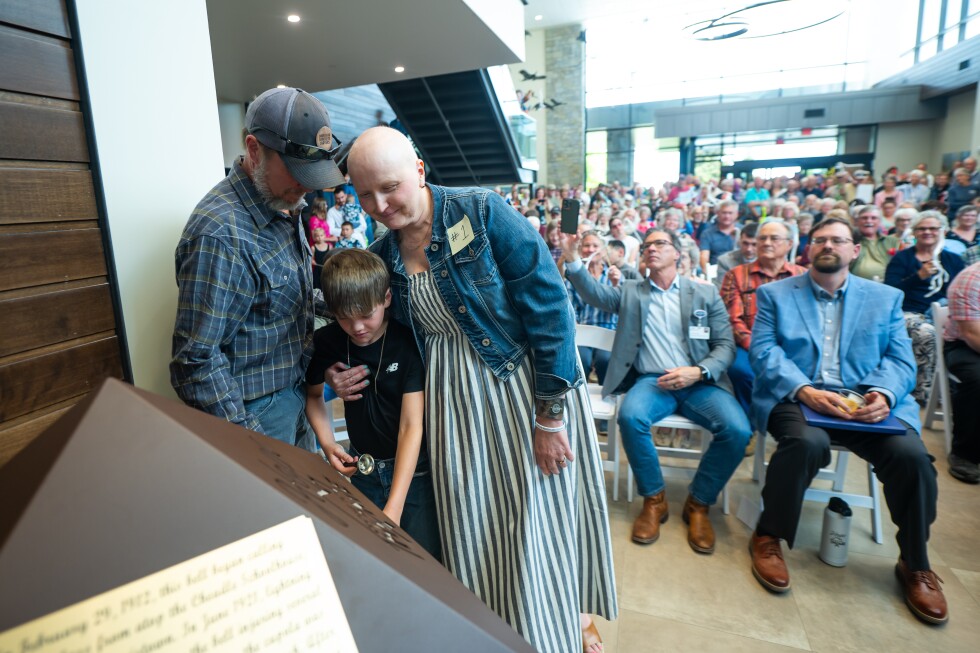
Just as Smith was preparing to decline potentially life-saving treatment, her oncologist delivered unexpected news: a cancer center was opening at a hospital in Miles City, just an hour from her home. The proximity changed everything. For six weeks, Smith was able to pick up her foster daughter from kindergarten, drive to her radiation appointment, and return home in time to prepare dinner.
One year later, Smith is cancer-free. “Thank the lord,” she says. “Getting the radiation was probably life-saving for me.”
The cancer center that made Smith’s treatment possible was largely funded by an unlikely benefactor: the charitable trust of Leona Helmsley, the infamous New York hotel magnate once dubbed the “queen of mean.” The Leona M. and Harry B. Helmsley Charitable Trust contributed $6 million toward the $17 million Miles City cancer center, part of more than $850 million the organization has invested in rural healthcare across the Upper Midwest and Rocky Mountain regions since 2009.
This philanthropic support comes at a critical time for rural healthcare systems. Between 2005 and 2023, 81 rural hospitals closed across the United States. Recent cuts to Medicaid threaten more closures despite Congress allocating $50 billion over five years to support rural healthcare—a sum independent analysts say covers only one-third of what rural facilities stand to lose from Medicaid reductions.
While philanthropic efforts like Helmsley’s cannot fully replace federal funding, they help narrow the quality gap between rural and urban healthcare services. The trust expects to spend $84 million on rural healthcare initiatives in its current fiscal year ending in March.
“Your ZIP code should not determine your health outcomes,” says Walter Panzirer, Helmsley trustee and architect of the rural health program. “And yet for so many rural Americans, it does.”
Panzirer, Helmsley’s grandson, brings personal experience to his role. After moving to South Dakota to pursue his love of the outdoors, he spent nearly a decade as a police officer, witnessing firsthand how limited healthcare options affect rural communities—especially those struggling with mental health issues in areas where psychiatric services are scarce or nonexistent.
When Leona Helmsley died in 2007, she named Panzirer as a trustee of her philanthropy. Despite initial challenges over how funds could be used—Helmsley famously wanted her fortune to benefit dogs—Panzirer successfully advocated for a rural healthcare focus, recognizing that few national foundations prioritized these underserved areas.
“I understood the challenges, the differences, and sometimes the inequities with rural America not always having state-of-the-art medical equipment or not having access to specialty care,” Panzirer explains. “That was kind of a lived experience for me.”
The trust established headquarters in Sioux Falls, South Dakota, a regional healthcare hub. Four program officers now travel extensively throughout the region, meeting with hospital executives, medical professionals, and first responders to assess local needs.
The foundation has distributed $60.4 million to provide more than 24,000 automated external defibrillators to police officers and first responders. These life-saving devices have already been credited with more than 600 successful resuscitations following heart attacks.
“In rural America, if you have a heart attack, law enforcement will show up,” Panzirer notes. “A lot of times they’ll get there quicker than the volunteer ambulance service.”
The trust has funded over 70 mammogram machines across the region, working toward ensuring no patient needs to travel more than 60 miles for breast cancer screening. More than $100 million has been invested in telemedicine infrastructure, connecting rural patients with specialists in distant medical centers.
In South Dakota, Nevada, and Wyoming, Helmsley launched “virtual crisis care,” equipping police officers with tablets to connect people experiencing mental health crises with remote counselors. The program addresses a need Panzirer witnessed as an officer, when he sometimes had to hold suicidal individuals in jail cells because no mental health services were available.
Helmsley’s cancer care initiative has established comprehensive centers in five rural communities, with a goal that no rural resident should travel more than 100 miles for cancer treatment. The Central Montana Medical Center in Lewistown exemplifies this approach. CEO Cody Langbehn acknowledges that without Helmsley’s $9 million contribution, a cancer center would have been unimaginable for the small hospital. The grant catalyzed additional local fundraising, ultimately covering most of the $19 million facility cost.
Across 20 health centers, Helmsley has invested $128 million to expand access to chemotherapy and radiation services. Karen Costello, former president of the Miles City hospital, emphasizes that Helmsley’s thorough sustainability planning is as valuable as its financial support. “The worst thing you can do is bring a wonderful service to a market and then have it peter out after five or six years,” she says. “That’s worse than never having it at all.”
The trust also targets small cities in predominantly rural areas that serve as regional medical hubs. At Billings Clinic, Montana’s largest hospital, Helmsley has funded Montana’s first internal medicine and psychiatric residency programs, its first surgical intensive care unit, and a new center supporting rural hospitals and patient transfers.
Jim Duncan, who recently retired after 30 years leading the clinic’s foundation, credits Panzirer’s firsthand rural healthcare experience for the trust’s impact throughout the region. “He has a very strategic eye for where the needs and gaps are—and how to creatively pursue ways that philanthropy can be transformational.”
Fact Checker
Verify the accuracy of this article using The Disinformation Commission analysis and real-time sources.

16 Comments
The impact of this $6 million investment in the Miles City cancer center is quite remarkable. Enabling patients like Marcy Smith to receive life-saving radiation treatment close to home is truly transformative.
Absolutely, the convenience and accessibility of the new cancer center was clearly a game-changer. It’s wonderful to see the Helmsley Charitable Trust’s funds being deployed so effectively.
I’m curious to know more about the Helmsley Charitable Trust’s broader strategy and focus areas when it comes to rural healthcare initiatives. Expanding access to critical services like this seems like a high-impact investment.
That’s a great question. The Trust’s rural healthcare work is clearly making a meaningful difference, and I’d be interested to learn about their other projects in this space as well.
While Leona Helmsley had a notorious reputation, it’s impressive to see her charitable trust having such a positive impact on people’s lives. The Miles City cancer center is an important example of how strategic philanthropy can address pressing community needs.
Agreed, this is a great example of philanthropy done right – leveraging resources to solve real problems and improve outcomes for underserved populations. It’s admirable to see the Helmsley Trust making such a difference.
It’s heartening to see the Helmsley Charitable Trust’s focus on improving rural healthcare access. Providing cancer patients like Marcy Smith the ability to receive treatment close to home is truly life-changing.
Absolutely, the convenience and proximity of the new cancer center was clearly a crucial factor in Marcy Smith’s ability to complete her treatment. This kind of targeted, community-based investment can have an outsized impact.
While Leona Helmsley had a controversial public image, this charitable trust’s support for the Miles City cancer center demonstrates how philanthropy can be leveraged to address critical healthcare needs in rural America.
You make a good point. It’s admirable to see the Helmsley Trust using its resources to tackle real problems and improve lives, regardless of the founder’s past reputation. This is a positive legacy to build on.
Fascinating to see how the Helmsley Charitable Trust is making a real difference in rural communities, providing critical cancer treatment access. This is an inspiring example of philanthropy addressing an important healthcare challenge.
I agree, it’s great to see a notorious figure like Leona Helmsley leaving a positive legacy through her charitable trust. Access to cancer care is so vital, especially for remote areas.
The $6 million contribution from the Helmsley Charitable Trust towards the Miles City cancer center is an impressive and impactful investment. Expanding access to life-saving cancer treatment in rural areas is so important.
Agreed, this is a great example of strategic philanthropy making a tangible difference. The Helmsley Trust’s focus on rural healthcare initiatives is commendable and clearly delivering meaningful results for local communities.
The $6 million investment in the Miles City cancer center is a significant contribution, especially for a rural community. It will be interesting to see if this model can be replicated in other remote areas facing similar healthcare access challenges.
That’s a good point. If this proves to be a successful and sustainable approach, it could serve as a template for expanding cancer care and other vital services to other rural regions in need.