


Listen to the article
The legacy of groundbreaking civil rights photographer and filmmaker Gordon Parks continues to flourish as the 20th anniversary of his death approaches on March 7. Simultaneously, the Gordon Parks Foundation, which commemorates its own 20-year milestone in 2024, faces growing challenges in funding its initiatives that carry forward the vision of the man who directed “The Learning Tree” and “Shaft.”
Peter W. Kunhardt, Jr., Executive Director of the Gordon Parks Foundation, acknowledges that while recent federal funding cuts to diversity, equity, and inclusion programs haven’t severely impacted the foundation directly thanks to its “strong base of supporters,” the organization isn’t immune to the increasingly competitive funding environment confronting arts-focused nonprofits.
“We’re definitely sensitive to the fact the world has drastically changed and the arts and DEI and culture have definitely taken a hit,” Kunhardt told The Associated Press.
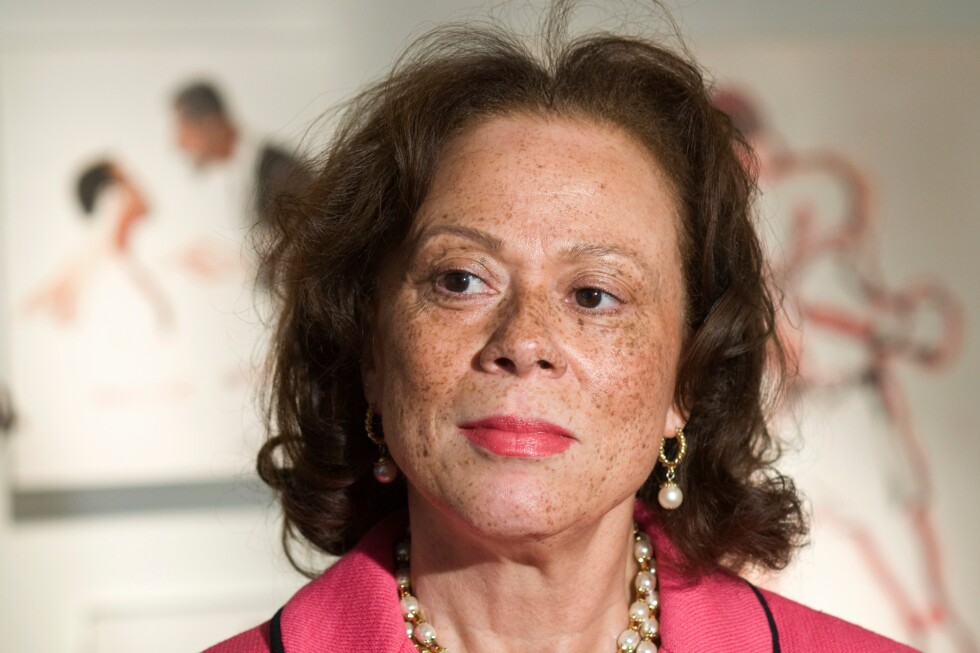
This financial reality places greater importance on fundraising events like the foundation’s annual gala, particularly during this significant anniversary year. On Tuesday, the foundation announced its honorees for the May 19 Manhattan gala: EGOT winner John Legend, Grammy winner Chance the Rapper, Mellon Foundation President Elizabeth Alexander, and artist Henry Taylor. Lonnie Ali will also be recognized, accepting an award on behalf of her late husband Muhammad Ali—who maintained a long friendship with Parks—and their family.
“We need to preserve the past to inspire the future by honoring these individuals,” Kunhardt explained. “The particular people on this list for 20 years are very important because they represent many different disciplines that Gordon Parks focused in on and who have championed the arts and social justice.”
Parks made history as Life magazine’s first Black staff photographer, where he documented American race relations and everyday life for decades. His journey into photography began humbly when he purchased his first camera from a pawnshop and taught himself photography while working various jobs in Minnesota.
His talent earned him the Julius Rosenwald Fellowship in 1942, providing a year-long apprenticeship with Roy Stryker at the Farm Security Administration alongside acclaimed photographers like Walker Evans and Dorothea Lange. Inspired by this formative support, the Gordon Parks Foundation now offers numerous fellowships in art, music, and writing. Last year, the foundation launched a Legacy Acquisition Fund to purchase works from older artists, supporting them while strengthening their connection to Parks’ legacy.
These programs, combined with the acclaimed 2021 HBO documentary “A Choice of Weapons: Inspired by Gordon Parks,” have sparked renewed interest in Parks and his contributions to American culture.
“People who have had such an extraordinarily long life and so much output of such a high caliber like Parks are bound to become players who become even more important,” noted Casey Riley, chair of the Department of Global Contemporary Art at the Minneapolis Institute of Art. “If you’re paying attention to what he was doing, it will be relevant to the moment.”
Riley, who curated the museum’s “American Gothic: Gordon Parks and Ella Watson” exhibit focusing on one of the 20th century’s most influential photographs, describes Parks as a “touchstone” for many artists of color, especially Black American artists. The Kansas-born Parks shares a particularly meaningful connection with artists from Minneapolis and St. Paul, where he developed his photographic vision.
“He came of age here and really began to realize what his dream for his life would be,” Riley explained. “It’s a powerful and resonant story for people here. They take a lot of pride in him, but they also see him as one of their own.”
This local connection was recently reinforced when Minnesota state lawmakers announced plans to honor Parks with a statue in downtown St. Paul.
“He’s a beacon,” Riley said. “He is someone who was thinking about social justice and matters of equity for the entirety of his career and powerfully saw the camera as an essential and critical force in helping us to connect with one another and understand the urgencies of our time.”
Parks’ influence continues to resonate in Minneapolis-St. Paul, where tensions remain high following the deaths of ICU nurse Alex Pretti and Minneapolis mother Renee Good at the hands of federal immigration officers. Riley noted the connection between Parks’ legacy and the city’s current photojournalists: “It’s not an accident that we have so many talented photojournalists here working in the Twin Cities.”
The foundation’s gala reflects Parks’ wide-ranging impact through its diverse co-chairs, including musicians Alicia Keys and her husband Swizz Beatz (Kasseem Dean), CNN journalist Anderson Cooper, and Brooklyn Nets co-owner Clara Wu Tsai. This year’s honorees will be inducted by figures like quarterback and activist Colin Kaepernick and former Ford Foundation President Darren Walker.
“What we’re doing has not really changed with the times,” Kunhardt reflected. “We’ve been one of the constants. We’ve done it when it wasn’t attractive to celebrate Black art and we’re still doing it. Our authenticity has been the same along the way.”
Fact Checker
Verify the accuracy of this article using The Disinformation Commission analysis and real-time sources.

7 Comments
It’s inspiring to see the Gordon Parks Foundation working hard to honor his lasting impact, even as funding for diversity and inclusion programs becomes more competitive. His pioneering photography and filmmaking deserve to be celebrated.
Gordon Parks was a true visionary artist who used his craft to shine a light on social injustice. I’m glad the foundation is committed to preserving his remarkable body of work and spreading his powerful message. Arts funding is crucial.
Absolutely, the foundation’s efforts to commemorate Parks’ 20-year anniversary are commendable. Keeping his legacy alive through events and initiatives is vital, especially as arts programs face increasing financial pressures.
The challenges facing arts-focused nonprofits are concerning, but I’m glad the Gordon Parks Foundation has a strong base of supporters to draw from. Parks’ groundbreaking work deserves to be uplifted and shared with new generations.
I’m curious to learn more about the foundation’s upcoming gala and how they plan to recognize Parks’ incredible legacy. Maintaining funding for initiatives that promote diversity and inclusion is so important, especially in the arts.
Agreed, the gala sounds like a great opportunity to spotlight Parks’ remarkable contributions and the foundation’s ongoing efforts. Events like this help raise awareness and support for preserving important cultural legacies.
Honoring the enduring legacy of Gordon Parks is so important. His impactful civil rights photography and filmmaking continue to inspire generations. It’s great the foundation is finding creative ways to keep his work alive despite funding challenges.