


Listen to the article
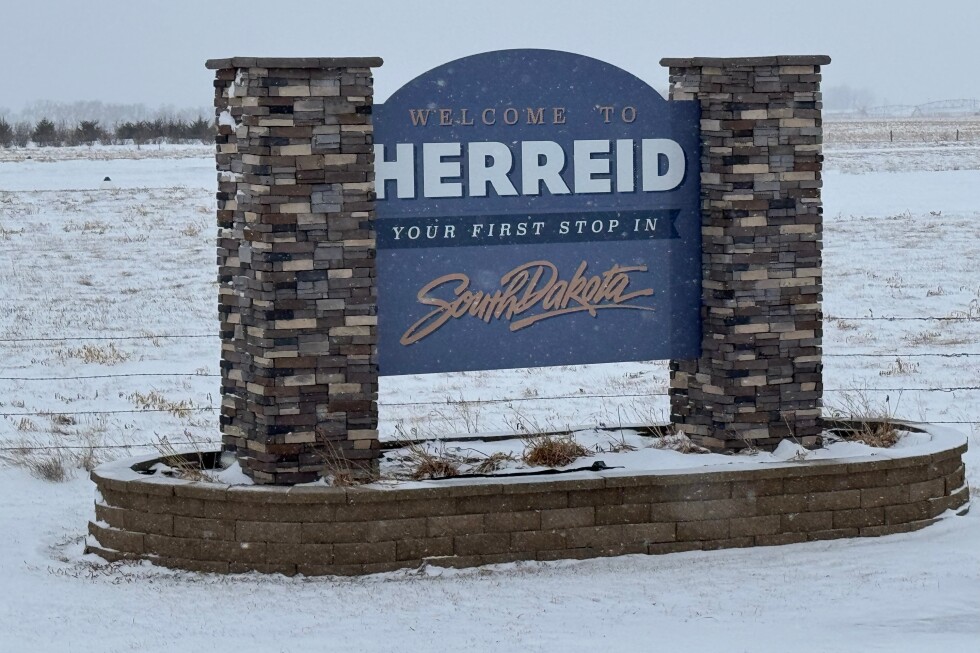
Driving through the quiet streets of Herreid, South Dakota, Dick Werner can hardly go a block without pointing out new homes or apartments that have emerged in recent years. Though this northern agricultural town of roughly 400 residents has only a handful of streets branching off U.S. Highway 83, the signs of revitalization are unmistakable.
Werner, 68, speaks with palpable enthusiasm about how local leaders have sparked a rebirth in this ranching community just seven miles south of the North Dakota border. A retired banking executive with experience in the state Legislature and county commission, Werner now volunteers as president of Herreid Area Housing Development (HAHD).
When he returned to his hometown in 2016 after spending his adult life elsewhere, Werner found a community in decline. The local grocery store had closed, and school enrollment had fallen to just 109 students—barely above the threshold where state law would require dissolving the school district.
“If you lose your school and your grocery store, your town is in trouble,” Werner explained.
Herreid’s population had been shrinking steadily since its 1960 peak of 767 residents, dropping to 416 by 2020 according to U.S. Census data. School enrollment mirrored this decline as the population aged and fewer families with children made Herreid their home.
Werner recognized that rebuilding the housing stock was critical to attracting families and workers—the backbone of any small town’s future. “We were really hurting for homes because without places to live, there’s no way people can move here to work or raise a family,” he said.
Like many remote South Dakota communities, Herreid isn’t an attractive target for private housing developers. Profit margins are too narrow, and securing materials and skilled workers presents significant challenges. Instead, the town has turned to a unique funding model to finance housing development.
Over the past decade, Werner has secured $2.2 million in grants to fund new housing, rehabilitate existing homes and businesses, and develop municipal amenities including a pool, playground and sports complex. Funding sources include the South Dakota Housing Authority, USDA Rural Development, the Land, Water and Conservation Fund, the South Dakota Community Foundation, and numerous other organizations.
HAHD created an additional pool of about $180,000 by soliciting loans from 30 committed local residents. The group also raised more than $250,000 through fundraising events, including $200,000 from a Queen of Diamonds raffle program held at a local tavern.
“You just have to know where to get the money,” Werner said. “You’ve got to have connections and partnerships, but it’s important to know that there are resources across the state to help your community.”
These funding efforts have produced tangible results. HAHD has developed five speculative homes that sold before completion, bringing 25 new residents to town. The organization has helped newcomers acquire homes through the state Governor’s House program, which uses prison inmate labor to build affordable housing.
The group now owns 16 fully-occupied apartment units and recently secured $700,000 in grants to construct a new three-unit apartment building. They’ve also funded improvements to 18 existing homes and are currently marketing eight fully-serviced lots north of downtown for just $7,000 each, with assistance available to keep construction and mortgage costs affordable.
“We want to get people into homes, to own them and have pride of ownership,” Werner emphasized.
Housing development has laid the foundation for economic revival. Through collaboration between town leaders, engaged residents, HAHD, and the Herreid Economic Development Corporation, the community has seen growth on multiple fronts.
Melinda Neeley, president of the development corporation, notes that housing expansion has enabled new businesses and residents to stabilize the local economy. Despite its small population, Herreid now supports a thriving grocery store, medical clinic, pharmacy, bank, day care, livestock yard, diesel repair shop, and hardware and feed store.
Public amenities have also received significant investment. A combination of tax revenue, grants, and donations funded a $200,000 sports complex, $145,000 playground upgrade, $1.1 million municipal pool renovation, and $20,000 pickleball court addition. The K-12 public school recently completed a $4 million expansion and renovation project.
“I feel like we’re on an upward trajectory,” Neeley said. “It takes the help of people from all of these different groups to not just maintain what we have but to grow the services we have here.”
Economic development efforts have attracted and strengthened employers providing quality jobs, including Pig Improvement Co., Agtegra Cooperative, and numerous agricultural operations and related businesses.
Kayla and Preston Huber moved to Herreid seven years ago, with Kayla opening Fresh Start Market to fill the town’s need for a grocery store. When they arrived, housing options were nearly non-existent, forcing them to renovate a double-wide trailer. Their successful business benefited from the housing development initiatives.
“More people want to get out of cities and big-city life, and this is a great place to raise a family,” Kayla noted. “We’ve had some younger couples move back, and I know a few more that would move back if there were more places to live.”
Werner predicts Herreid’s population will increase in the 2030 census—potentially the first growth in 70 years—and projects school enrollment will rise to about 150 students in the next four years. The community has become more diverse, with approximately 40 Hispanic residents on federal work visas and several Hutterite families moving to town.
“If you’re in small, rural communities in South Dakota, and you’re not willing to accept diversity, you’re not going to grow,” Werner observed.
While there’s no “special sauce” for generating rural growth, Werner emphasizes the need for committed leadership and perseverance. “Housing development is a marathon, not a sprint,” he said. “There’s been all these naysayers out there on all these projects, but once they see the results, the naysayers all go away.”
Reflecting on his efforts during a February drive around town, Werner acknowledged the challenges but emphasized the rewards. “I’ve run banks, groups of banks and managed dozens of employees, and this is the toughest thing I’ve ever done. But it’s also the most rewarding.”
Fact Checker
Verify the accuracy of this article using The Disinformation Commission analysis and real-time sources.

10 Comments
This is an encouraging sign of life for a rural community like Herreid. While housing alone may not be enough to fully turn the town around, it demonstrates that local leaders are taking proactive steps to address population decline and the loss of essential services. It will be interesting to see if this momentum can be sustained over the long run.
Absolutely. Revitalizing a small town requires a holistic, multi-year strategy. The housing development seems like a solid foundation, but Herreid will need to continue diversifying its economy, enhancing quality of life, and attracting new families and businesses to ensure lasting success.
The story of Herreid’s revitalization is an interesting case study in how small towns can leverage their strengths to spur growth. The fact that they were able to maintain their school district despite declining enrollment is commendable. It will be worth watching to see if this housing boom translates into broader economic and population gains for the community.
I agree, preserving critical community assets like the local school system is crucial. The housing development seems to be a good first step, but Herreid will need to continue innovating and adapting to ensure the town’s long-term viability.
I’m skeptical that new housing alone will be enough to fully revitalize a town the size of Herreid. While it’s a positive step, the community will likely need to focus on attracting jobs, improving infrastructure, and providing more services and attractions to keep residents, especially younger generations, from leaving.
That’s a fair point. Sustainable community development requires a multi-faceted approach beyond just building new homes. Herreid will need to address a range of economic, social, and civic challenges to truly thrive long-term.
It’s great to see Herreid, SD revitalizing its housing and community. Small towns often struggle to retain population, so this is an encouraging sign of growth and investment in the local area. I’m curious to learn more about the specific initiatives that drove this resurgence.
I agree, it’s heartening to see a small rural town like Herreid find ways to attract new residents and breathe new life into the community. Maintaining basic services like schools and grocery stores is crucial for these places to thrive.
The housing development in Herreid seems like an important catalyst for revitalizing the town’s economy and infrastructure. Losing the grocery store and struggling with declining school enrollment were clear warning signs, so it’s good to see local leaders taking proactive steps to address those challenges.
Absolutely, maintaining essential services and amenities is vital for the long-term viability of small towns. It will be interesting to see if this housing boom helps Herreid rebuild its economic base and attract more businesses and families to the area.