


Listen to the article
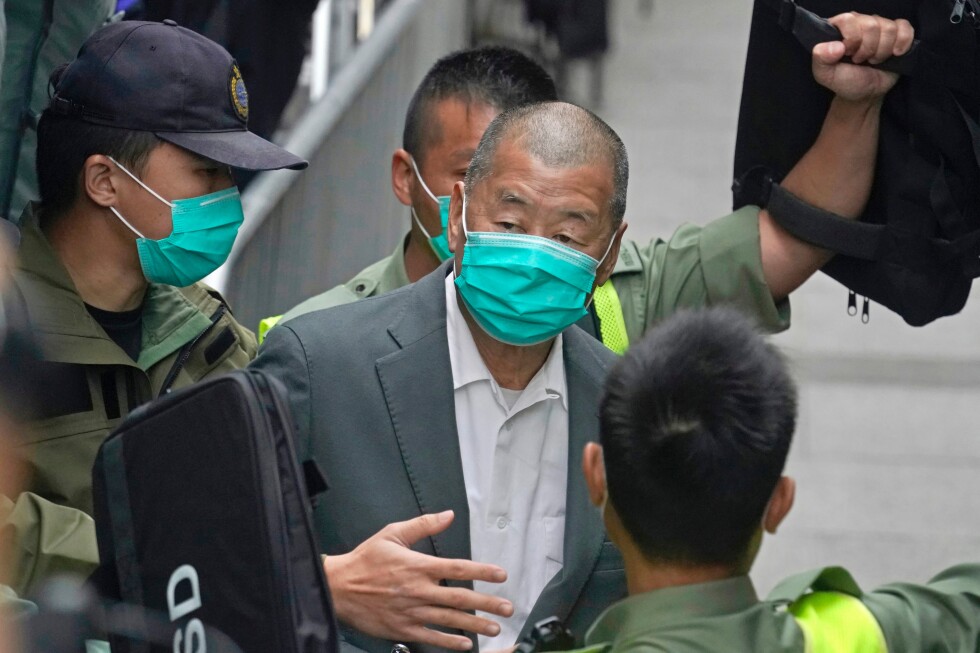
Hong Kong media mogul Jimmy Lai faces a potential life sentence on Monday as judges prepare to announce his punishment in one of the most significant cases under China’s controversial national security law, which has effectively silenced dissent in the former British colony.
In December, three government-vetted judges convicted the 78-year-old founder of the now-defunct Apple Daily newspaper of conspiring to collude with foreign forces and publishing seditious articles. Lai, who maintained his innocence throughout the proceedings, has already spent more than five years in custody.
The case has drawn international attention as a symbol of Hong Kong’s deteriorating press freedom and Beijing’s tightening grip on the territory that was once considered a bastion of media independence in Asia. Once known for its vibrant press landscape, Hong Kong has plummeted in global press freedom rankings, falling from 18th place in 2002 to 140th currently, according to Reporters Without Borders.
U.S. President Donald Trump has expressed concern over Lai’s situation, revealing he personally discussed the case with Chinese President Xi Jinping and “asked to consider his release.” The British government under Prime Minister Keir Starmer has similarly called for the release of Lai, who holds British citizenship.
“We will never stop fighting until he is free,” Lai’s daughter Claire told The Associated Press, expressing hope that authorities might yet show mercy toward her father, a Roman Catholic.
Prosecutors portrayed Lai as the mastermind behind efforts to request foreign sanctions against Hong Kong and China. During his 156-day trial, which included 52 days of personal testimony, Lai argued he had never called for foreign sanctions after the national security law’s implementation in 2020.
The judges disagreed, ruling that Lai “never wavered in his intention” to destabilize China’s ruling Communist Party. They specifically cited what they described as his “constant invitation” for the United States to take action against the Chinese government under the guise of helping Hong Kong residents.
Legal experts view the case as setting dangerous precedents for journalists and academics. Urania Chiu, a lecturer in law at Oxford Brookes University, noted the alarming breadth of what constitutes “collusion with foreign forces” under the court’s interpretation.
“Offering and publishing legitimate critiques of the state, which often involves engagement with international platforms and audiences, may now easily be construed as ‘collusion,'” Chiu warned.
Lai’s health has become a concern during his incarceration. In January, his lawyer Robert Pang reported that Lai suffers from heart palpitations, high blood pressure, and diabetes. While prosecutors maintain his condition remains stable, Pang argued that Lai’s health issues, advanced age, and solitary confinement would make any sentence “more burdensome.”
The Hong Kong government has repeatedly insisted the case has nothing to do with press freedom, claiming the defendants used journalism as a pretext for activities that harmed China and Hong Kong’s interests.
Several co-defendants are also scheduled for sentencing on Monday. These include six former Apple Daily executives and editors—publisher Cheung Kim-hung, associate publisher Chan Pui-man, editor-in-chief Ryan Law, executive editors-in-chief Lam Man-chung and Fung Wai-kong, and editorial writer Yeung Ching-kee. Unlike Lai, these individuals entered guilty pleas, which may result in reduced sentences. Two activists involved in the case, Andy Li and Chan Tsz-wah, also testified for the prosecution.
Apple Daily’s closure in June 2021 marked a significant blow to Hong Kong’s independent media. Founded by Lai in 1995, just two years before Hong Kong’s handover from British to Chinese rule, the newspaper had built a reputation for bold investigative reporting and pro-democracy coverage. Its final edition sold an unprecedented one million copies as supporters rallied to purchase what many viewed as the last testament to the city’s once-vibrant free press.
Before dawn on Monday, dozens of people lined up outside the courthouse to secure seats for the sentencing, reflecting the case’s profound significance for Hong Kong society.
“Whatever happens, it’s an end—at least we’ll know the outcome,” said former Apple Daily employee Tammy Cheung, expressing hope that the defendants might be released in time to celebrate the upcoming Lunar New Year with their families.
Fact Checker
Verify the accuracy of this article using The Disinformation Commission analysis and real-time sources.

16 Comments
It’s troubling to see a respected media figure like Lai facing such harsh punishment. This case serves as a stark reminder of the shrinking space for independent journalism and free expression in Hong Kong.
Absolutely. The deterioration of press freedoms in Hong Kong is a concerning trend that the global community must continue to address. Lai’s case is a clear example of the Chinese government’s intolerance for dissent.
This case highlights the alarming erosion of press freedoms in Hong Kong under China’s tightening grip. It’s crucial that global leaders continue to speak out and hold Beijing accountable for its crackdown on independent media and civil society.
Absolutely. The international community must remain vigilant and continue to pressure the Chinese government to uphold its commitments to Hong Kong’s autonomy and press freedoms. Cases like Lai’s are deeply troubling and deserve sustained attention.
This ruling underscores the challenges facing Hong Kong’s once-vibrant media landscape. As the territory’s press freedom ranking plummets, it’s crucial that global leaders continue to shine a spotlight on cases like Lai’s.
You’re right, the deterioration of press freedoms in Hong Kong is deeply troubling. This case serves as a sobering reminder of the authoritarian control Beijing seeks to exert over the territory.
The potential life sentence for Lai is deeply concerning and seems disproportionate to the charges. This case underscores the need for the international community to closely monitor the situation in Hong Kong and defend press freedoms.
I agree, the severity of the potential sentence is highly troubling. Lai’s case exemplifies the authoritarian measures the Chinese government is willing to take to stifle dissent and control the narrative in Hong Kong.
The potential life sentence for Lai is a concerning development that underscores the rapidly shrinking space for free expression in Hong Kong. This case serves as a stark reminder of the need for continued global scrutiny and action to defend press freedoms in the territory.
You’re right, this case is a troubling sign of the Chinese government’s intolerance for dissent and independent media in Hong Kong. It’s crucial that the international community remains engaged and continues to pressure Beijing to uphold its commitments to the territory’s autonomy.
While the details of Lai’s case are complex, the potential life sentence he faces is extremely concerning. This ruling could have a chilling effect on media freedom and dissent in Hong Kong.
Absolutely, the severe punishment for Lai is a clear message to Hong Kong’s media and civil society. It’s critical that the international community continues to pressure Beijing on these issues.
The fact that Lai has already spent over 5 years in custody is deeply concerning. This case highlights the need for the international community to closely monitor the situation in Hong Kong and defend press freedoms.
You raise a good point. The prolonged detention of Lai is a worrying sign of the Chinese government’s crackdown on dissent. Maintaining international pressure is crucial to protect Hong Kong’s once-vibrant media landscape.
Lai’s case is a sobering example of the erosion of press freedoms in Hong Kong. It’s concerning to see such a harsh sentence imposed on a media figure, which sends a chilling message to the territory’s journalists.
I agree, this case highlights the Chinese government’s crackdown on dissent and independent media in Hong Kong. It’s a worrying trend that deserves close international scrutiny.