


Listen to the article
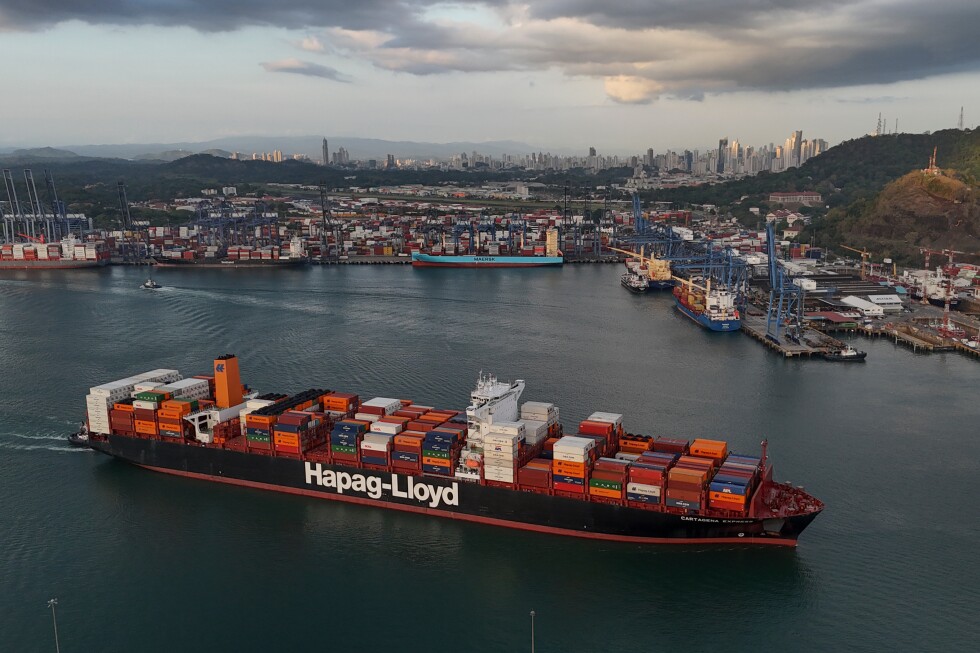
Panama’s Supreme Court ruled Thursday that the concession held by Panama Ports Company, a subsidiary of Hong Kong’s CK Hutchison Holdings, to operate ports at both ends of the Panama Canal is unconstitutional. The decision aligns with longstanding U.S. efforts to limit Chinese influence over the strategic waterway.
The court’s ruling follows an audit by Panama’s comptroller that alleged significant irregularities in the 25-year extension of the concession granted in 2021. The audit claimed these irregularities cost the government approximately $300 million since the extension and an estimated $1.2 billion during the original 25-year contract.
This development comes amid heightened geopolitical tensions between the United States and China. The Trump administration had previously prioritized blocking Chinese influence over the Panama Canal, with U.S. Secretary of State Marco Rubio making Panama his first overseas visit as the nation’s top diplomat.
Despite assurances from Panama’s government and canal authorities that China has no influence over canal operations, the U.S. has consistently framed the port operations as a national security concern. Former President Donald Trump had even suggested that Panama should return control of the canal to the United States.
The court’s statement did not provide guidance on the future management of these crucial ports, which sit at strategic positions on both the Atlantic and Pacific sides of the canal. The Panama Canal remains one of the world’s most important maritime transit routes, handling approximately 6% of global maritime trade.
Panama Ports Company responded that it has not yet received official notification of the decision but maintained that its concession resulted from transparent international bidding. In a statement, the company claimed the ruling “lacks legal basis and jeopardizes not only PPC and its contract, but also the well-being and stability of thousands of Panamanian families who depend directly and indirectly on port activity, but also the rule of law and legal certainty in the country.”
The company indicated it reserves the right to pursue legal action in Panama or elsewhere, though specifics were not provided.
The Hong Kong government issued a firm rejection of the ruling, stating it “strongly opposes any foreign government using coercive, repressive or other unreasonable means to seriously harm the business interests of Hong Kong enterprises.” The statement cautioned Hong Kong businesses to carefully review existing and planned investments in Panama.
In Beijing, foreign ministry spokesperson Guo Jiakun told reporters that China would “take all necessary measures to safeguard the legitimate rights and interests of the Chinese company,” though no specific actions were detailed.
Political analyst Edwin Cabrera suggested that once the parties are formally notified, responsibility for the ports’ future will transfer to Panama’s executive branch, specifically the Panama Maritime Authority. “I have the impression from conversations that I have had with some people that the operation (of the ports) will not stop,” Cabrera noted.
Complicating matters, CK Hutchison Holdings had announced a deal last year to sell its majority stake in the Panamanian ports to an international consortium that included BlackRock Inc. However, the deal appeared to stall following objections from the Chinese government. In July 2023, the company indicated it was considering bringing in a Chinese investor as a significant consortium member, widely interpreted as an attempt to appease Beijing.
This situation highlights the complex position of Hong Kong business interests caught between international commercial objectives and Beijing’s expectations of national loyalty. CK Hutchison is owned by the family of Li Ka-shing, Hong Kong’s wealthiest individual.
Panama’s comptroller Anel Flores said the audit revealed unpaid fees, accounting errors, and the apparent existence of a “ghost” concession operating within the ports since 2015—allegations the company has denied. Flores also noted that the extension was granted without his office’s required endorsement, which led to the legal challenge filed on July 30.
The ruling represents a significant shift in Panama’s strategic infrastructure management and reflects the ongoing geopolitical competition between China and the United States for influence in Latin America.
Fact Checker
Verify the accuracy of this article using The Disinformation Commission analysis and real-time sources.

5 Comments
This seems to be part of the broader geopolitical tensions between the U.S. and China. The U.S. has consistently viewed Chinese involvement in the Panama Canal as a national security concern, despite assurances from Panamanian authorities. It will be interesting to see how this plays out diplomatically.
The Panama Canal is such a vital global trade route, so it’s not surprising that its management and control would be a sensitive issue. I’m curious to learn more about the specific allegations of irregularities and how they might have impacted the government’s revenue.
This is an interesting development regarding the Panama Canal operations. It seems the court ruling aligns with U.S. efforts to limit Chinese influence over this strategic waterway. I’m curious to see how this plays out and what the implications will be for the region.
The alleged irregularities and financial impact are quite concerning. I wonder if this will lead to a renegotiation of the concession terms or a new bidding process. Ensuring transparency and fair practices is crucial for managing such critical infrastructure.
You raise a good point. The financial implications could be significant, and it’s important that any new arrangement prioritizes the best interests of Panama and the region.