


Listen to the article
Defense Secretary Pete Hegseth’s recent criticism of media coverage regarding U.S. casualties in the Iran war has reignited a decades-old tension between the military, government officials, and the press over how combat deaths are reported to the American public.
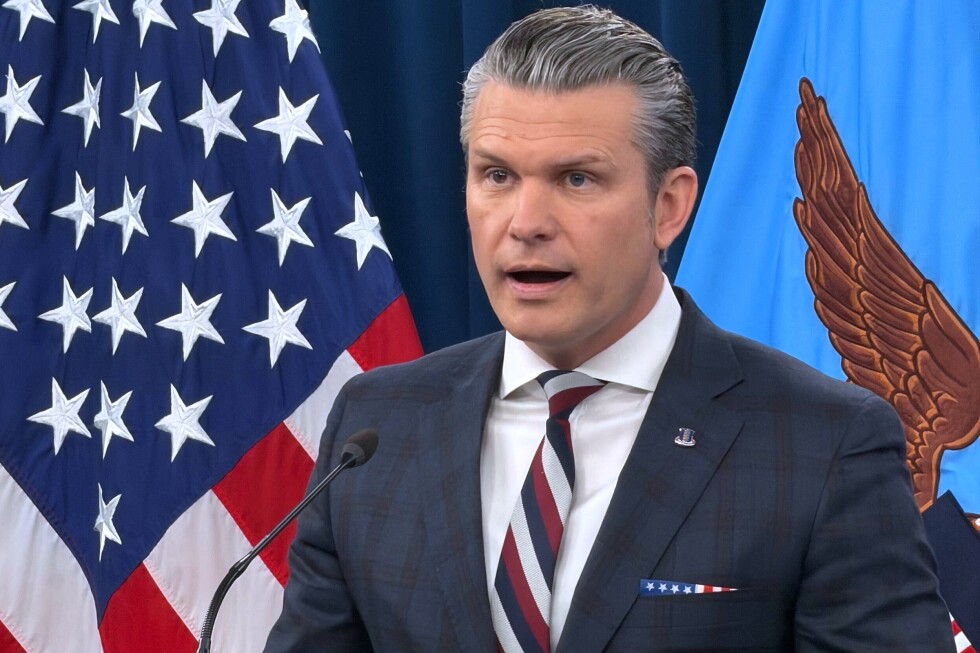
During a Pentagon briefing on Wednesday, Hegseth condemned what he called “fake news” while addressing the deaths of six U.S. Army reservists killed in an Iranian attack on an operations center in Kuwait. “When a few drones get through or tragic things happen, it’s front-page news,” Hegseth stated. “I get it. The press only wants to make the president look bad. But try for once to report the reality. The terms of this war will be set by us at every step.”
When questioned about these remarks, White House press secretary Karoline Leavitt reinforced Hegseth’s position, telling CNN’s Kaitlan Collins, “You take every single thing this administration says and try to use it to make the president look bad. That’s an objective fact.”
The current tensions reflect a historical pattern dating back to the Vietnam War, when televised images of combat casualties significantly influenced public opinion. The graphic footage of suffering and death that entered American living rooms night after night is widely credited with turning public sentiment against that conflict.
Timothy Naftali, senior research scholar at Columbia University’s School of International and Public Affairs, notes that subsequent administrations learned from Vietnam’s media coverage. “For many presidents, the lesson seemed to be: Don’t allow the realities of war into people’s living rooms if you can help it,” Naftali explained.
The relationship between war reporting and military access has evolved dramatically over time. During World War II, journalists were embedded with troops and became household names—reporters like Ernie Pyle and Walter Cronkite, and photographers such as Robert Capa and Margaret Bourke-White documented the conflict extensively, though this predated television.
Vietnam represented perhaps the most accessible war for journalists, who maintained a steady stream of reporting from the battlefield. Cronkite’s 1968 on-the-ground reporting from Vietnam—where he concluded that a negotiated peace was the only rational solution—prompted President Lyndon Johnson to lament, “If I’ve lost Cronkite, I’ve lost Middle America.”
Following the Gulf War in 1991, the Pentagon instituted restrictions on media coverage of military casualties. President George H.W. Bush was particularly affected by split-screen television images showing coffins returning to the U.S. while he was seen joking with reporters. The Pentagon subsequently banned coverage of these ceremonies, ostensibly to protect family privacy, though critics argued it was designed to shield Americans from the human cost of war. This ban remained largely intact until President Barack Obama lifted it in 2009.
In more recent conflicts, journalists have faced significant restrictions. Jessica Donati, who covered Afghanistan for The Wall Street Journal and Reuters, wrote in 2021 that “it’s easier these days for journalists in Afghanistan to embed with the Taliban than with the U.S. military.”
Multiple journalists have pushed back against Hegseth’s characterization that casualty reporting is politically motivated. CNN’s Jake Tapper called the defense secretary’s statement “a warped way of looking at the world” and “ahistorical,” emphasizing that “the news media covers fallen service members because they have made the ultimate sacrifice for their country. It’s a tribute. It’s an honor.”
The current conflict with Iran has seen limited on-the-ground media coverage. CNN recently became the first U.S.-based television network to enter Iran, with correspondent Frederik Pleitgen reaching Tehran on Thursday.
Washington Post military affairs reporter Dan Lamothe vowed that such criticism would not deter continued coverage of war casualties, noting this reporting has occurred under administrations of both parties. “These efforts haven’t always been perfect,” Lamothe wrote, “but they’ve highlighted sacrifices by American servicemembers and their families, and shortcomings that sometimes allowed these deaths to happen. We’ll continue to do so. It’s too important to stop.”
Robert H. Reid, former editor at Stars and Stripes, observed that service members themselves want more than statistics when Americans die in combat—they seek details about the lives lost, their backgrounds, families, and passions.
“The public needs to know that war is not a video game,” Naftali concluded. “It affects people.”
Fact Checker
Verify the accuracy of this article using The Disinformation Commission analysis and real-time sources.

9 Comments
Hmm, this is a complex issue without easy answers. While the government may want to control the narrative, the public deserves an honest accounting of the realities of war. Curious to see how this debate evolves.
Interesting insights into the challenges of reporting on the human costs of war. I can understand the government’s desire to control the narrative, but the public deserves an honest accounting of these tragic realities.
War reporting has always been a challenging and politically charged space. I hope all sides can find ways to provide accurate information without unduly influencing public opinion one way or the other.
Well said. Objectivity and transparency should be the guiding principles, even when it’s uncomfortable for those in power.
The human toll of war is often an inconvenient truth that governments would prefer to downplay. But the public deserves to know the real costs, even if it’s politically uncomfortable.
Interesting perspective on the tensions between government, military, and the press over reporting combat casualties. It’s a sensitive issue with valid concerns on both sides that deserve thoughtful consideration.
The human cost of war is always tragic, regardless of political leanings. I hope there can be more transparency and nuance in how these issues are discussed and covered by all parties.
I agree, open and balanced dialogue is crucial when it comes to such a weighty topic. Finding the right balance between security concerns and public transparency is never easy.
An intriguing look at the longstanding tensions between the military, government, and the media over war reporting. Hopefully, they can find ways to balance security needs with the public’s right to know the truth.