


Listen to the article
Popular YouTube Educators Hank and John Green Convert Production Studio to Nonprofit
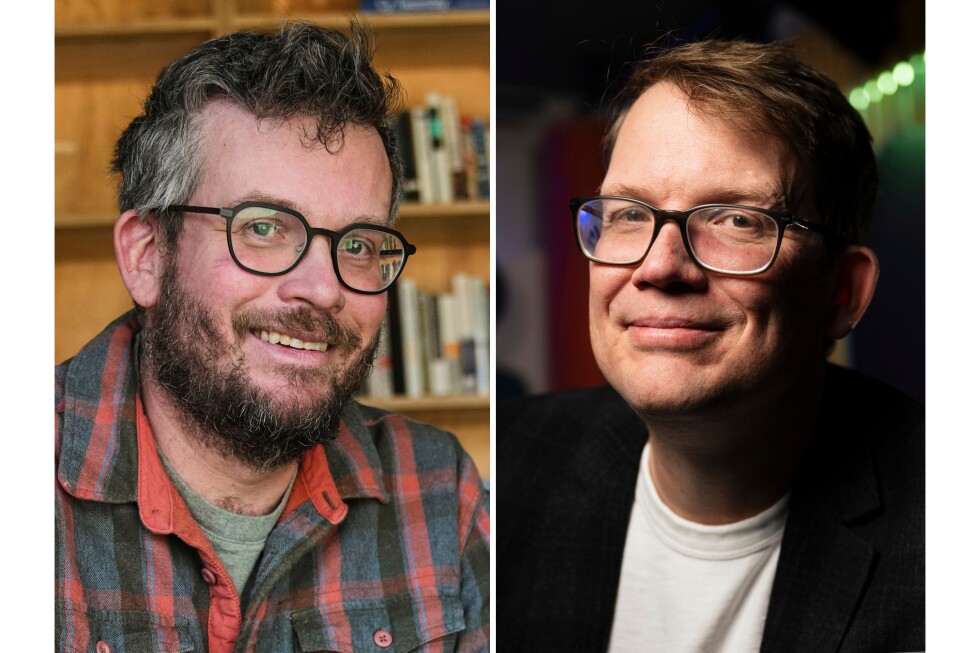
In a significant shift aimed at preserving free access to educational content, author-vloggers Hank and John Green have converted their educational media company Complexly to nonprofit status. The production studio, known for its “Crash Course” series that has amassed billions of views across various academic subjects, made the transition to ensure its content remains “free for everyone forever.”
The Green brothers’ decision comes at a critical moment in the digital media landscape. As artificial intelligence generates increasingly misleading content and public media faces funding challenges, the move represents a deliberate strategy to prioritize trustworthy information over commercial interests.
“Part of what Complexly’s trying to do is create good information on the internet,” Hank Green explained in an interview with the Associated Press. “Let’s actually just say that this is our goal. Like, our goal isn’t to build a big company and sell it someday.”
His brother John, the acclaimed author of “The Fault in Our Stars” and “Looking for Alaska,” emphasized the growing information crisis online. “There’s never been more information and yet there’s never been less information that you feel you can trust,” he said. “Our goal at Complexly has always been to make trustworthy content. And making Complexly a public good, for me, is the next step in that process.”
According to Complexly CEO Julie Walsh Smith, the studio has been considering nonprofit status for several years. The company already receives substantial philanthropic support, including $4.8 million last year from partners such as YouTube, PBS, and the Alfred P. Sloan Foundation. Additional funding comes from educational institutions like Arizona State University and the Howard Hughes Medical Institute.
While approximately 10% of Complexly’s revenue comes from YouTube’s advertising earnings program, another 10% is generated through Patreon, where fans contribute monthly payments to support their favorite creators. The company also sells collectible silver “Crash Course” coins annually, with some versions costing thousands of dollars.
Hank Green noted that many high-dollar supporters have expressed interest in increasing their contributions but felt uncomfortable giving to a for-profit entity. These individual donations provide flexible funding that allows Complexly to “invest in the ideas that we think are most likely to deliver impact through reach.”
The transition to nonprofit status requires both Green brothers to relinquish their equity in Complexly. The Montana-headquartered organization will maintain its staff of approximately 80 employees but will see changes in the founders’ roles. John Green will move to a position as “founder emeritus,” while Hank will join the nonprofit’s board of directors and continue hosting some shows.
“The way I like to think about it is they’re going from leaders of the organization to cheerleaders,” Smith explained.
John Green promised viewers that the content experience won’t change significantly. In fact, he suggested the nonprofit model might enable new shows “that have long been great ideas that weren’t possible because they didn’t make sense from a business perspective.”
Complexly has committed $8.5 million to new content development. While specific details remain under wraps, Smith revealed they are seeking additional funding for a series that will explore behind-the-scenes aspects of zoos and museums, highlighting specimens not typically on display.
The move to nonprofit status reflects the Green brothers’ ongoing concerns about internet economics. In 2013, they founded the crowdfunding platform Subbable to help creators raise project-specific funding. Hank even attempted to form a creators’ union at one point to address the unpredictability of social media platforms’ algorithms and revenue-sharing models.
“We’ve always worried about being overly reliant on advertising,” John Green said. “I think that an advertising-funded internet is a complicated place to live, as I’ve observed from the last 25 years of my life.”
The nonprofit approach represents a deliberate departure from typical digital media strategies. “Often, they’ll put premium content behind paywalls or behind a subscription service. And we’re just never gonna do that,” Smith affirmed.
This isn’t the Green brothers’ first venture into philanthropy. Through their Foundation to Decrease World Suck, they have granted more than $17 million to various charities, funded by profits from their online retailer, the Good Store.
The brothers acknowledge the challenges nonprofits often face in maintaining the agility required for digital production but emphasize there are multiple models for nonprofit success. They hope their approach might inspire others in the digital content space to consider similar paths.
“Can we signal to other people that there is no reason why you can’t do this and also model, as we go forward, that if that’s a choice that other people want to make then there’s good ways to do it?” Hank Green asked, highlighting the broader implications of their decision for the future of educational content online.
Fact Checker
Verify the accuracy of this article using The Disinformation Commission analysis and real-time sources.

6 Comments
It’s encouraging to see influential creators taking proactive steps to address the growing misinformation crisis online. By transitioning to nonprofit status, the Greens are demonstrating their commitment to serving the public good rather than commercial interests. This model could inspire others to follow suit.
This is a great move by the Green brothers to prioritize trustworthy educational content over profit motives. Their Crash Course series has been invaluable for so many students and lifelong learners. Turning Complexly into a nonprofit will help ensure continued free access to high-quality information.
With AI-generated content becoming increasingly prevalent, the need for authoritative, fact-based educational resources has never been greater. The Green brothers’ decision to make their studio a nonprofit is a bold and admirable move that will benefit countless people seeking trustworthy information.
This is a really impressive and timely move by the Green brothers. Transitioning their studio to a nonprofit status demonstrates their dedication to providing trustworthy content that remains freely accessible to all. It will be interesting to see how this model evolves and potentially influences the broader digital media landscape.
Kudos to the Green brothers for their commitment to preserving free access to educational resources. In an era of increasing online misinformation, their decision to transition Complexly to a nonprofit is a refreshing and important step. I hope this inspires more creators to prioritize public service over commercial interests.
The Greens’ focus on creating ‘trustworthy content’ is exactly what the internet needs right now. As traditional media faces funding challenges, this nonprofit model could be a sustainable way to ensure free access to high-quality educational programming. I’m curious to see how this shift will impact their future content and collaborations.