


Listen to the article
Mexican authorities revealed Thursday that an oil spill in the Gulf of Mexico, which occurred in early March, spread over 600 kilometers (373 miles), impacting seven protected nature reserves. The spill originated from multiple sources, including an unidentified vessel and two natural oil seepages.
After weeks of public criticism regarding lack of transparency, officials finally disclosed preliminary findings about the environmental incident that affected coastlines in the states of Veracruz and Tabasco.
Admiral Raymundo Morales, Mexico’s Navy Secretary, explained that satellite imagery and on-site inspections identified three distinct sources of the contamination. One source was a vessel anchored near the port city of Coatzacoalcos in Veracruz state. The other two sources were natural geological formations known locally as “chapopoteras” – one located 8 kilometers from Coatzacoalcos and another in the Bay of Campeche.
“We have not yet been able to identify the specific vessel responsible,” Morales stated during the press conference. “As of early March, there were 13 ships in the area that require inspection.”
Concerning is Morales’ admission that the source of the pollution “remains active,” with the natural seeps in Cantarell, Bay of Campeche, being one of the primary ongoing contributors. “These oil seeps have a constant, natural emission; however, there has been a greater flow of contaminants in the last month,” he explained.
The Gulf of Mexico has a history of both natural oil seepage and industrial accidents. Just five months before this incident, heavy rains caused a pipeline rupture in Veracruz that resulted in an 8-kilometer spill along the Pantepec River.
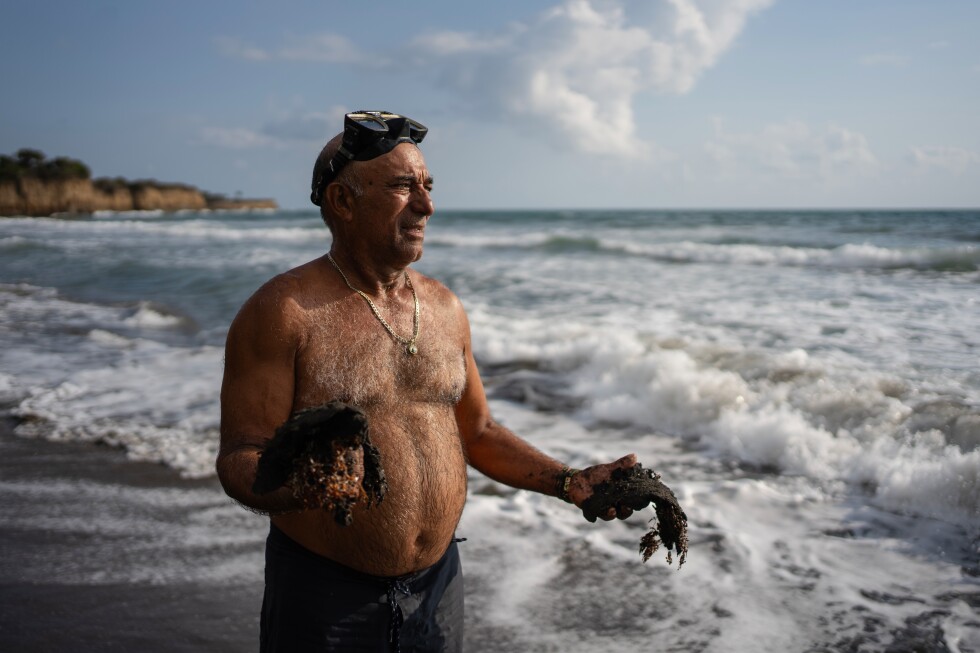
The March spill’s impact was considerably larger, covering approximately 600 kilometers, including 200 kilometers of coastline across Veracruz and Tabasco. Cleanup efforts have so far recovered “430 tons of hydrocarbons,” according to Morales.
Environment Secretary Alicia Bárcena confirmed that seven protected natural reserves were affected: Los Tuxtlas Biosphere Reserve, the Veracruz Reef System National Park, the Lechuguillas Sanctuary, the Totonacapan Beaches Sanctuary, the Lobos Tuxpan Reef System Flora and Fauna Protection Area, a portion of the Rancho Nuevo Beach Sanctuary in Veracruz, and the Centla Wetlands Biosphere Reserve in Tabasco.
Despite the extensive spread, Bárcena downplayed the environmental impact, stating, “We have not detected severe environmental damage.” Official reports acknowledge contamination affecting six species, including sea turtles, birds, and fish.
However, independent conservation organizations paint a more concerning picture. Oceana, an international nonprofit focused on ocean conservation, released a statement contradicting the government’s assessment. According to reports from communities in the Gulf of Mexico Reef Corridor Network, the spill has caused the deaths of sea turtles, a manatee, and various fish species, while damaging at least 17 reef systems.
The Gulf of Mexico represents a critical ecological zone and an important economic resource for Mexico. Its waters support robust fishing industries, tourism, and extensive oil and gas operations. The region’s unique biodiversity includes coral reefs, wetlands, and migration routes for numerous marine species.
Mexico’s state-owned oil company Pemex has extensive operations in the Gulf, though authorities have not explicitly linked this spill to the company’s activities. The mention of natural seepage at Cantarell is notable, as this area contains one of Mexico’s largest offshore oil fields, which has been in production since the 1970s.
This incident highlights ongoing challenges in environmental protection and regulatory oversight in Mexico’s offshore energy sector. Environmental advocates have long criticized the government for prioritizing oil production over ecological concerns and for lack of transparency when accidents occur.
As cleanup efforts continue, questions remain about long-term ecological impacts, the adequacy of the response, and what measures will be implemented to prevent similar incidents in the future. The identification of the vessel responsible could lead to legal action and financial liability for remediation costs.
Fact Checker
Verify the accuracy of this article using The Disinformation Commission analysis and real-time sources.

6 Comments
It’s disappointing to hear about the lack of transparency from officials initially. Timely and accurate information is vital when dealing with environmental disasters like this. Hopefully they will be more forthcoming going forward.
This spill is quite concerning, especially with the potential impact on protected nature reserves in the region. I hope the authorities can quickly identify the responsible party and take appropriate actions to mitigate the environmental damage.
Offshore oil operations always carry inherent risks, and incidents like this highlight the need for robust safety protocols and emergency response plans. I wonder if this will prompt a review of regulations and oversight in the Gulf of Mexico.
You’re right, better oversight and enforcement would be crucial to prevent such widespread incidents in the future. Protecting sensitive ecosystems should be a top priority.
Natural oil seeps are an interesting factor in this spill. I wonder if there are ways to better monitor and mitigate the impacts of these geological features, especially in sensitive coastal regions. Managing both natural and human-caused sources will be crucial.
This sounds like a complex situation with multiple potential sources. I hope the authorities can conduct a thorough investigation to determine the root cause and hold the responsible parties accountable. Minimizing further ecological damage should be the top concern.