


Listen to the article
Middle Eastern sovereign wealth funds are poised to maintain their substantial renewable energy investments in Africa despite regional tensions stemming from the Iran conflict, according to industry analysts tracking cross-continental investment patterns.
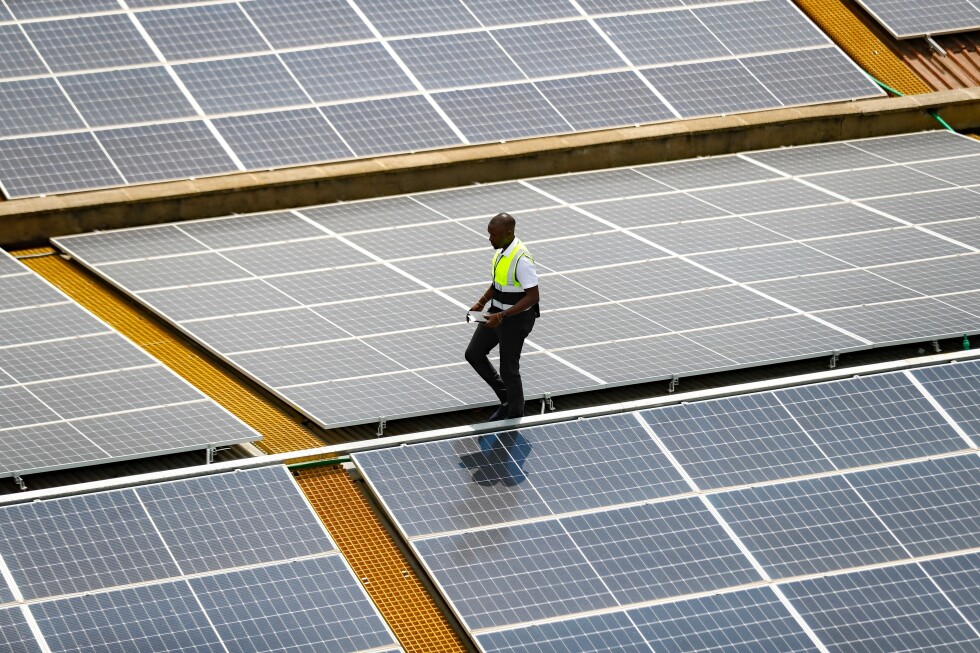
Gulf investors have directed more than $101.9 billion into Africa’s renewable energy sector through the end of 2024, with the United Arab Emirates, Saudi Arabia, Qatar, Kuwait, and Bahrain leading these capital flows, according to a recent Clean Air Task Force report. This investment has predominantly concentrated in North Africa, Southern Africa, and parts of East Africa, while West African nations have attracted comparatively less funding.
“Africa remains one of the few regions where demand growth is unequivocal,” explains Matthew Tilleard, chief executive of CrossBoundary Energy, a Nairobi-based developer and operator of renewable energy projects. “Short-term shocks may delay individual transactions, but the biggest infrastructure opportunities require a long-term view of risk and value.”
The strategic rationale behind this continued investment is compelling. Approximately 600 million Africans still lack electricity access, while millions more contend with unreliable power supplies. This persistent energy deficit has prompted African governments to increasingly court private investment for solar, wind, and hybrid power projects to expand generation capacity without further straining public finances.
For Gulf investors, Africa represents an attractive opportunity to diversify beyond traditional oil and gas revenues. “Ultimately, Gulf investments in Africa tend to be driven by pragmatic national interests and strategic returns,” notes Louw Nelson, political analyst at Oxford Economics. “There is currently a significant amount of energy investment underway across Africa, which are long-term projects that have been years in the making, so we don’t anticipate major disruptions.”
These renewable energy investments align with broader economic diversification strategies among Middle Eastern nations as they adapt to global shifts toward cleaner energy sources. Many Gulf countries are actively repositioning their economies for a future less dependent on fossil fuels, with African renewable projects forming a key component of this transition.
Joel Okanda, an energy and development analyst, suggests the recent disruptions to oil and gas shipments due to the Iran conflict might actually strengthen the case for renewable investment, highlighting the vulnerability of traditional energy supply routes.
“These companies, many of them state-owned, hold significant capital but also understand that the world is gradually transitioning away from fossil fuels,” Okanda explains. “Investing in renewable energy allows them to diversify their portfolios and position themselves for the energy systems of the future.”
Africa’s strategic importance extends beyond just energy generation. The continent sits at the nexus of several critical global economic shifts, including the clean energy transition and growing demand for minerals essential to high-technology manufacturing. Countries rich in cobalt, lithium, and other critical minerals have become particularly attractive investment destinations.
“For investors, renewable power projects can provide strategic access to industries beyond electricity generation,” notes Tilleard. “Power plants built to supply mines or large industrial operations can position Arab investors close to supply chains for minerals used in batteries and other technologies.”
Despite the overall positive outlook, investment patterns remain uneven across the continent. Perceived risks, including currency volatility and policy uncertainty, continue to influence investment decisions, particularly regarding West Africa. Several countries in the region have experienced political instability in recent years, creating a more challenging environment for long-term infrastructure investment.
“Generating power is only one part of the equation,” Okanda points out. “You also need transmission systems and a functioning electricity market where the electricity can actually be sold and paid for.”
As Africa’s urbanization accelerates and its manufacturing base grows, the continent’s energy demands will continue expanding, creating ongoing opportunities for Gulf investors seeking long-term returns beyond traditional fossil fuel investments. The strategic rationale for these investments appears sufficiently robust to weather short-term regional tensions, positioning renewable energy as a cornerstone of future economic relations between the Gulf states and Africa.
Fact Checker
Verify the accuracy of this article using The Disinformation Commission analysis and real-time sources.

10 Comments
The sheer scale of the Gulf’s renewable energy investments in Africa – over $100 billion by 2024 – is quite remarkable. This speaks to the strategic importance these countries see in developing Africa’s clean energy capacity, despite regional geopolitical tensions.
While the Iran conflict may create some short-term volatility, it’s encouraging that Gulf sovereign wealth funds remain committed to funding renewable energy projects across Africa. This could be a major catalyst for the continent’s clean energy transition.
Absolutely. Consistent capital inflows from the Gulf, focused on renewable energy infrastructure, could be transformative for many underserved African markets. It’s an important long-term investment trend to watch.
Africa’s renewable energy sector is attracting significant Gulf capital, which is a positive sign for the continent’s energy transition. The high unmet demand provides ample room for growth, if investors can navigate the regional geopolitical risks.
Agreed. Gulf investors seem willing to take a long-term view on Africa’s renewable potential, despite near-term uncertainties. Developing the grid infrastructure will be crucial to expanding electricity access.
The continued flow of Gulf capital into Africa’s renewable energy sector is an encouraging sign, especially given the Iran conflict tensions. Africa’s unmet electricity demand provides ample opportunity for growth, if investors can manage the regional risks.
Interesting to see Gulf investors maintaining their focus on renewable energy in Africa despite regional tensions. With over 600 million Africans still lacking electricity access, the long-term potential for renewable growth seems undimmed.
Yes, the strategic rationale for Gulf investment in African renewables appears compelling. Even short-term shocks shouldn’t deter these long-term infrastructure plays targeting underserved markets.
It’s promising to see Gulf investors maintaining their focus on Africa’s renewable energy potential, even amidst the Iran conflict. With hundreds of millions of Africans still lacking electricity access, this capital could be transformative if deployed effectively.
Agreed. Navigating the regional geopolitical landscape will be crucial, but the long-term fundamentals of Africa’s renewable energy market seem very compelling for these Gulf investors.