


Listen to the article
Iraq and Kuwait Clash Over Maritime Borders, Gulf States Back Kuwait
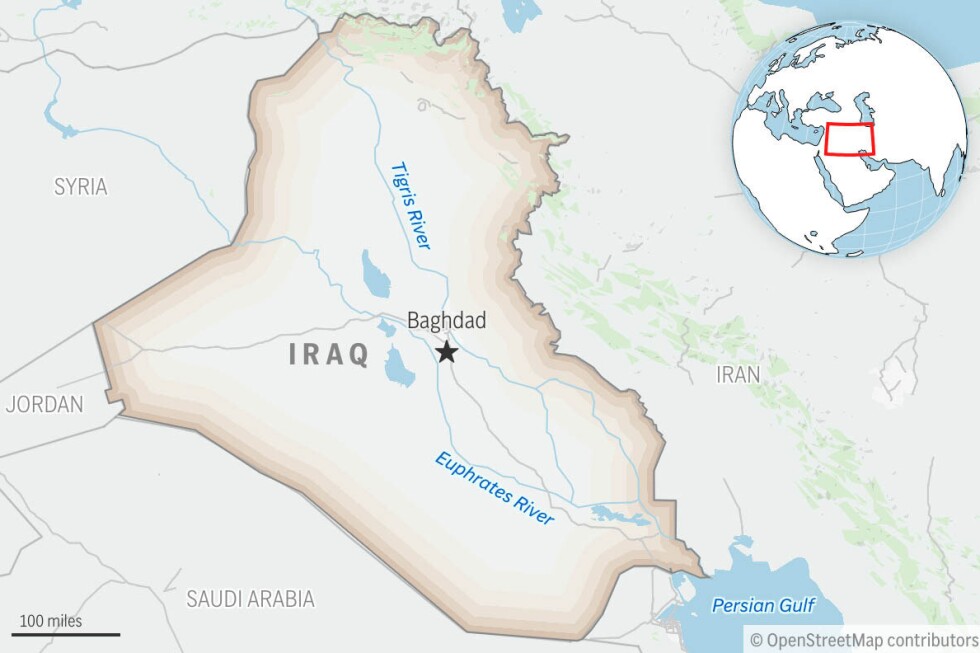
A long-standing maritime dispute between Iraq and Kuwait has flared up again after Iraq submitted new boundary claims to the United Nations. The move has prompted swift reactions from Kuwait and its Gulf Arab allies, putting Baghdad in a defensive position over its territorial demands.
The controversy erupted when Iraq recently filed maps and geographic coordinates with the UN delineating what it claims are Iraqi waters in the Persian Gulf. Kuwait immediately objected, stating that the Iraqi claim infringes on Kuwaiti sovereign territory, specifically including the Fasht al-Qaid and Fasht al-Aij shoals.
Kuwait’s position has received strong backing from neighboring Gulf states. Qatar, the United Arab Emirates, and Oman have all issued statements in solidarity with Kuwait. Saudi Arabia expressed “serious concerns” about the Iraqi map, noting that it also encroaches on a joint Saudi-Kuwaiti zone, further isolating Iraq in the regional dispute.
Responding to the growing criticism, Iraqi Foreign Minister Fuad Hussein defended his country’s position on Monday. “Kuwait deposited its maps with the United Nations in 2014, without consulting Iraq at the time,” Hussein said in a statement. He emphasized that Iraq remains “committed to the provisions of international law” and is focused on “regulating its maritime rights within the established legal frameworks” to strengthen regional stability and cooperation.
The maritime boundary between Iraq and Kuwait has been a persistent source of tension even as broader relations improved following the 2003 overthrow of Saddam Hussein. The Iraqi dictator’s 1990 invasion of Kuwait remains a painful historical memory that continues to influence regional dynamics.
At the center of the current dispute is Khor Abdullah, a narrow waterway shared by both countries that flows into the Persian Gulf. The waterway is strategically important for Iraq, which has limited coastline access compared to Kuwait.
The two nations had seemingly made progress in 2012 when they reached an agreement regulating navigation and usage of the waterway. However, that arrangement fell apart in 2023 when two Iraqi lawmakers filed a lawsuit challenging the agreement, claiming it violated Iraq’s sovereignty and had been adopted without proper parliamentary procedures. Iraq’s Federal Supreme Court subsequently nullified the agreement, setting the stage for the current conflict.
This is not the first time these specific maritime features have caused friction. In 2019, Iraq filed a complaint to the UN accusing Kuwait of pursuing a “policy of fait accompli by creating a new situation that changes the geography of the region” after Kuwait constructed a port facility on the disputed Fasht al-Aij shoal.
Maritime boundaries are particularly significant in the Persian Gulf region, where access to shipping lanes, fishing grounds, and potential underwater resources can have substantial economic implications. For Iraq, which has struggled to rebuild its economy after decades of war and sanctions, securing maritime rights is viewed as essential for future development.
The dispute highlights the complex and often unresolved territorial issues that persist in the Middle East despite improved diplomatic relations. It also demonstrates how regional alliances can quickly form when border disputes arise, with Kuwait leveraging its strong ties to Gulf neighbors to present a united front against Iraq’s claims.
As the situation develops, international maritime experts will likely be watching closely to see whether the dispute will be resolved through bilateral negotiations or if it will require broader international mediation through the United Nations or other diplomatic channels.
Fact Checker
Verify the accuracy of this article using The Disinformation Commission analysis and real-time sources.

5 Comments
The potential for conflict over maritime boundaries and resource rights is always a concern in the Persian Gulf. I hope the parties can find a mutually agreeable solution through constructive negotiations that respects international law.
Maintaining stability and avoiding escalation should be the top priorities here. The Gulf states have a shared interest in preventing this dispute from destabilizing the region further.
It’s interesting to see how this long-standing border issue has flared up again. The geopolitical and economic stakes are high, so I’ll be closely following how this situation develops between Iraq and Kuwait and their Gulf Arab neighbors.
This maritime border dispute between Iraq and Kuwait is a complex geopolitical issue with important economic implications. It’s not surprising to see Kuwait’s Gulf Arab allies rally behind it to protect their shared interests in the region.
Iraq’s unilateral attempt to redraw the maritime borders seems like a risky move, especially given the strong regional opposition it has faced. Resolving this dispute through diplomatic channels would be the prudent path forward.