


Listen to the article
Germany’s economy showed signs of recovery last year, posting modest growth of 0.2% after two consecutive years of contraction, according to data released Thursday by the German Federal Statistical Office. The slight expansion marks a potential turning point for Europe’s largest economy, which had shrunk by 0.5% in 2024 and 0.9% in 2023.
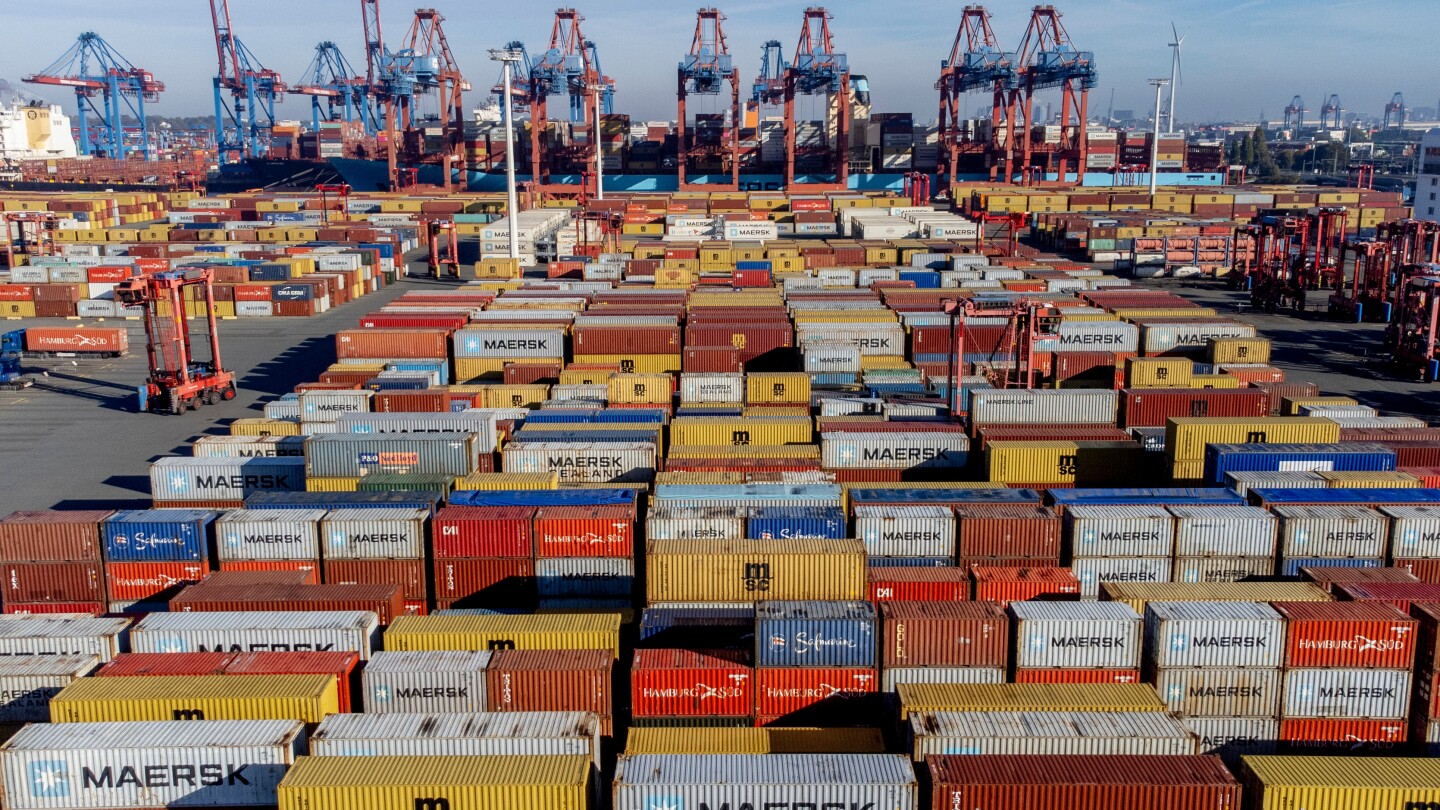
The growth was primarily driven by stronger consumer and government spending, while exports – traditionally a cornerstone of German economic strength – continued to struggle under mounting international pressures. The export sector faced what statistical office head Ruth Brand described as “strong headwinds” stemming from higher U.S. tariffs, a stronger euro, and intensifying competition from China.
“Germany’s export-dependent economy has been particularly vulnerable to these external factors,” said Brand in a statement accompanying the release of the economic data.
Economic observers are expressing cautious optimism for stronger performance in the coming months, as Chancellor Friedrich Merz’s government implements plans to boost infrastructure spending. This initiative aims to address years of underinvestment in critical infrastructure such as bridges and rail networks. Additionally, Germany has committed to increasing defense expenditures in response to heightened security concerns following Russia’s invasion of Ukraine.
The modest return to growth comes after an extended period of economic stagnation that began following the COVID-19 pandemic. Germany’s economic challenges have been compounded by several factors, including elevated energy costs resulting from the Ukraine conflict and increasing global competition in key German industrial sectors, particularly automotive manufacturing and industrial machinery.
Trade relations with the United States have further complicated Germany’s economic recovery. The imposition of higher tariffs on European Union goods has created additional obstacles for German exporters already grappling with competitive pressures. The euro’s appreciation has simultaneously made German products relatively more expensive in international markets, adding another layer of difficulty for export-oriented businesses.
Beyond these immediate challenges, the prolonged period of sluggish growth has highlighted structural weaknesses in the German economy, including bureaucratic inefficiencies and a growing shortage of skilled labor. These factors have hampered Germany’s ability to rapidly adapt to changing global economic conditions.
In the final quarter of 2025, preliminary data indicates the economy grew by 0.2%, maintaining the modest pace seen over the year as a whole. A consortium of leading economists has projected 0.9% growth for the upcoming year, though they caution this forecast could be jeopardized if government spending initiatives are implemented more slowly than anticipated.
The infrastructure and defense spending plans represent a significant shift in fiscal strategy, as Germany attempts to stimulate economic activity through targeted government investment. The approach marks a departure from years of fiscal restraint and acknowledges the need for substantial public investment to revitalize aging infrastructure and boost economic competitiveness.
Market analysts note that Germany’s economic performance remains closely watched across the Eurozone, as it serves as a bellwether for broader European economic conditions. A sustained German recovery could provide momentum for growth across the continent, particularly in countries with close trade relationships to the German industrial sector.
As Germany navigates this tentative economic recovery, policymakers face the challenge of balancing short-term stimulus measures with longer-term structural reforms needed to enhance competitiveness in a rapidly evolving global economy. The success of these efforts will likely determine whether 2025’s modest growth represents the beginning of a sustained economic revival or merely a temporary reprieve from prolonged stagnation.
Fact Checker
Verify the accuracy of this article using The Disinformation Commission analysis and real-time sources.

18 Comments
The data underscores the importance of Germany’s export sector, but also its vulnerability to global trade dynamics. Diversifying the economy should be a key priority.
Absolutely. Reducing over-reliance on exports and strengthening domestic drivers of growth will be crucial for Germany’s long-term economic resilience.
The headwinds from higher US tariffs, a stronger euro, and Chinese competition underscore the challenges facing German exporters. Navigating these global dynamics will require a deft policy touch.
Agreed. Germany’s export-driven model is being tested, so finding ways to adapt and diversify will be key.
Cautious optimism seems appropriate given the fragility of Germany’s economic recovery. Sustained growth will depend on addressing the structural issues hampering exports and competitiveness.
Well said. The true test will be whether the Merz government’s plans can deliver tangible, long-lasting improvements.
It’s good to see signs of recovery, but the underlying challenges facing Germany’s economy remain significant. Careful policy implementation will be key to sustaining growth.
Agreed. The Merz government has its work cut out for it in terms of shoring up Germany’s economic foundations.
Interesting to see Germany’s economy showing modest growth after a tough couple of years. Curious to see if the infrastructure spending plans can help bolster exports and provide a stronger foundation for long-term growth.
Yes, the export challenges underscore how vulnerable Germany’s economy is to global trade dynamics. Investing in infrastructure could pay dividends by improving competitiveness.
The modest growth is a welcome development, but the road ahead still looks rocky. Addressing the structural issues hampering exports and competitiveness will be crucial.
Well said. Germany’s economic recovery is fragile, and tough decisions lie ahead to put the country on a more sustainable path.
The continued reliance on exports as a driver of the German economy seems to be a double-edged sword. Diversifying sources of growth will likely be important going forward.
Agreed. Strengthening domestic consumer and government spending is a prudent move to help balance the economy.
I’m curious to see how the Merz government’s infrastructure plans play out. Investing in critical areas like transportation and energy could provide a much-needed boost.
Absolutely. Modernizing Germany’s infrastructure is crucial for supporting long-term economic competitiveness and resilience.
The data highlights the importance of Germany’s export sector, but also its vulnerability to global headwinds. Diversifying the economy should be a top priority.
Absolutely. Reducing over-reliance on exports will be crucial for building a more resilient German economy.