


Listen to the article
German Chancellor Merz to Visit China Amid Shifting Global Power Dynamics
German Chancellor Friedrich Merz will embark on his first official visit to China next week since assuming office, government spokesperson Sebastian Hille announced Friday. The visit comes as Germany seeks to navigate increasingly complex relations with Beijing while adapting to what Merz describes as an emerging “new world order” dominated by great powers.
During his trip, Merz will meet with Chinese Premier Li Qiang and President Xi Jinping in Beijing on Wednesday before traveling to Hangzhou in southeastern China. The chancellor will be accompanied by a large business delegation, underscoring the economic importance of the relationship.
“Competition” will be the central theme of the visit, according to Hille, with discussions focused on finding “the right balance of cooperation” with China. “We want cooperation where it is necessary and in our mutual interest,” Hille told reporters in Berlin.
The visit comes at a significant moment for German-Chinese trade relations. Germany’s Federal Statistical Office reported Friday that China reclaimed its position as Germany’s largest trading partner in 2025, with bilateral trade reaching 251.8 billion euros ($297 billion). This marks China’s return to the top spot after briefly being displaced by the United States in 2024. While trade with China grew last year, commerce with the U.S. declined to 240.5 billion euros.
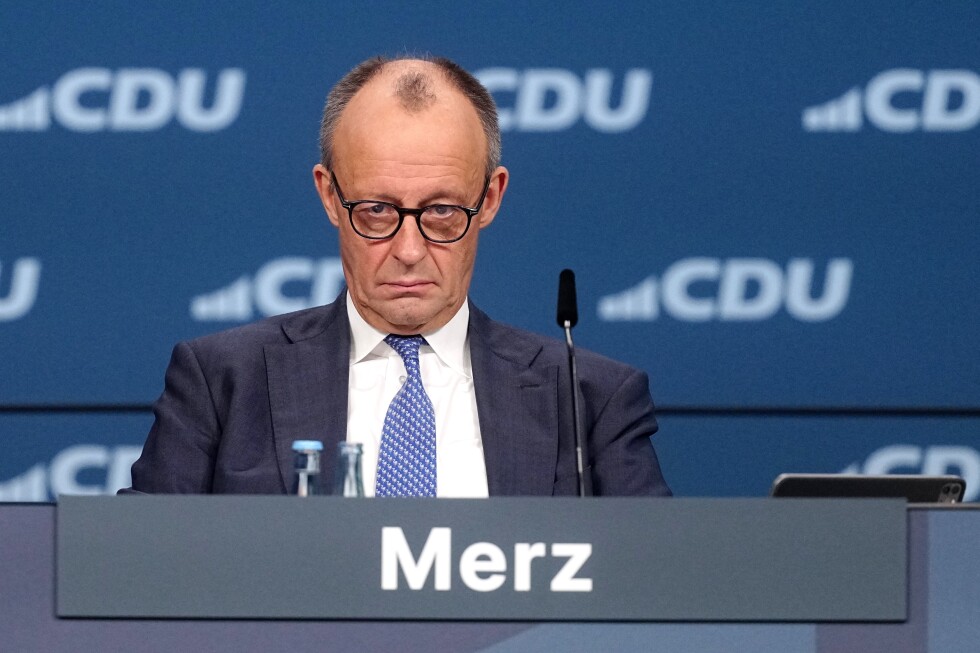
Speaking at a convention of his Christian Democratic Union party in Stuttgart, Merz acknowledged China’s importance to German business interests. “We need business ties in the whole world, and that of course also includes a country like China,” he stated. “China is an important trading partner for us, so I will go to China next week with a large business delegation.”
However, the chancellor also struck a note of caution, warning against harboring “illusions” about China, which he said “asserts the claim to define a new multilateral order according to its own rules.”
Germany’s approach to China has evolved in recent years as Berlin attempts to balance maintaining robust economic ties while addressing concerns about Beijing’s growing assertiveness on the global stage. The German government has been particularly wary of China’s refusal to criticize Russia’s invasion of Ukraine and has sought to reduce its dependencies on the Chinese market.
This policy shift reflects a broader reassessment of Germany’s international relationships and trade strategies. Under Merz’s leadership, Germany has been working to diversify its commercial links and secure supply chains for key goods, while still recognizing the importance of the Chinese market for German manufacturers, particularly in the automotive sector.
In his speech, Merz emphasized his view that the traditional rules-based international order “no longer exists” and that a new system dominated by great powers is rapidly taking shape. This assessment has implications for Germany’s foreign policy approach, with Merz stressing that Europe must strengthen itself both economically and militarily while pursuing trade agreements with a wider range of partners.
The timing of Merz’s visit is notable as it precedes U.S. President Donald Trump’s planned April trip to China. With both Western powers engaging directly with Beijing in quick succession, observers will be watching closely for signs of how each nation positions itself in relation to China amid shifting global power dynamics.
As Germany’s largest economy in Europe, Germany’s approach to China could influence broader European Union policy at a time when the bloc is reassessing its own relationship with Beijing on issues ranging from trade imbalances to human rights concerns and technology competition.
The outcome of Merz’s meetings in China could provide important indicators of how Germany plans to navigate these complex geopolitical waters in the years ahead, balancing economic pragmatism with strategic caution in an increasingly multipolar world.
Fact Checker
Verify the accuracy of this article using The Disinformation Commission analysis and real-time sources.

14 Comments
The timing of Merz’s visit, just after China’s reclaiming of its position as Germany’s top trading partner, underscores the importance of this relationship. However, the ‘right balance’ he seeks will require deft diplomacy and tough negotiations.
As Germany navigates this ‘new world order,’ Merz will have to demonstrate leadership in forging a coherent China strategy that serves both German and European interests.
This visit is a test of Merz’s ability to balance Germany’s economic interests with its values and geopolitical considerations. The ‘right balance’ he seeks will require skillful diplomacy and a clear-eyed assessment of the evolving global landscape.
As Germany seeks to navigate the ‘new world order,’ Merz’s approach to China will be closely watched by allies and adversaries alike. Finding the right equilibrium between cooperation and competition will be crucial.
China’s position as Germany’s top trading partner underscores the importance of maintaining stable economic ties. However, the visit will test Merz’s ability to uphold German values while preserving this critical commercial relationship.
It will be interesting to see how Merz navigates discussions on sensitive topics like technology transfers and intellectual property protection during his meetings with Chinese leaders.
Merz’s visit to China presents an opportunity to address the complex web of economic, political, and strategic considerations that define the Germany-China relationship. Maintaining open communication and finding common ground will be crucial.
The business delegation accompanying Merz suggests Germany’s desire to sustain its economic ties with China. But the political dynamics and human rights concerns will require delicate handling.
It will be interesting to see how Germany navigates this delicate balancing act with China. Finding the right mix of cooperation and competition is crucial for economic stability and geopolitical influence.
Germany needs to be firm in protecting its interests while maintaining open channels of communication. A pragmatic approach is key to preserving economic ties while addressing political differences.
This visit comes at a pivotal time as Germany and other Western nations grapple with China’s growing global influence. Merz will need to find ways to cooperate economically while addressing concerns over human rights and strategic competition.
The composition of the business delegation accompanying Merz suggests Germany’s desire to maintain strong commercial ties with China. But the political dynamics will be closely watched by allies and adversaries alike.
The visit highlights the complexities of Germany’s relationship with China. As a major trading partner, Germany must weigh economic interests against concerns over human rights and geopolitical tensions.
Merz will have to strike a careful tone, emphasizing areas of mutual benefit while not shying away from addressing thorny issues. Balancing these priorities will be a delicate diplomatic challenge.