


Listen to the article
Georgia Suspends Fuel Taxes as Middle East Conflict Drives Pump Prices Higher
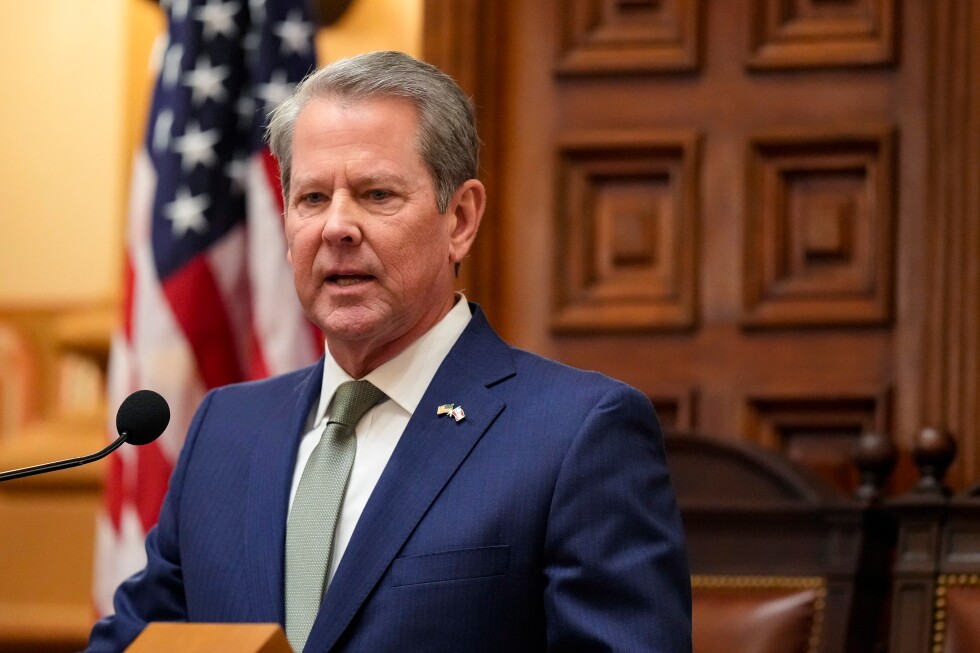
Georgia became the first U.S. state to suspend fuel taxes on Friday in response to soaring pump prices triggered by the ongoing conflict in the Middle East. Republican Governor Brian Kemp signed legislation implementing a 60-day suspension of the state’s 33-cent-per-gallon tax on gasoline and 37-cent-per-gallon tax on diesel.
Motorists in Georgia are expected to see relief at the pump within days as price reductions work their way through the supply chain from wholesalers to retail gas stations. Officials estimate the tax holiday will save drivers approximately $5 to $6 per tank for typical passenger vehicles.
“We want to return taxpayer money where it belongs, in the pockets of hardworking Georgians,” Kemp said during the signing ceremony, framing the move as part of his administration’s ongoing efforts to address affordability concerns.
The national average gas price has climbed dramatically in recent weeks, rising from $2.93 per gallon on February 20 to $3.91 by Friday, according to motorist group AAA. This sharp increase has placed financial strain on consumers already dealing with persistent inflation in other sectors.
Unlike 2022, when multiple states implemented similar measures following Russia’s invasion of Ukraine, Georgia stands alone in suspending fuel taxes this time. Economic conditions have shifted, with states no longer benefiting from the surge in tax revenues and federal pandemic aid that bolstered budgets two years ago.
Georgia officials estimate the state will forgo between $360 million and $400 million in fuel tax revenue during the two-month suspension. These taxes typically fund road and bridge infrastructure, but the state plans to tap into its accumulated surplus to cover the shortfall.
The tax suspension is part of a larger financial relief package that includes state income tax rebates of $250 to $500 per household for Georgians who filed tax returns in both 2024 and 2025. The combined initiatives will distribute approximately $1.2 billion from state savings.
The timing of these financial relief measures coincides with an election year in the critical swing state, where Republicans and Democrats are battling for control. Since 2021, Republican-led initiatives have provided Georgians with income and property tax rebates, along with multiple gas tax holidays, totaling more than $9 billion in tax relief.
Not all Georgians are convinced the tax holiday will provide meaningful assistance. Skylah Mercier, a 21-year-old college student who commutes about 40 miles between home and school or work, has already been cutting back on food and searching for other expenses to trim as fuel costs rise.
“It’s really nothing I can do about it,” Mercier said while filling her tank near downtown Atlanta.
Other states appear reluctant to follow Georgia’s example. In Florida, Republican Governor Ron DeSantis stated Thursday he has no plans to suspend his state’s 23.5-cent gas tax, suggesting there is no “simple fix” to the problem.
“My answer is just get the cost down internationally, and that means having stable energy markets, making sure we’re doing everything to get our stuff to market,” DeSantis said during a news conference in Bradenton.
In Maryland, Republicans are pushing for a 30-day holiday, but the Democratic majority has resisted. Ammar Moussa, a spokesperson for Democratic Governor Wes Moore, criticized the proposal, saying it “would blow a $100 million hole in our transportation budget while we’re working to close Maryland’s budget shortfall.”
Connecticut’s Democratic Governor Ned Lamont proposed a gas tax holiday earlier this month, but the idea has failed to gain traction in the legislature.
While Georgia Republicans focused their messaging on affordability and economic relief, some residents pointed to the root cause of price increases. Atlanta resident Terrence Wynn acknowledged the underlying problem while filling his tank.
“Gas is a necessity,” Wynn said. “We’re going to have to pay for it anyway, whatever the price is.”
The contrasting approaches highlight both the political and fiscal considerations states face when addressing fuel price volatility during international conflicts, particularly as budget constraints have tightened compared to the immediate post-pandemic period.
Fact Checker
Verify the accuracy of this article using The Disinformation Commission analysis and real-time sources.

10 Comments
The spike in gas prices is certainly causing financial strain on consumers. I hope other states follow Georgia’s lead and explore ways to provide temporary tax relief to help offset these increases at the pump.
It will be interesting to see if the fuel tax suspension in Georgia leads to meaningful savings for drivers or if the savings get absorbed elsewhere in the supply chain. Transparency and monitoring will be key.
I appreciate Georgia taking action to address the affordability concerns caused by rising fuel costs. It will be interesting to see if this temporary tax holiday has the desired impact on pump prices.
While the fuel tax suspension in Georgia is a welcome measure, I wonder if it will be enough to offset the broader inflationary pressures affecting consumers. It’ll be important to monitor the broader economic impact of this decision.
That’s a good point. Inflation is a complex issue, and this tax holiday may only provide limited relief. Policymakers will need to consider longer-term solutions to address the root causes of rising prices.
The conflict in the Middle East is undoubtedly a major factor behind the rise in fuel prices, but I wonder if there are other longer-term structural issues that need to be addressed as well. A temporary tax holiday may only provide limited relief.
That’s a good point. Addressing the underlying supply and demand dynamics in the global energy market could be more impactful in the long run. A holistic approach may be needed.
Kudos to Georgia for taking this step, but I’m curious to see if it will have the desired impact of lowering prices at the pump. Ultimately, a more comprehensive strategy may be needed to address the broader economic factors driving inflation.
The conflict in the Middle East is clearly driving up fuel prices, and it’s good to see states like Georgia trying to provide some relief to consumers. However, I’m curious if this is a sustainable long-term solution or just a temporary fix.
Interesting move by Georgia to suspend fuel taxes. I wonder if other states will follow suit to provide relief to drivers affected by the spike in gas prices.