


Listen to the article
Palestinians Cross Reopened Rafah Border as Gaza Ceasefire Holds
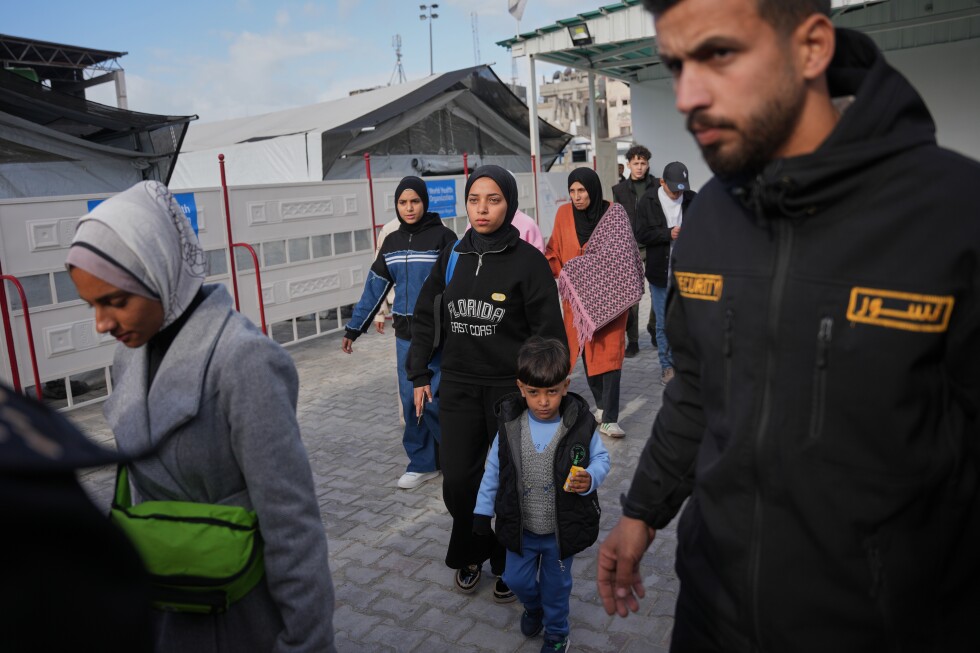
A limited number of Palestinians traveled between Gaza and Egypt on Sunday as the Rafah crossing reopened after a two-day closure, according to Egyptian state media. The vital border point had resumed operations last week for the first time since mid-2024, marking a significant development in the U.S.-backed ceasefire agreement between Israel and Hamas.
The Palestinian Red Crescent reported that 17 medical evacuees and 27 companions began crossing into Egypt, with a similar number expected to enter Gaza. The crossing had been temporarily closed Friday and Saturday due to operational confusion, highlighting the fragile nature of the newly implemented arrangements.
The reopening follows intense diplomatic pressure and coincided with Israel’s recovery of the remains of the last hostage in Gaza. U.S. officials had recently visited Israel to push for progress on ceasefire commitments, including the reopening of border crossings.
However, the pace of crossings remains significantly below demand. During the first four days of operation, only 36 Palestinians requiring medical care and 62 companions were permitted to leave for Egypt, according to United Nations data. Palestinian officials estimate nearly 20,000 people in Gaza are seeking to leave for medical treatment unavailable in the war-ravaged territory.
On Sunday morning, a group of Palestinian patients gathered in the courtyard of a Red Crescent hospital in Khan Younis before attempting the journey. Among them was Amjad Abu Jedian, who was shot by an Israeli sniper while working in the Bureij refugee camp in July 2024, according to his mother, Raja Abu Jedian.
“We want them to take care of the patients during their evacuation,” she told the Associated Press. “We want the Israeli military not to burden them.”
The crossing’s current protocols, negotiated by Israeli, Egyptian, Palestinian and international officials, allow just 50 people to return to Gaza daily, along with 50 medical patients and two companions for each. However, actual numbers crossing have fallen far short of these limits.
Palestinians who have returned to Gaza in recent days described lengthy delays and invasive searches conducted by Israeli authorities and an Israeli-backed Palestinian armed group called Abu Shabab. Israel has denied allegations of mistreatment.
The Rafah crossing has long been a critical lifeline for Gaza. Before the current conflict, it was the only border crossing not controlled by Israel. Israeli forces seized the Palestinian side in May 2024, further restricting movement that was already severely limited.
The crossing now operates under complex arrangements involving a European Union mission and Palestinian officials at the border, with Israel maintaining a separate screening facility some distance away.
Meanwhile, diplomatic efforts continue on other fronts. Israeli Prime Minister Benjamin Netanyahu is scheduled to meet with U.S. President Donald Trump in Washington on Wednesday, though his office indicated Iran would be the primary focus of discussions rather than Gaza.
In a significant development regarding the ceasefire’s future phases, senior Hamas official Khaled Mashaal stated the group is open to discussing the future of its weapons as part of a “balanced approach” that includes Gaza’s reconstruction and protection from Israel.
Speaking at a forum in Qatar, Mashaal revealed Hamas has offered multiple options, including a long-term truce, during ongoing negotiations with Egyptian, Qatari and Turkish mediators. He said the group is prepared to agree to certain “guarantees,” potentially including a 10-year disarmament period and an international peacekeeping force on Gaza’s borders.
Israel has consistently demanded complete disarmament and dismantling of Hamas’ military and civil infrastructure as a condition for lasting peace.
When asked about Hamas’ position on Trump’s new Board of Peace—expected to meet February 19 to raise funds for Gaza’s reconstruction—Mashaal avoided specifics but emphasized opposition to “foreign intervention” in Palestinian affairs.
“Gaza is for the people of Gaza. Palestinians are for the people of Palestine,” he stated. “We will not accept foreign rule.”
Fact Checker
Verify the accuracy of this article using The Disinformation Commission analysis and real-time sources.

10 Comments
It’s good to see the Rafah crossing reopen, but the frequent closures and operational issues are worrying. Maintaining reliable border access is crucial for Gaza’s recovery and economic development.
Absolutely, the fragility of the arrangements is a concern. Consistent and predictable border operations will be key to easing the dire humanitarian situation in Gaza long-term.
The delays and mistreatment of Palestinians at the border crossing are concerning. Even with the ceasefire, there appear to be ongoing issues with freedom of movement that need to be addressed.
I agree, the reports of delays and mistreatment are troubling. Ensuring the safe and dignified passage of people, especially medical evacuees, should be a priority in upholding the ceasefire agreement.
Interesting to see the Rafah crossing reopening, even if temporarily closed for a couple days. Seems the ceasefire agreement is still fragile and progress is slow, but any movement on border crossings is positive for the people of Gaza.
You’re right, the reopening is a step in the right direction, but the delays and confusion highlight the challenges in implementing the ceasefire fully. Diplomatic pressure will likely be needed to keep momentum.
The temporary closure of the Rafah crossing highlights the challenges in implementing the ceasefire agreement. While any progress is welcome, the delays and mistreatment of Palestinians suggest more work is needed to ensure the agreement is upheld in practice.
I agree, the reports of delays and mistreatment are concerning. Ensuring the smooth and dignified passage of people, especially the most vulnerable, should be a top priority as the ceasefire arrangements are further developed.
The recovery of the last hostage’s remains is an important development, but the slow pace of border crossings is frustrating. More progress is needed to fulfill the ceasefire commitments and improve conditions for Gaza’s residents.
You make a good point. Securing the return of hostages is a positive step, but the real test will be whether the ceasefire leads to substantive improvements in freedom of movement and quality of life for Palestinians in Gaza.