


Listen to the article
Federal investigators revealed Wednesday that staff at a Pennsylvania nursing home detected a natural gas odor hours before a devastating explosion killed three people and injured about 20 others last December.
According to a preliminary report by the National Transportation Safety Board (NTSB), employees at Bristol Health & Rehab Center, located just outside Philadelphia, noticed the smell of gas in the building’s basement and on multiple floors. The maintenance director contacted the local utility company, PECO, which dispatched a worker to investigate the situation.
The PECO worker arrived approximately one hour after the odor was first detected, just before noon on December 23. The technician traced the leak to a valve in a meter set located in the basement boiler room of the facility and subsequently called for assistance to make the necessary repairs.
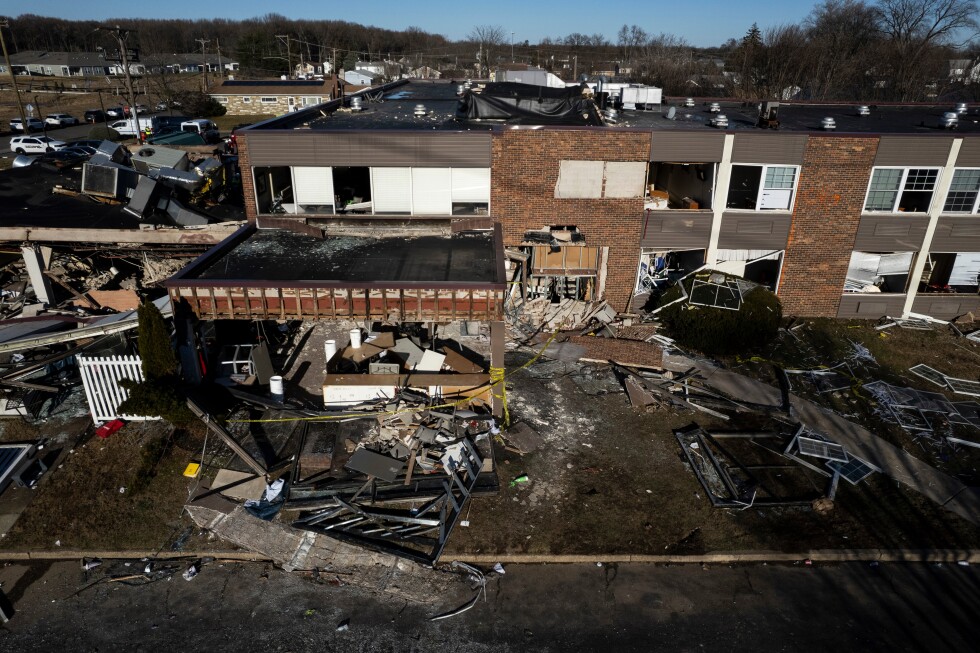
An additional meter services technician was sent by an Exelon foreman and arrived at the nursing home at approximately 1:20 p.m. Less than an hour later, at around 2:15 p.m., the building was rocked by an explosion that partially collapsed the structure, killing two residents and an employee.
One of the utility workers was among those injured in the blast, which occurred just days before Christmas. The catastrophic event prompted emergency workers, staff members, and even medical personnel from a nearby hospital to rush to the scene to evacuate residents, many of whom were trapped in the collapsed portion of the building.
Notably, the report indicates that Exelon, PECO’s parent company, did not shut off the gas flow to the facility until almost two hours after the explosion occurred. The document does not explain the reason for this delay.
The NTSB investigation will now focus on Exelon’s pipeline safety management practices, including employee training, worker qualifications, and protocols for responding to gas odor complaints. Federal inspectors have already tested the gas line and equipment from the facility, with some components being sent to a laboratory for more detailed examination.
In response to the preliminary findings, a PECO spokesperson issued a statement acknowledging “the importance of continuous improvement and vigilance with respect to the safe and reliable delivery of electric and natural gas service.” The statement also expressed condolences to the victims and their families, as well as to displaced residents and the broader community affected by the tragedy.
The release of this report provides significant new details about the sequence of events leading up to the explosion. While questions had been raised immediately after the incident about a possible gas leak due to witness accounts describing a strong gas odor and the presence of utility workers, PECO had initially stated it could not determine the cause or confirm whether its equipment was involved.
Natural gas explosions in institutional settings like nursing homes are particularly dangerous due to the vulnerable population they serve and the complexity of evacuating residents with mobility issues or cognitive impairments. Such incidents often raise questions about inspection protocols, maintenance schedules, and emergency response procedures.
The meter set identified in the report as the leak source includes the gas meter, regulator, piping, valves, and fittings—all critical components in safely delivering natural gas to a facility. Failures in these systems can allow gas to accumulate to dangerous levels, creating the potential for catastrophic explosions when the gas encounters an ignition source.
As the investigation continues, authorities will likely examine whether proper inspection and maintenance procedures were followed, if the response time by utility workers was appropriate, and whether the nursing home staff took adequate precautions once the gas odor was detected.
Fact Checker
Verify the accuracy of this article using The Disinformation Commission analysis and real-time sources.

8 Comments
While the details are still emerging, this event highlights the need for rigorous safety standards and emergency preparedness in nursing homes. Proactive maintenance, rapid response, and clear communication protocols could have potentially prevented this devastating outcome.
You make a good point. Nursing home operators must prioritize resident safety and be vigilant about addressing any potential hazards promptly. Lessons from this tragedy should inform industry-wide improvements to emergency planning and response.
The fact that the gas leak was detected hours prior to the explosion raises serious concerns about the emergency response. Nursing homes require robust safety systems and procedures to protect their residents. This incident warrants a comprehensive review to identify gaps and implement stronger safeguards.
This is a tragic incident. It’s concerning that the gas leak was detected hours before the deadly explosion, raising questions about the response time and safety protocols. Proper maintenance and swift action are crucial to prevent such disasters in nursing homes.
You’re right, the report indicates there were opportunities to address the issue before it escalated. Thorough investigations are needed to understand what went wrong and how to improve safety procedures going forward.
This is a heartbreaking situation. The fact that the gas leak was detected hours earlier but the explosion still occurred suggests systemic issues that need to be thoroughly investigated and addressed. Nursing home residents deserve the highest level of care and protection.
Nursing homes should be safe havens for vulnerable residents. This explosion, which took three lives, is deeply troubling. I hope the NTSB investigation provides clear answers and recommendations to prevent similar incidents in the future.
Agreed. Ensuring the safety and wellbeing of nursing home residents must be the top priority. Lessons learned from this tragedy could help enhance emergency protocols and utility response times at similar facilities.