


Listen to the article
Russia’s Small Businesses Face Crushing Tax Burden Amid War Economy
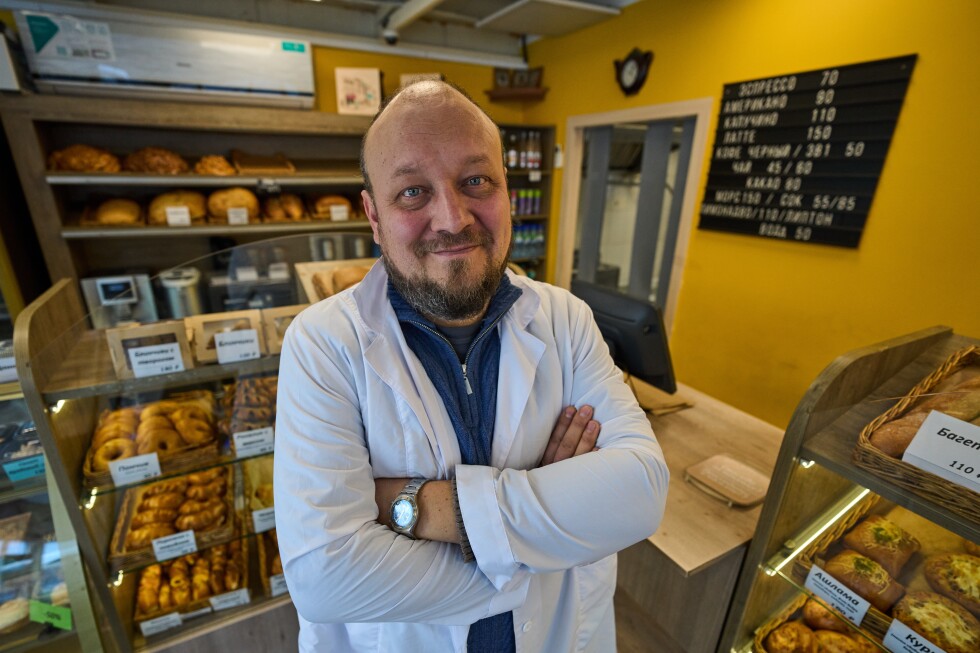
Denis Maksimov’s suburban Moscow bakery, Mashenka, gained unexpected fame after he appeared on President Vladimir Putin’s annual call-in show last December. Standing before the camera, Maksimov made a desperate appeal regarding tax reforms that threatened small businesses like his.
“We understand very well that it’s not an easy situation for the country. We understand that raising taxes is necessary,” Maksimov told Putin. “We’re looking ahead without optimism, frankly speaking. Many businesses will close down.”
As Russia’s invasion of Ukraine enters its fifth year, economic pressures are mounting visibly across the country. Oil revenues have declined significantly, the budget deficit has increased, and the military spending that previously drove economic growth has plateaued, forcing the Kremlin to seek new revenue sources.
The government’s solution has been to target consumers and small enterprises through increased taxation. The value-added tax (VAT) has been raised by 2%, and the revenue thresholds that determine which businesses must pay it have been drastically reduced.
The effects are becoming increasingly apparent. Business owners across Russia report diminishing demand for products and services, rapidly rising costs as suppliers adjust to new tax realities, and tax burdens that have multiplied. Many entrepreneurs have been forced to downsize operations, while others have shuttered completely.
Evidence of this economic contraction recently circulated on social media showing Nevsky Prospekt, St. Petersburg’s main commercial thoroughfare, lined with vacant storefronts where thriving businesses once stood.
“I’ve never felt so scared as this year, so unprotected, so anxious,” said Darya Demchenko, who operates a chain of beauty salons in St. Petersburg, Russia’s second-largest city.
Maksimov’s televised appeal failed to reverse the policy, which lowered the threshold requiring VAT payment from 60 million rubles ($783,000) in annual revenue to just 20 million rubles ($261,000) this year, with further reductions to 10 million rubles ($130,500) planned by 2028.
Similar reductions affected the “patent taxation system,” which previously allowed small businesses to make fixed annual payments instead of percentage-based taxes. Now, businesses exceeding 20 million rubles in revenue must pay at least 6% on their revenues, plus 5% VAT.
During their exchange, Putin acknowledged Maksimov’s concerns but emphasized the necessity of tax reform to combat “uncontrolled” illegal imports. The bakery owner’s appearance brought temporary attention and new customers to his three Mashenka locations in the Moscow region. The bakery even sent baked goods to the Kremlin and proudly notes on its website that Putin “tried our pies.”
While Maksimov’s case received special attention at a government meeting last month, with Economy Minister Maxim Reshetnikov proposing measures that would exempt his business from VAT and reduce other taxes, most entrepreneurs lack such high-profile intervention.
“I think we will grow, maybe slower than before, but no less confidently,” Maksimov told the Associated Press recently, though he acknowledged he’s still waiting for authorities to implement the promised measures.
Maksimov’s case sparked an online campaign called “We Are Mashenka,” initiated by the Association of Beauty Industry Enterprises. Business owners nationwide highlighted similar struggles, noting that unlike the fortunate bakery owner who caught Putin’s attention, they had no one to rescue their enterprises.
Demchenko, who supported the campaign, reported having to close one of her beauty salons and sell another due to dramatically increased taxes and lagging consumer demand. The tax reforms disqualified her from using the patent system, substantially increasing her tax burden while also requiring her to hire a full-time accountant to manage the additional paperwork.
Her operational costs rose by 30%, she said, as suppliers increased prices well beyond the 2% VAT hike. Meanwhile, customer spending on beauty services has declined for months, a situation worsened by Russia’s restrictions on social media platforms that previously provided affordable marketing channels.
Unlike during the COVID-19 pandemic, when the government offered tax breaks and rent deferrals, small business owners now feel abandoned. “This year, we haven’t felt any support at all. We feel like they want to shut us down,” Demchenko said.
Lyalya Sadykova, president of the Association of Beauty Industry Enterprises, reported that approximately 20% of beauty businesses in St. Petersburg either closed or were sold between December and January. She predicts further closures this spring when tax deadlines arrive.
“People will do the math. The first deadline for taxes is in April, and people will see that they have nothing to pay with, and that’s when the collapse will begin,” Sadykova warned.
For pastry shop owners Ilsiya Gizatullina and Railya Shayhieva in Kazan, the decision to close their business came after careful consideration of the tax reforms. “It was like cutting off a body part. Because we lived there, it was our life, 24/7,” Gizatullina said. Unlike the pandemic, which they weathered as a temporary challenge, the tax system changes appeared permanent and likely to worsen.
Small and medium enterprises represent just over 20% of Russia’s economy, but their contribution remains significant, according to Chris Weafer, CEO of Macro-Advisory Ltd. Consultancy. The expanded application of VAT to these businesses represents a deliberate strategy by Russia’s Finance Ministry to create more stable, predictable revenue sources as oil income declines.
Small businesses have faced mounting pressure since 2014, when Russia annexed Crimea and faced initial international sanctions. The government primarily supported large companies, leaving smaller enterprises vulnerable. The new tax regulations further compound these challenges.
While these changes may not completely derail the economy, Weafer notes they will impede post-war recovery. “The one engine of expansion and growth and innovation that you need in an economy is the sector that has suffered most in the last four years and is continuing to suffer today,” he concluded.
Fact Checker
Verify the accuracy of this article using The Disinformation Commission analysis and real-time sources.

6 Comments
It’s unfortunate to see Russia’s small businesses bearing the brunt of the government’s efforts to raise revenue amid the ongoing conflict. These tax changes could have severe consequences for local communities that rely on these enterprises. I wonder if there are any measures being taken to support or protect the most vulnerable businesses.
The government’s decision to target consumers and small businesses through higher taxes is an interesting approach, though it does seem quite harsh. I imagine this will only exacerbate the economic hardships many Russians are already facing. It would be good to understand the broader strategy and rationale behind these tax policy changes.
This seems like a concerning development for Russian small businesses, many of which were already struggling. Increasing the VAT and lowering the revenue thresholds will likely force a wave of closures, with ripple effects across local communities. I wonder if there are plans to mitigate the impact on the most vulnerable enterprises.
As Russia’s budget deficit grows and military spending plateaus, it’s understandable the government is seeking new revenue sources. But placing such a heavy tax burden on small businesses could backfire and stifle economic activity. I hope there are ways to provide relief or alternative support for these enterprises.
This new tax policy seems quite burdensome for small Russian businesses already struggling with the economic impacts of the war. The increased VAT and lower revenue thresholds will likely force many bakeries, beauty shops, and other enterprises to close down. It’s a challenging time for the Russian economy.
This new tax policy seems quite concerning for Russia’s small businesses, many of which were already struggling with the economic impacts of the war. Raising the VAT and lowering revenue thresholds could force a wave of closures, with ripple effects across local communities. I hope the government has measures in place to provide relief and support for the most vulnerable enterprises.