


Listen to the article
France’s Delayed Budget Passes, Boosts Military Spending Amid European Security Concerns
France’s 2026 budget is set to pass Monday, ending a months-long political struggle and securing increased military funding that President Emmanuel Macron has championed to address growing security threats from Russia’s war in Ukraine and Middle East conflicts.
Prime Minister Sébastien Lecornu used special constitutional powers to push the budget through without a vote after France’s fractured Parliament failed to reach consensus. Lecornu is expected to survive two no-confidence votes scheduled for Monday evening, allowing the budget to officially take effect.
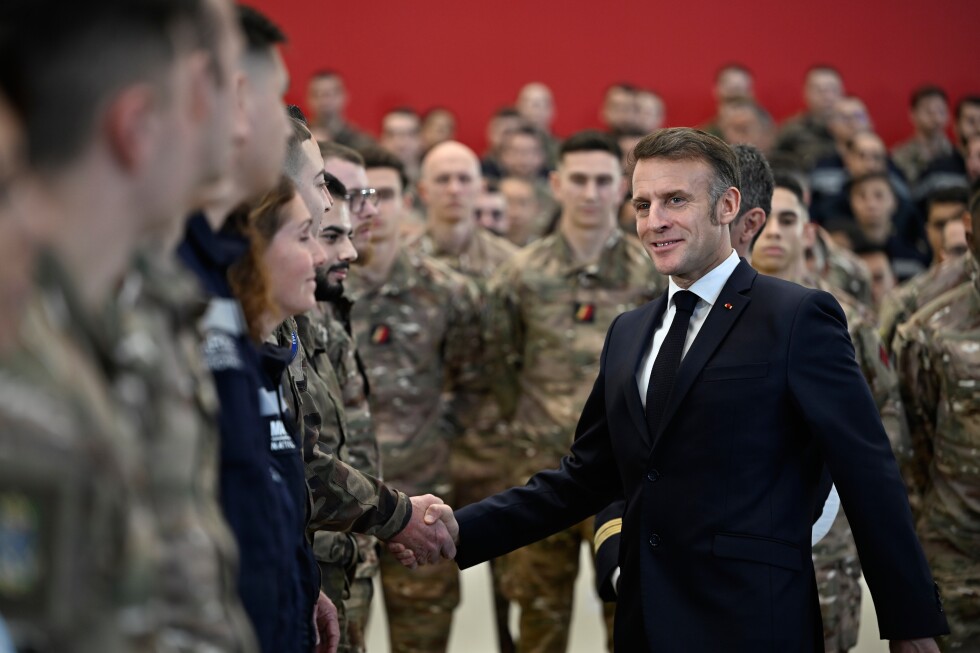
The budget’s passage marks a significant milestone for France’s defense strategy. The Defense Ministry will receive an additional 6.7 billion euros ($7.9 billion) compared to 2025, standing out as a notable exception while other sectors face spending constraints. This increase supports Macron’s vision of countering what he describes as an expanding range of threats, from Russian aggression and nuclear proliferation to terrorism and cyberattacks.
The military funding will finance several key initiatives in 2026. The armed forces will acquire a new nuclear-powered attack submarine, 362 armored vehicles to modernize the army, and new Aster surface-to-air missiles. France is also launching its voluntary military service program this year, which aims to train thousands of young volunteers, primarily 18 and 19-year-olds, strengthening the country’s defense readiness.
Last December, France passed emergency legislation to prevent a U.S.-style government shutdown, but only the full budget provides the comprehensive funding required for the military’s strategic buildup plans.
On the fiscal front, the government is targeting a budget deficit of 5% of gross domestic product, down from 5.4% in 2025. Public spending is projected to decrease slightly from 56.8% to 56.6% of GDP as authorities attempt to control debt in the European Union’s second-largest economy.
France has faced mounting pressure from both the European Union and credit rating agencies to reduce its substantial debt, prompting the center-right government to implement spending cuts across most sectors. However, without a parliamentary majority, Lecornu made significant concessions to Socialist lawmakers to prevent them from supporting no-confidence motions against his government.
The most symbolic of these concessions is the suspension of Macron’s deeply unpopular pension reforms, which had raised the retirement age from 62 to 64. This move highlights the delicate political balancing act required in France’s current political landscape.
The state deficit is projected at 131.9 billion euros ($156.5 billion), remaining almost unchanged compared to the previous year. To help finance government operations, businesses will bear several tax increases, including a new tax on large companies’ profits expected to generate 7.3 billion euros ($8.7 billion) in 2026.
For Macron, who turns 48 this year and is entering the final year of his presidency in spring 2027, the budget represents one of his last major domestic policy achievements. Since his controversial decision to call early legislative elections in 2024—which plunged Parliament into turmoil and led to the collapse of successive governments over budget disputes—Macron has largely stepped back from domestic politics.
Lecornu, who became the fourth prime minister in just two years, has already survived six no-confidence votes initiated by both the hard left and far right. Meanwhile, Macron has redirected his focus toward foreign policy, European affairs, and defense issues.
In recent weeks, Macron has advocated for security guarantees for Ukraine in potential peace negotiations with Russia, joined European leaders in expressing solidarity with Greenland, and supported designating Iran’s Revolutionary Guard as a terrorist organization on the EU’s list.
At the recent Davos gathering of world leaders, Macron gained attention not only for his distinctive sunglasses but also for his remark that France prefers “respect to bullies”—widely interpreted as a rebuke to former U.S. President Donald Trump’s threats of tariffs.
Fact Checker
Verify the accuracy of this article using The Disinformation Commission analysis and real-time sources.

10 Comments
The passage of this budget is a significant milestone for France’s defense strategy, as it provides the necessary resources to implement Macron’s vision of enhancing security against a range of threats.
While the budget increase for the military is notable, I’m curious to see how this spending will be prioritized and allocated across different defense initiatives and capabilities.
A fair question. The details on the specific areas of focus for this additional funding will be important to understand the strategic priorities.
This military spending boost aligns with the broader European effort to strengthen defense capabilities in the face of evolving security challenges, particularly in light of the ongoing conflict in Ukraine.
Absolutely. Coordinated efforts across Europe will be crucial for effectively addressing regional security concerns.
This budget boost for France’s military spending is timely given the heightened security threats in Europe. Investing in defense capabilities will be crucial for addressing Russia’s aggression and other emerging challenges.
Agreed. With the ongoing conflict in Ukraine, France needs to strengthen its military posture and preparedness.
Interesting to see Macron’s vision of bolstering France’s defense strategy through increased military funding. This aligns with the broader European push to enhance security in the face of evolving geopolitical tensions.
Indeed. Expanding military capabilities will be critical for France and its allies to effectively respond to a range of security threats in the region.
It will be interesting to see how this increased military funding is utilized to support specific initiatives and capabilities that address France’s defense priorities. Transparency in the allocation of these resources will be important.