


Listen to the article
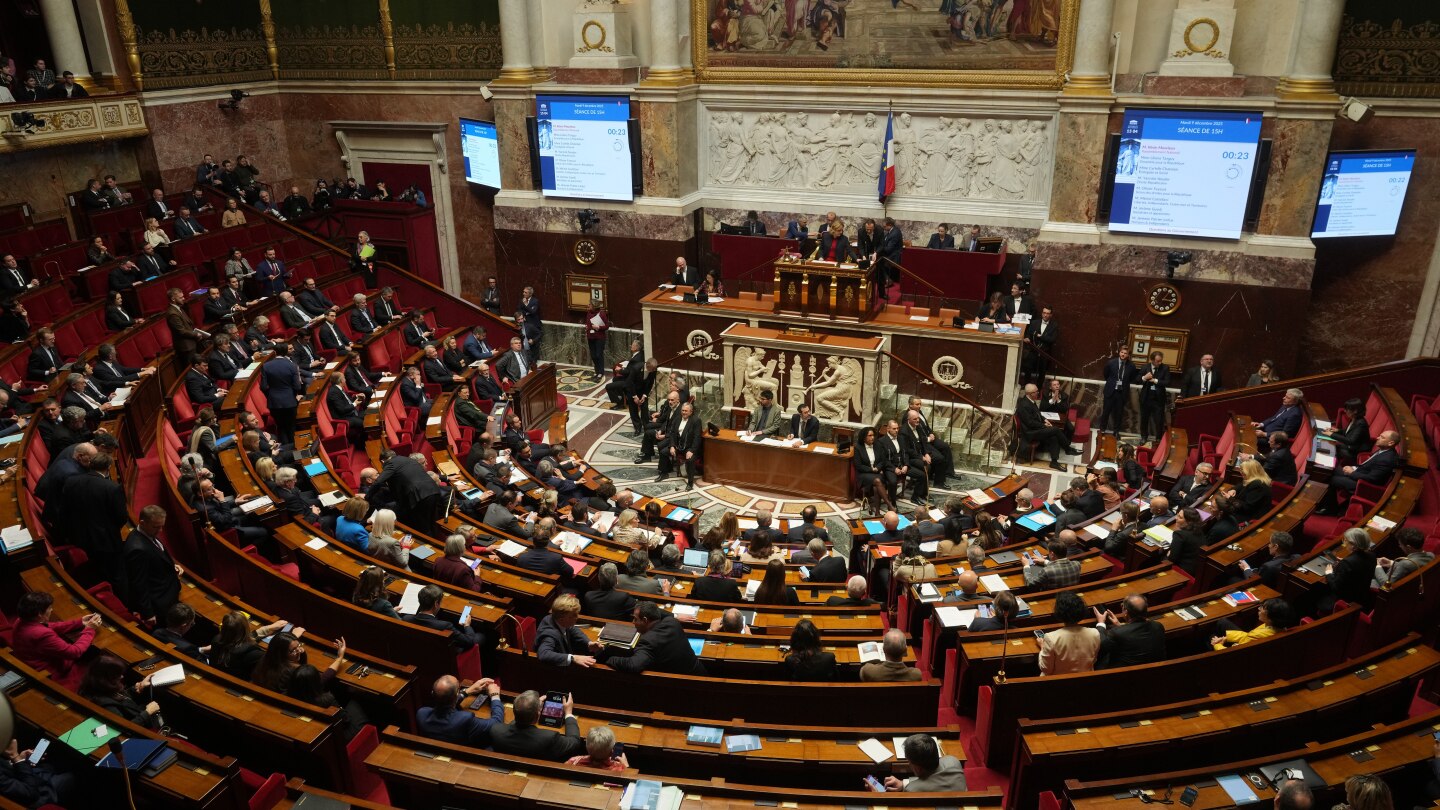
France’s parliament convened Tuesday to debate emergency legislation aimed at preventing a government shutdown as the country faces a looming budget crisis. With the new year approaching rapidly, lawmakers are scrambling to ensure essential government functions continue despite the collapse of negotiations over the 2026 budget.
The draft law, presented by President Emmanuel Macron and his Cabinet Monday night, seeks to “ensure the continuity of national life and the functioning of public services,” according to an official statement. If passed, the measure would allow the government to continue collecting taxes and disbursing funds to local authorities based on the spending framework established in the 2025 budget.
Despite deep political divisions, the National Assembly—the lower and more powerful chamber of France’s parliament—has already made several amendments to the bill and is expected to approve it late Tuesday. The Senate will then take up the legislation. Political observers anticipate the emergency measure will pass despite the fractured parliament, which consists of three main blocs: Marine Le Pen’s far-right National Rally, various left-wing parties, and Macron’s centrist minority government.
Finance Minister Roland Lescure emphasized the urgent need for action during an interview Tuesday with BFM television. “We need a budget as fast as possible so that we can move on,” Lescure said, adding that “the longer [the temporary budget] lasts, the more it costs.”
The current crisis stems from Macron’s controversial decision to call snap elections last year, which resulted in a hung parliament and prolonged political paralysis. The legislative gridlock has complicated efforts to address France’s substantial budget deficit, which currently stands at around 5% of GDP—well above the European Union’s 3% threshold.
This fiscal uncertainty has raised concerns among international investors and ratings agencies about France’s economic stability. The country has historically maintained generous social welfare programs, universal healthcare, and free education, resulting in high levels of public spending that tax revenues have consistently failed to fully cover.
Prime Minister Sebastien Lecornu, who recently went through an unusual political maneuver of resigning and then being reappointed, is expected to deliver a public address later Tuesday addressing the budget situation. His government faces the daunting task of not only passing this emergency measure but also crafting a comprehensive 2026 budget that can win approval in the divided parliament.
The Lecornu government did secure a small victory earlier this month when parliament narrowly approved a key healthcare budget bill. However, this success came at a significant cost—the suspension of Macron’s flagship pension reform, which would have gradually raised France’s retirement age from 62 to 64 years. The pension reform had previously sparked massive protests across the country but was seen by Macron as essential to ensuring the long-term financial sustainability of France’s social security system.
The current budget standoff represents the most serious governance challenge of Macron’s presidency. His centrist alliance lacks the parliamentary majority needed to push through its policy agenda without support from opposition parties, forcing difficult compromises that have weakened his administration’s ability to implement reforms.
Economic analysts warn that continued political instability could further erode investor confidence and potentially trigger a downgrade of France’s sovereign debt rating, which would increase borrowing costs at a time when the country can least afford it.
While the emergency measure may avert an immediate shutdown, the fundamental challenge remains: constructing a comprehensive 2026 budget that balances fiscal responsibility with France’s extensive social welfare commitments—all within a deeply divided political landscape that shows little sign of finding consensus.
Fact Checker
Verify the accuracy of this article using The Disinformation Commission analysis and real-time sources.

9 Comments
I’m curious to see how the amendments made by the National Assembly will shape the final legislation. Balancing competing political interests is never easy when it comes to the budget.
A government shutdown, even a temporary one, can be very disruptive. I hope France is able to avoid that outcome and maintain essential services for its citizens.
This situation highlights the importance of effective budget planning and negotiation, even in developed economies. I’ll be following the progress of this legislation closely.
Interesting to see France facing budget challenges similar to the US. I wonder how this emergency legislation will impact the country’s fiscal situation and public services in the near term.
Yes, it’s a delicate balancing act to ensure continuity of essential functions while navigating political divisions. The Senate’s role in approving the measure will be critical.
This situation highlights the complexities of budget negotiations, even for developed economies like France. I hope they can find a pragmatic solution to avoid a government shutdown.
Agreed. A prolonged budget impasse could have significant ripple effects on the French economy and public. Timely resolution will be key.
The proposed emergency legislation seems like a reasonable stopgap, but I wonder about the longer-term implications for France’s fiscal policy and political stability. This bears watching.
The collapse of budget negotiations is troubling, but I’m glad to see the government taking proactive steps to prevent a full-blown shutdown. Fiscal responsibility is critical.