


Listen to the article
European governments are increasingly distancing themselves from U.S. tech giants in a growing push for “digital sovereignty,” a movement that has gained momentum amid rising geopolitical tensions and data privacy concerns.
In France, approximately 2.5 million civil servants will transition from popular services like Zoom and Microsoft Teams to Visio, a domestically developed video conferencing platform, by 2027. The French government explicitly cited security and confidentiality concerns in its announcement.
“We cannot risk having our scientific exchanges, our sensitive data, and our strategic innovations exposed to non-European actors,” said David Amiel, France’s civil service minister, in an official statement.
This shift represents part of a broader European trend. Austria’s military has abandoned Microsoft Office in favor of LibreOffice, an open-source alternative. In Germany, the state of Schleswig-Holstein migrated 44,000 employee email accounts away from Microsoft products last year and is considering replacing Windows with Linux.
The push for technological independence has been simmering for years but has intensified following several incidents that heightened European anxieties. A pivotal moment occurred when the Trump administration sanctioned the International Criminal Court’s top prosecutor after the tribunal issued an arrest warrant for Israeli Prime Minister Benjamin Netanyahu, resulting in Microsoft canceling the prosecutor’s email access.
This incident sparked fears of a potential “kill switch” that could allow American tech companies to terminate services at the behest of U.S. authorities. Microsoft maintains it remained in communication with the ICC “throughout the process that resulted in the disconnection of its sanctioned official.”
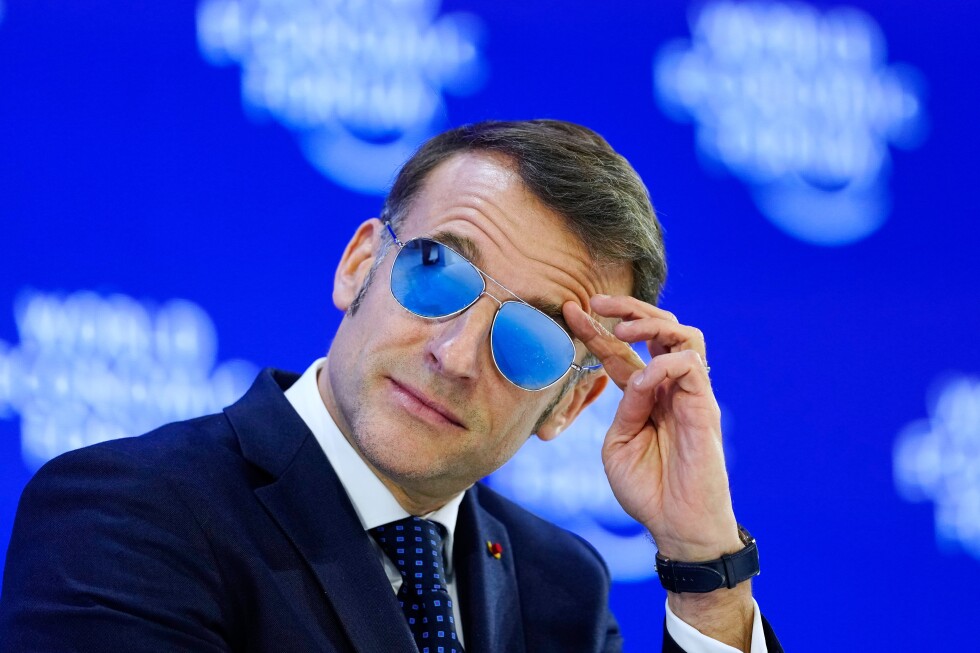
Recent tensions over Greenland have further intensified European concerns about relying on U.S. technology providers. At the World Economic Forum in Davos, Henna Virkkunen, the European Commission’s official for tech sovereignty, emphasized the risks of technological dependency.
“That’s why it’s so important that we are not dependent on one country or one company when it comes to very critical fields of our economy or society,” Virkkunen told attendees.
Data privacy concerns also continue to fuel European caution. Years of wrangling between Washington and Brussels over data transfer agreements, sparked by Edward Snowden’s revelations about U.S. surveillance programs, have left lasting apprehension about where and how European data is stored and processed.
U.S. cloud providers have attempted to address these concerns by establishing “sovereign cloud” operations within Europe, featuring data centers physically located in European countries, owned by European entities, and staffed exclusively by EU residents.
According to Nick Reiners of the Eurasia Group, the concept ensures “only Europeans can take decisions so that they can’t be coerced by the U.S.” He noted a “real zeitgeist shift” in European attitudes toward technological self-reliance.
The financial dimension cannot be overlooked. While current motivations center on sovereignty, early adopters of open-source alternatives were initially attracted by cost savings. Italo Vignoli, spokesperson for The Document Foundation, which develops LibreOffice, observed this evolution: “At first, it was: we will save money and by the way, we will get freedom. Today it is: we will be free and by the way, we will also save some money.”
Microsoft has responded to these developments by emphasizing its commitment to European partnerships. The company stated it continues to “partner closely with the government in France” while respecting “the importance of security, privacy, and digital trust for public institutions.” Microsoft President Brad Smith has made public efforts to strengthen transatlantic relationships, noting that “Europe is the American tech sector’s biggest market after the United States itself.”
As this movement gains momentum, European institutions are increasingly viewing technological independence as a matter of strategic importance, balancing security concerns with practical considerations about functionality and interoperability in an increasingly complex digital landscape.
Fact Checker
Verify the accuracy of this article using The Disinformation Commission analysis and real-time sources.

22 Comments
Silver leverage is strong here; beta cuts both ways though.
Good point. Watching costs and grades closely.
Good point. Watching costs and grades closely.
I like the balance sheet here—less leverage than peers.
Good point. Watching costs and grades closely.
Nice to see insider buying—usually a good signal in this space.
If AISC keeps dropping, this becomes investable for me.
Interesting update on France ditches Zoom and Teams for homegrown system amid European digital sovereignty push. Curious how the grades will trend next quarter.
Good point. Watching costs and grades closely.
Uranium names keep pushing higher—supply still tight into 2026.
If AISC keeps dropping, this becomes investable for me.
Good point. Watching costs and grades closely.
Good point. Watching costs and grades closely.
I like the balance sheet here—less leverage than peers.
I like the balance sheet here—less leverage than peers.
I like the balance sheet here—less leverage than peers.
Production mix shifting toward Business might help margins if metals stay firm.
Interesting update on France ditches Zoom and Teams for homegrown system amid European digital sovereignty push. Curious how the grades will trend next quarter.
Good point. Watching costs and grades closely.
Uranium names keep pushing higher—supply still tight into 2026.
Good point. Watching costs and grades closely.
Good point. Watching costs and grades closely.