


Listen to the article
After 25 years of negotiations, the European Union and the South American trade bloc Mercosur are poised to formally sign a landmark free trade agreement this Saturday in Paraguay, creating one of the world’s largest free-trade zones encompassing over 700 million people and a quarter of global GDP.
The agreement represents the first major trade deal for Mercosur, which includes Brazil, Argentina, Paraguay, and Uruguay. Bolivia, the bloc’s newest member, did not participate in negotiations but may join the agreement in coming years.
Talks began so long ago that the euro hadn’t yet entered circulation, China hadn’t joined the World Trade Organization, and Venezuela was still America’s primary oil supplier. The geopolitical landscape has shifted dramatically since then.
European Commission President Ursula von der Leyen praised the deal as a powerful endorsement of multilateralism “in the face of an increasingly hostile and transactional world.” Brazilian President Luiz Inácio Lula da Silva called it a rare “victory for dialogue, negotiation and the bet on cooperation.”
Analysts note the agreement’s timing is significant as both the United States and China compete for influence in resource-rich South America. “It’s a signal that South American economies are seeking to hedge away from this great power competition between the U.S. and China,” said Lee Schlenker from the Quincy Institute for Responsible Statecraft.
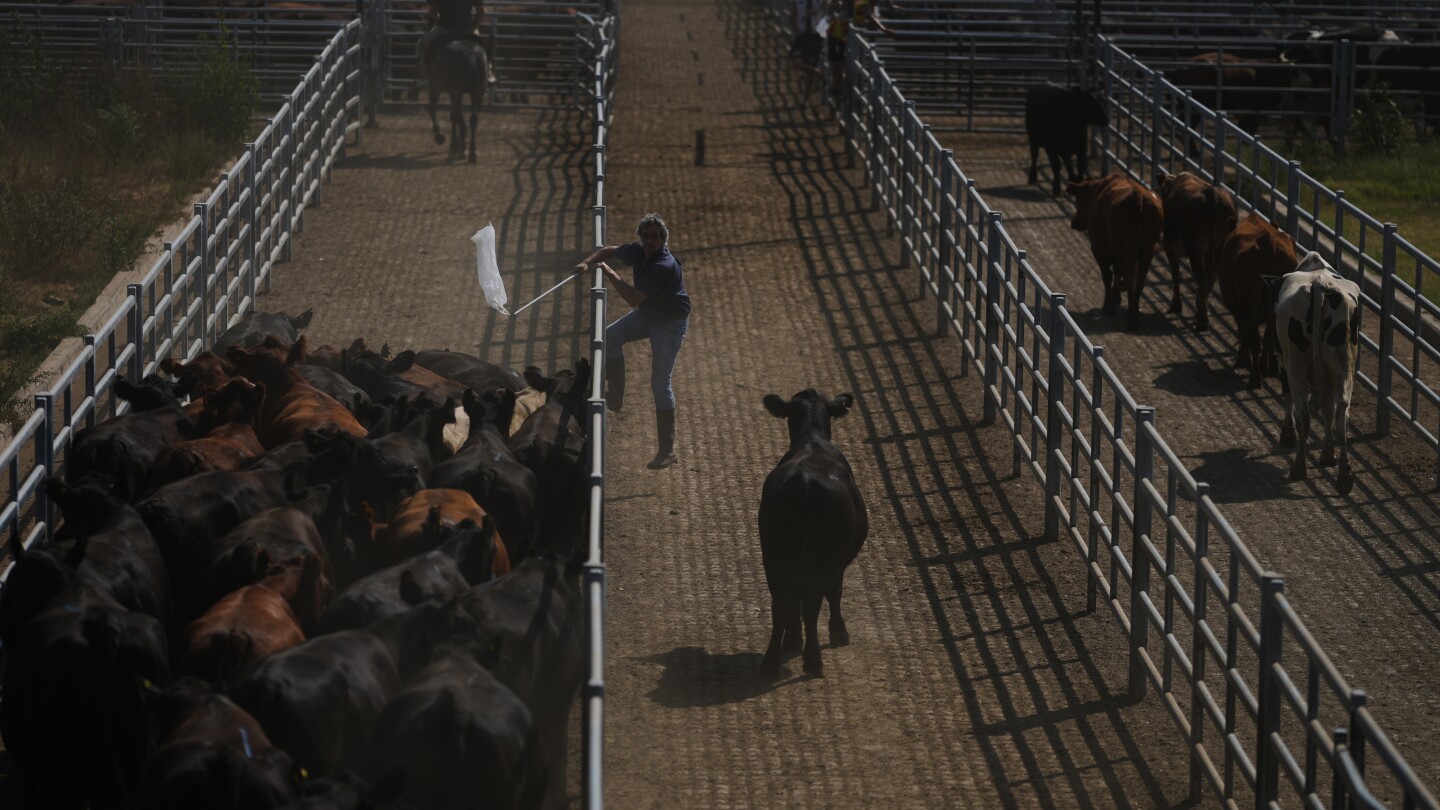
For South American nations, the deal offers expanded access to Europe’s vast market for agricultural goods at preferential tax rates. Argentine exporters anticipate saving tens of millions of dollars annually through the immediate elimination of a 20% tariff on the EU’s quota for high-quality meat imports.
Carlos Colombo, president of Cañuelas Cattle Market in Buenos Aires province, described the agreement as part of a “paradigm shift” for Argentina, a country that has historically maintained protectionist economic policies. “Argentina has reopened itself to the world,” he said.
Despite his ideological alignment with Donald Trump, Argentina’s libertarian President Javier Milei has embraced the trade pact after initially criticizing Mercosur as irrelevant. “He sees this agreement as a way to revitalize and re-signify Mercosur,” explained Marcelo Elizondo, an Argentine economic analyst.
Brazil also stands to benefit significantly. Apex, a Brazilian government investment agency, estimates that EU-bound agricultural exports like instant coffee, poultry, and orange juice will generate $7 billion in the coming years.
However, the path to Saturday’s signing has been fraught with challenges. European farmers, concerned about competition from cheaper South American imports and regulatory disadvantages, have staged protests across the continent, blocking highways and marching in capital cities.
The EU responded by implementing environmental and animal welfare safeguards and imposing strict quotas on South American meat and sugar exports to protect European producers. Despite these measures, several EU member states, including France and Poland, voted against the deal in recent internal deliberations.
Other agricultural powerhouses like Italy only agreed to support the pact after the EU offered farmers substantial subsidies totaling $52 billion. “It’s a sizable bribe,” noted Jacob Funk Kirkegaard from the Peterson Institute for International Economics. “EU leaders decided that the deal is so important at this moment, it’s worth it.”
The agreement, sometimes called “cows for cars,” also benefits Europe’s automotive industry. With the elimination of 35% tariffs on auto parts and vehicles, European manufacturers gain a competitive edge against Chinese rivals in South American markets. This comes at a crucial time as European automakers face growing Chinese competition and high U.S. tariffs.
“Failing to sign the EU-Mercosur free trade agreement risked pushing Latin American economies closer to Beijing’s orbit,” said Agathe Demarais from the European Council on Foreign Relations.
Despite the planned signing ceremony, stakeholders remain cautious given the agreement’s tumultuous history. The deal must still be ratified by the European Parliament and national legislatures before taking effect.
“There are still several steps that have to be taken… and Europe continues to be very careful,” Colombo said. “Let’s not forget, this is historic. We’ve never reached an agreement like this before.”
Fact Checker
Verify the accuracy of this article using The Disinformation Commission analysis and real-time sources.

10 Comments
This deal could reshape global supply chains, especially for commodities. Businesses will need to carefully assess new trade flows and logistics to optimize their operations. Flexible, resilient supply networks will be crucial going forward.
Absolutely. The reconfiguration of supply chains is one of the most impactful outcomes to watch. Smart companies will be nimble in adapting to the new trade environment created by this agreement.
I wonder how this will impact the geopolitical dynamics in the region, particularly the tug-of-war between the US and China for economic and diplomatic influence. This deal could shift the balance of power and commercial opportunities in meaningful ways.
That’s an insightful observation. This agreement has clear geopolitical ramifications beyond just the economic benefits. It will be fascinating to see how it reshapes the strategic landscape in the Americas and globally.
This is a major win for multilateralism and global trade. Reducing tariffs and barriers between these economic blocs will create new opportunities for businesses and consumers on both sides. It’s encouraging to see countries come together to deepen economic ties despite the current geopolitical tensions.
I have some concerns about the environmental and labor protections in this trade deal. While reducing tariffs is positive, the agreement needs robust mechanisms to ensure sustainable practices and safeguard worker rights across all member states. Oversight will be critical.
That’s a fair point. The environmental and labor provisions will be key to ensuring the benefits of this deal are shared broadly and responsibly. Robust monitoring and enforcement will be essential.
The scope of this agreement is impressive, covering a massive market of over 700 million people. Lowering trade frictions should boost exports, investment, and economic growth across the region. It’s a positive sign that countries are prioritizing cooperation over confrontation.
After 25 years of negotiations, I’m glad the EU and Mercosur were finally able to reach an agreement. This demonstrates the long-term value of persistent diplomacy, even in the face of shifting political landscapes. A testament to the enduring power of economic integration.
I’m curious to see how this trade deal will impact commodity flows and pricing, especially for key resources like minerals and energy. Will it open up new supply channels and increase competition? Or will dominant players leverage their position? Lots of potential implications to watch.