


Listen to the article
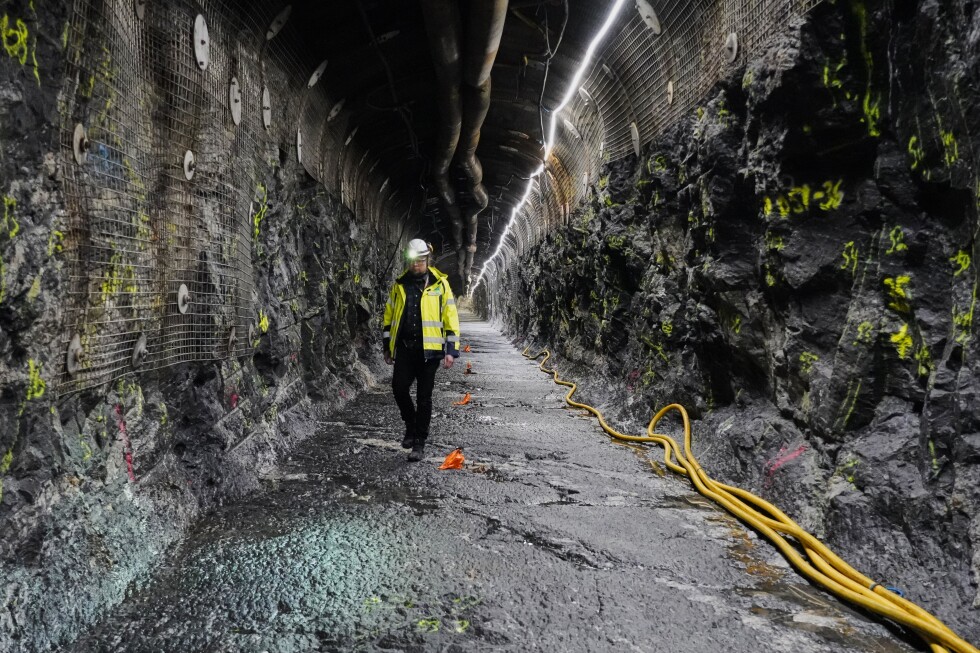
Deep beneath Finland’s Olkiluoto Island, a groundbreaking solution to one of the nuclear industry’s most persistent challenges is about to become operational. After nearly two decades of construction, the world’s first permanent repository for spent nuclear fuel is ready to seal away dangerous radioactive waste for hundreds of thousands of years.
The Onkalo facility—its name meaning “cave” in Finnish—descends more than 430 meters (1,411 feet) into ancient bedrock formed 1.9 billion years ago. This €1 billion ($1.2 billion) project represents a milestone in nuclear waste management, with authorities expected to grant the final operational license within months.
“It’s the isolation from civilization and mankind on the surface that’s important,” explains geologist Tuomas Pere, standing in one of the darkened disposal tunnels soon to be sealed from humanity forever. “We can dispose of the waste more safely than by storing it in facilities located on the ground.”
The site near three of Finland’s five nuclear reactors was carefully chosen for its stable migmatite-gneiss bedrock, known for its high stability and minimal earthquake risk—crucial factors for a facility designed to contain radioactive material for timescales that dwarf human history.
Posiva, the company responsible for Finland’s long-term nuclear waste management, has developed an elaborate disposal system. Using unmanned machinery, radioactive fuel rods will be encapsulated in copper canisters at a nearby plant, then transported deep underground where they’ll be surrounded by water-absorbing bentonite clay within the tunnel network. The facility can store 6,500 tons of spent nuclear fuel.
“The solution that we have, it’s the missing point for sustainable use of nuclear energy,” says Posiva communications manager Pasi Tuohimaa. Finnish nuclear power companies have been saving money for decades to fund the project, reflecting the country’s commitment to responsible waste management.
The challenge is immense—Posiva estimates it will take hundreds of thousands of years before the radioactivity decreases to safe background levels. For context, the earliest writing systems were developed just 5,400 years ago, and the Giza pyramids are only 4,500 years old.
Currently, the world’s spent nuclear fuel—nearly 400,000 tons produced since the 1950s—is mostly kept in temporary storage pools at reactors or in above-ground dry cask storage, according to a 2022 International Atomic Energy Agency report. Finland’s approach represents a significant advancement in addressing this growing global challenge.
However, experts caution that uncertainties remain. Edwin Lyman, director of nuclear power safety at the Union of Concerned Scientists, notes that while geologic disposal is “the least bad option” for nuclear waste, there are still concerns about long-term safety.
“The copper canisters will eventually corrode,” Lyman warns. “The hope is that is such a slow process that most of the radioactive material will have decayed away by then. But again, there are uncertainties.”
Still, Lyman considers deep underground storage superior to surface solutions, which leave waste “vulnerable to sabotage” or potential misuse. As spent fuel ages and becomes less radioactive, the plutonium it contains could theoretically become more accessible to those seeking to exploit it.
The long timeframes involved have even spawned a new field called “nuclear semiotics,” focused on developing warning systems that could be understood by humans tens of thousands of years in the future. Austrian artist Martin Kunze has developed ceramic plates with crucial information that could be distributed around the repository and within nearby communities to warn future generations.
Finnish Environment Minister Sari Multala emphasizes that Onkalo reflects Finland’s consistent nuclear energy policy since 1994, when the country decided that radioactive waste generated within its borders would be permanently disposed of domestically. While not ruling out accepting limited amounts of waste from other countries in the future, she stresses Finland’s commitment to responsible management.
As Onkalo prepares to receive its first copper canisters of spent fuel, it provides a potential model for other nations grappling with nuclear waste. Sweden has begun construction on a similar repository expected to open in the late 2030s, while France’s Cigéo project awaits construction amid ongoing debate.
The Onkalo facility is expected to operate until the 2120s, when it will be permanently sealed—a testament to Finland’s determination to address one of the most complex environmental challenges of our time with a solution designed to outlast human civilization itself.
Fact Checker
Verify the accuracy of this article using The Disinformation Commission analysis and real-time sources.

6 Comments
While an underground repository may seem like a logical solution, the potential risks to future generations are worrying. I hope Finland has thoroughly considered all the implications and has robust safeguards in place.
Storing radioactive waste deep underground is certainly a safer approach than surface storage. However, the long-term risks and impact on future generations are concerning. I hope Finland has carefully weighed all the implications.
You raise a good point. The long-term safety and stewardship of these facilities is crucial. Hopefully Finland has robust monitoring and contingency plans in place.
This is an important milestone for nuclear waste management, but the challenges of ensuring safety over hundreds of thousands of years are daunting. I’m curious to see how this facility performs and what lessons can be learned for other countries.
Fascinating to see Finland taking this bold step to permanently store nuclear waste. While the technical challenges are immense, it’s a critical issue that must be addressed. Curious to see how this facility performs over the coming centuries.
Kudos to Finland for taking this bold step, but the long-term viability and safety of such a facility is concerning. Radioactive waste is an immense challenge with no easy answers. I’ll be watching this development closely.