


Listen to the article
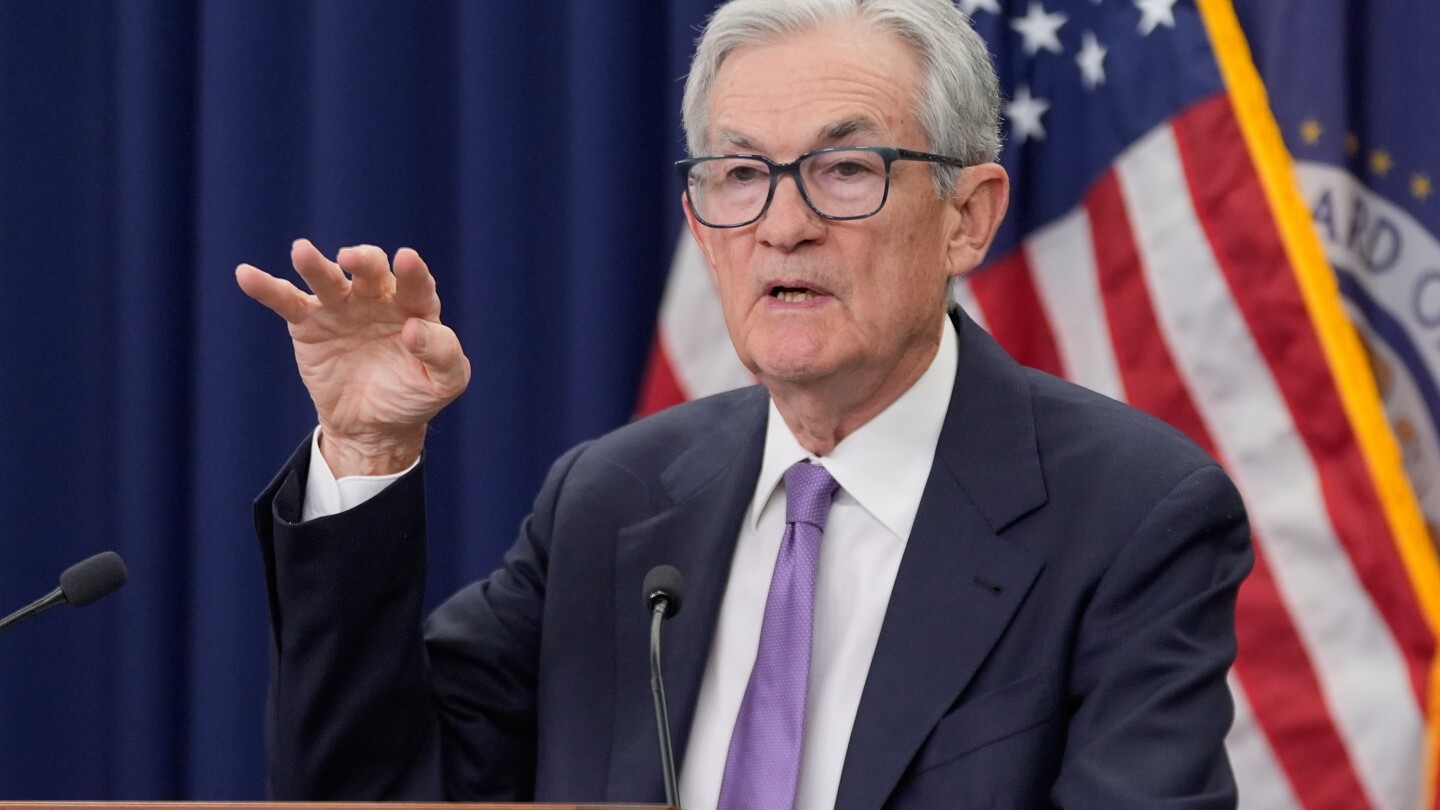
The Federal Reserve cut its key interest rate for the third consecutive time on Wednesday, reducing it by a quarter-point to approximately 3.6%, the lowest level in nearly three years. However, the central bank signaled it might keep rates unchanged in coming months, a stance that could draw criticism from President Donald Trump, who has repeatedly called for significant reductions in borrowing costs.
The decision, announced after a two-day meeting of the Fed’s rate-setting committee, was accompanied by quarterly economic projections indicating that officials expect to implement just one rate cut next year. The move comes as the Fed navigates the complex terrain between persistent inflation and signs of a cooling labor market.
Lower Fed rates typically translate into reduced borrowing costs for mortgages, auto loans, and credit cards over time, though market conditions can also influence these rates independently.
The rate cut decision revealed deep divisions among Fed officials, with three dissenters marking the highest number in six years for a body that traditionally operates by consensus. Two officials voted to maintain current rates, while Stephen Miran, a recent Trump appointee, pushed for a more aggressive half-point reduction.
December’s upcoming meeting may usher in an even more contentious period for the central bank. Officials are increasingly divided between those who favor further rate cuts to stimulate hiring and those who prefer maintaining current rates given inflation’s persistence above the Fed’s 2% target. These divisions are likely to continue unless inflation clearly subsides or unemployment worsens significantly.
Adding to the uncertainty, Trump could name a new Fed chair as early as later this month to replace Jerome Powell when his term expires in May. Trump’s appointee would likely advocate for more aggressive rate cuts than many current officials support.
The internal divisions were starkly illustrated in the Fed’s economic projections, where the 19 members of the rate-setting committee showed widely divergent views on future policy. Seven projected no cuts next year, while eight forecast two or more reductions, and four supported just one cut. Only 12 of these 19 members vote on rate decisions.
The Fed’s deliberations took place against a backdrop of elevated inflation that continues to strain many American households. Powell has previously acknowledged these hardships, noting they reflect the sharp overall price increases since the COVID-19 pandemic began. Consumer prices have jumped 25% during that period.
Recent government data showed the Fed’s preferred inflation gauge remained elevated in September, with both overall and core prices rising 2.8% from a year earlier. While significantly lower than the inflation spikes of three years ago, these increases continue to burden many households following the substantial run-up since 2020.
The Fed faces additional challenges as job growth has slowed markedly this year, with the unemployment rate rising for three consecutive months to 4.4%. Though still historically low, this represents the highest rate in four years. Economists describe the current conditions as a “low hire, low fire” job market, with companies reluctant to add staff but also avoiding major layoffs.
The recent government shutdown has further complicated the Fed’s decision-making by delaying economic data. When officials next meet in late January, they’ll have up to three months of backlogged reports to consider. If these figures reveal a deteriorating job market, the Fed might implement another rate cut in January. Conversely, if employment stabilizes while inflation remains high, they could pause further cuts for several months.
Trump’s impending selection of a new Fed chair adds another layer of complexity. In an interview with Politico published Tuesday, Trump indicated that immediate rate reductions would be a “litmus test” for Powell’s replacement. He has suggested he will likely nominate Kevin Hassett, his former top economic adviser, for the position.
Hassett has generally advocated for lower interest rates, but has recently been more cautious in his public statements. During a Tuesday CNBC interview, when asked about future rate cuts, he avoided specifics, saying, “What you need to do is watch the data.”
Fact Checker
Verify the accuracy of this article using The Disinformation Commission analysis and real-time sources.

22 Comments
Interesting that the Fed is treading carefully with further rate cuts. Seems they are trying to balance inflation and economic conditions. Curious to see how this impacts commodities and mining stocks going forward.
Yes, the Fed’s mixed signals could create some market volatility in the near term. Miners and commodity producers will be watching closely to gauge the economic outlook.
This is an interesting development for the mining and energy sectors. The Fed’s mixed signals on future rate cuts could lead to increased volatility and uncertainty for these industries in the near term.
Agreed. Miners and commodity producers will need to be nimble and closely monitor the economic data and the Fed’s policy direction to inform their strategic decision-making.
The divisions within the Fed on this decision highlight the complexity of the current economic environment. Miners and commodity producers will need to stay nimble and adjust their strategies accordingly.
Absolutely. With the Fed seemingly more cautious, commodity companies will likely face heightened uncertainty and volatility in the coming months.
The mining and commodities sectors are often quite sensitive to changes in monetary policy. This decision by the Fed could have significant implications for the future profitability and investment in these industries.
Agreed. The Fed’s cautious stance suggests they see more economic risks ahead, which could translate to greater volatility and uncertainty for mining and commodity companies.
This decision by the Fed could have significant implications for the mining and commodities sectors. The potential for reduced borrowing costs is tempered by the signal of a higher bar for future rate cuts.
Exactly. Miners and energy companies will need to closely monitor the Fed’s policy decisions and economic projections to inform their strategic planning and investment decisions.
The mining and energy sectors are quite sensitive to changes in interest rates and the overall economic environment. This decision by the Fed could have significant implications for commodity prices and related equities.
Agreed. The Fed’s cautious stance suggests they see more uncertainty ahead. Miners and energy companies will need to factor that into their planning and investment decisions.
It’s interesting that the Fed is signaling a higher bar for future rate cuts, despite the ongoing concerns about the economic outlook. This could put more pressure on commodity prices and profits for mining companies.
Good point. The mining industry will be closely monitoring the Fed’s policy moves and economic projections to gauge the potential impacts on their businesses.
This is an interesting development for the mining and energy sectors. The Fed’s mixed signals could create challenges in terms of capital investment and long-term planning for these industries.
You’re right. Miners and energy firms will need to carefully monitor the economic data and the Fed’s policy direction to inform their strategic decision-making.
It’s interesting to see the divisions within the Fed on this decision. This could signal a more unpredictable environment for the mining and energy sectors in the near future.
Definitely. Miners and commodity producers will need to closely follow the Fed’s policy signals and be prepared to adapt their strategies accordingly.
The Fed’s decision to cut rates but signal a higher bar for future reductions is a complex one. It could create challenges for the mining and energy industries in terms of investment and planning.
You’re right. This mixed message from the Fed adds to the uncertainty these sectors are already facing due to trade tensions and other economic factors.
The Fed’s cautious approach to further rate cuts could create some headwinds for the mining and commodities industries. These sectors are often quite sensitive to changes in monetary policy and the broader economic outlook.
That’s a good point. Investors in mining and energy stocks will be watching closely to see how this decision affects commodity prices and company profitability.